-

+86-13961903990

+86-13961903990
Industry News
 Home / News / Industry News / API 6A Gate Valves: Key Features, Pressure Ratings, and Applications in Oilfield Equipment
  2026.08.10
 Industry News
Content
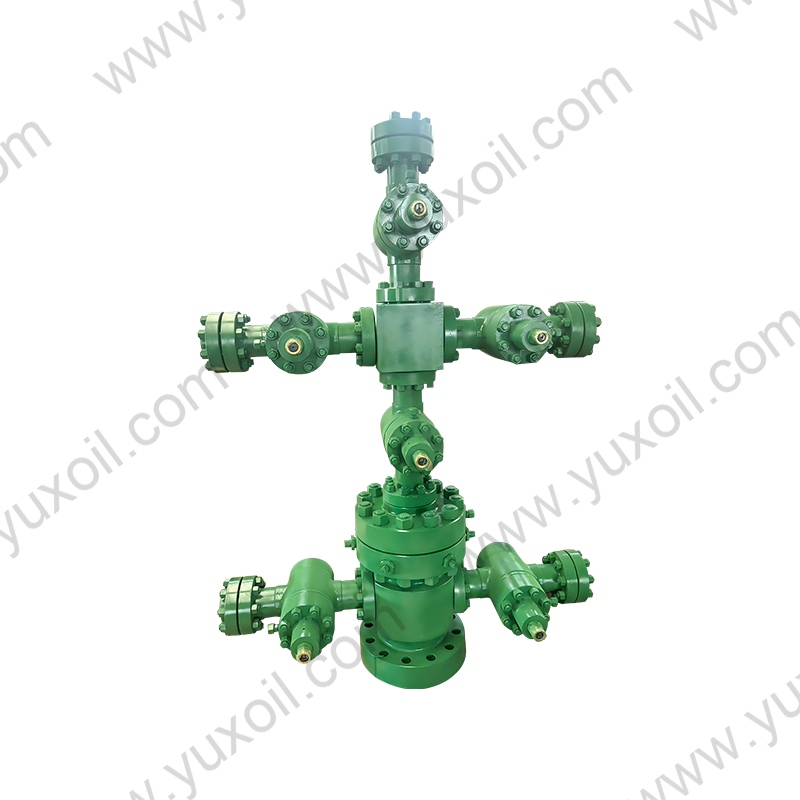
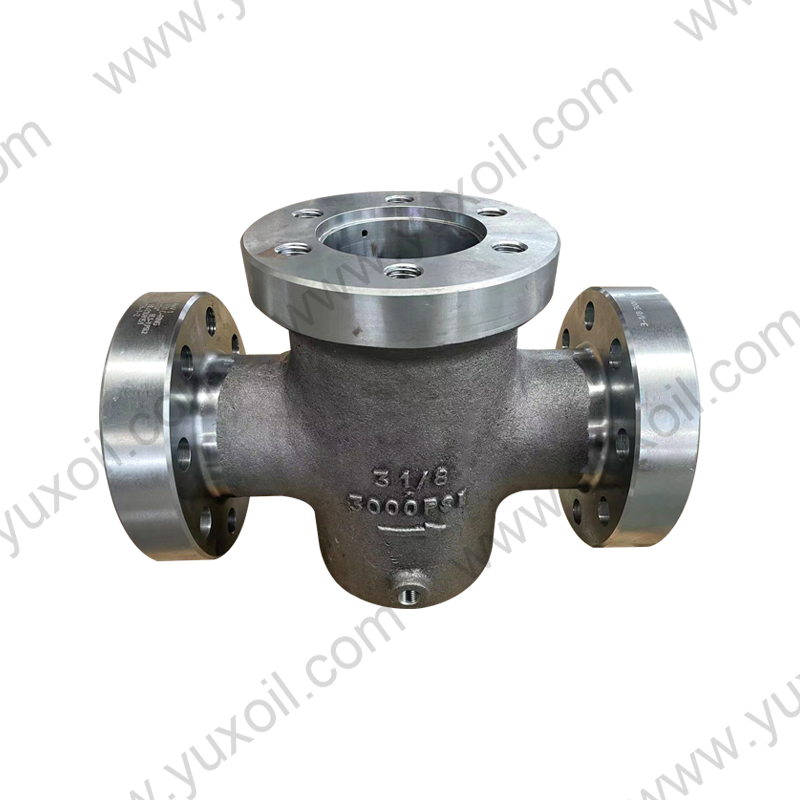
An API 6A gate valve is a wellhead and Christmas tree isolation valve built to the API Specification 6A standard, rated for working pressures from 2,000 psi to 20,000 psi and temperature classes from -75°F to 350°F. It uses a sliding gate mechanism to provide full bore, bi-directional shutoff for high-pressure oil and gas production, drilling, and completion operations. Selection depends on three factors: pressure rating (PSL/PR), material class (temperature and corrosion service), and product specification level (PSL 1–4) tied to the required quality and testing rigor.
API 6A gate valves are manufactured under the American Petroleum Institute's Specification 6A, "Specification for Wellhead and Christmas Tree Equipment." This standard governs design validation, materials, welding, testing, and marking for valves used in wellhead systems, Christmas trees, and manifolds. Unlike general industrial gate valves, API 6A valves must pass rigorous performance verification (PR1 and PR2 testing) before they can be sold as API-monogrammed products.
These features distinguish API 6A gate valves from standard API 600 or API 602 industrial gate valves, which are not designed for the extreme pressure cycling and sour service conditions typical of wellhead applications.
API 6A defines valve pressure ratings using standardized PR (Pressure Rating) designations. The working pressure directly determines wall thickness, forging grade, and bolting requirements. The table below summarizes the standard pressure classes used across the industry.
| Pressure Class (PR) | Rated Working Pressure (psi) | Typical Application |
|---|---|---|
| 2K | 2,000 | Low-pressure surface flowlines |
| 3K / 5K | 3,000 / 5,000 | Standard onshore wellheads |
| 10K | 10,000 | High-pressure production and offshore trees |
| 15K | 15,000 | Deepwater and HPHT wells |
| 20K | 20,000 | Ultra-HPHT and extreme reservoir conditions |
In addition to pressure class, API 6A assigns a Product Specification Level (PSL 1 through PSL 4) that dictates testing intensity — from basic dimensional/hydrostatic checks at PSL 1 to full material traceability, extended NDE, and extreme-service documentation at PSL 4. Most critical wellhead gate valves in sour or offshore service specify PSL 3 or PSL 3G.
Three gate valve configurations dominate oilfield use, each suited to different flow and pressure conditions.
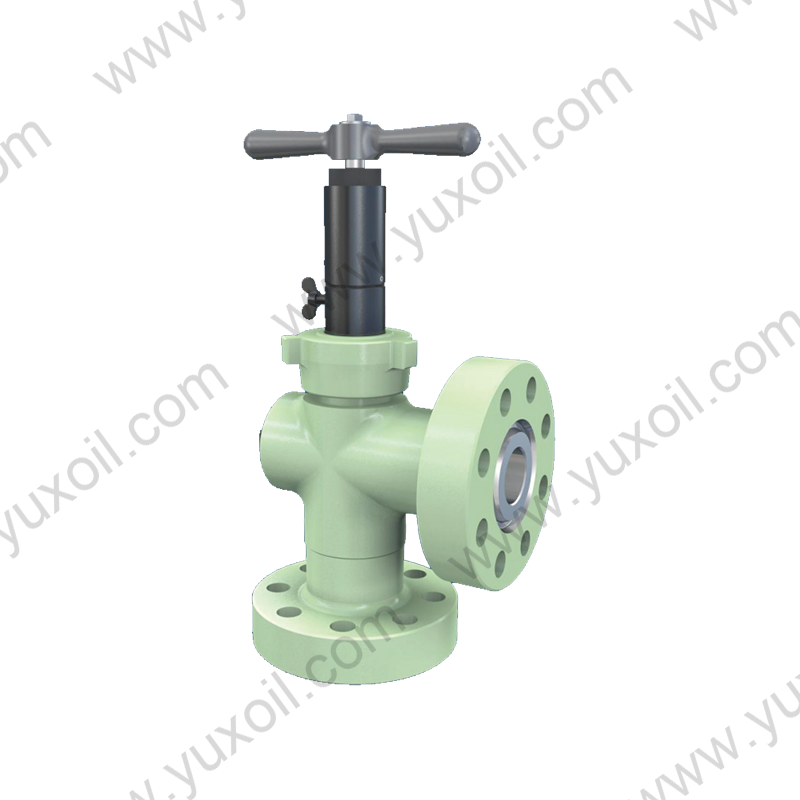
The most widely used design in wellheads and Christmas trees, offering a straight, unrestricted bore that allows wireline tools and pigs to pass through without obstruction. Ideal for production and workover operations.
Uses a two-piece gate that expands against the seats when closed, producing a tighter metal-to-metal seal. Common in high-pressure, high-cycle applications where seat wear must be minimized.
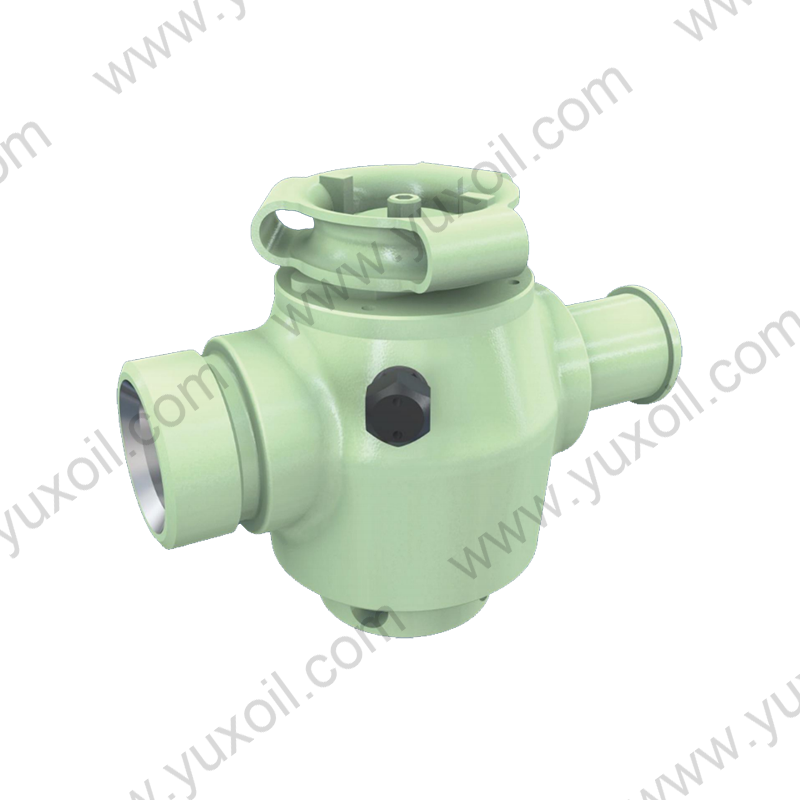
Features a single solid gate that slides between two seats. Slab gates are simpler mechanically and are frequently chosen for surface production trees and manifold isolation where bidirectional sealing at moderate pressures is sufficient.
API 6A gate valves are deployed across nearly every high-pressure point in the well construction and production chain.
In frac tree service specifically, gate valves may see hundreds of high-pressure cycles per well, which is why API 6A also incorporates cycle-life and erosion-resistance testing for valves intended for repeated frac use.
API 6A assigns material classes (AA, BB, CC, DD, EE, FF, HH) that combine metallurgy with corrosion resistance requirements, particularly for sour (H2S-containing) service governed by NACE MR0175/ISO 15156.
| Material Class | Body/Bonnet | Trim | Service |
|---|---|---|---|
| AA | Carbon/low-alloy steel | Carbon/low-alloy steel | General, non-sour |
| DD | Carbon/low-alloy steel | Corrosion-resistant alloy | Sour, non-corrosive |
| HH | Corrosion-resistant alloy | Corrosion-resistant alloy | Sour, corrosive |
Temperature classes range from U (-75°F/-60°C) for arctic service to V, K, L, N, P, R, S, T, U, and X, up to 350°F (177°C) for hot production streams. Selecting the correct temperature class prevents seal degradation and metal embrittlement in extreme climates.
Choosing the correct valve requires matching four parameters to actual well conditions rather than defaulting to the highest available rating, which unnecessarily increases cost and weight.
Operators should also confirm the manufacturer holds a valid API Monogram license for 6A products, since this certification is the practical proof that design validation, material traceability, and quality management comply with the specification.
API 6A gate valves require periodic function testing and pressure testing to confirm sealing integrity throughout well life. Field practice typically includes:
Consistent testing is essential because a single seat leak in a master or wing valve can compromise well control. Documented, traceable maintenance records are also typically required to maintain regulatory compliance on offshore and high-risk onshore installations.
 No. 161, Yanhe Middle Road, Yanhe Town, Jianhu County, Yancheng City, Jiangsu Province, China
 +86-13961903990
 +86-515-86598285
 +86-515-86590688
Copyright © Jianhu Yuxiang Machinery Manufacturing Co., Ltd. All Rights Reserved.
 Login Wholesale High Pressure Wellhead/Drilling Equipment Manufacturer

 English
 русский
 Español