-

+86-13961903990

+86-13961903990
Industry News
 Home / News / Industry News / why are the valves important: Applications, Selection Criteria, and Practical Guidance
 2026.11.16
 Industry News
Content
Valves are easy to overlook. One hides behind the washing machine, another sits under the kitchen sink, a few more work inside the car engine, and dozens are bolted onto the wellhead of an oil or gas well. Most days nobody gives them a second thought. The day one fails, the valve suddenly becomes the most important piece of equipment on the site.
So why are valves important? Because they decide where a fluid goes, how fast it moves, and whether it is allowed to travel backwards. That single job, controlling flow, is what keeps a heart beating steadily, keeps water pipes from bursting, and keeps oilfield crews safe when pressure climbs into the thousands of psi. The answer looks different depending on whether you are talking about the valves in your chest or the ones we machine in our workshop, but the underlying principle is exactly the same.
Strip away the engineering and a valve is simply a controlled opening. It might be a gate that slides across a pipe, a plug that rotates a quarter turn, a disc that swings shut the moment flow reverses, or a needle that fine-tunes a rate. Whatever the shape, valves carry out three fundamental jobs:
Remove every valve from a refinery, a municipal water network or a producing well and none of those systems could be operated, let alone maintained. Valves are what turn a sealed network of pipes into something human beings can actually control.
When most people search for why valves are important, they are thinking about the heart. Four valves sit inside the human heart, and each one acts as a one-way gate: the tricuspid valve between the right atrium and right ventricle, the pulmonary valve between the right ventricle and the pulmonary artery, the mitral valve between the left atrium and left ventricle, and the aortic valve between the left ventricle and the aorta.
Their importance is easy to see. Blood has to move forward at the right moment and must not fall back into the chamber it just left. The opening and closing of these leaflets is what produces the familiar heartbeat sounds, and it is what keeps oxygenated and deoxygenated blood from mixing. When a heart valve narrows or leaks, the consequences are not abstract: breathlessness, fatigue, heart failure, and in the worst cases a stroke.
| Feature | Heart valve | Oilfield valve |
|---|---|---|
| What it controls | Blood flow between chambers | Oil, gas, water and treatment fluids |
| Working pressure | Pulsing, low pressure | Steady or surging, thousands of psi |
| Environment | Warm, wet, biological | Corrosive, abrasive, often sandy |
| Result of failure | Breathlessness, heart failure, stroke | Leak, spill, blowout, injury |
| Care and upkeep | Medical checks, medication, surgery | Inspection, torque checks, seal and trim replacement |
An oil or gas well is a pressurised system by nature. Whatever comes out of the reservoir arrives at surface under its own energy, and everything connected to the wellhead has to keep that energy contained while still allowing operators to work. Valves are the only tool that lets a crew redirect, stop or measure that flow without opening the system to the atmosphere.
A wellhead or Christmas tree is essentially a stack of valves and fittings. Each one provides a barrier between the reservoir and the outside world. If a single barrier leaks when it should be holding, the result is not a small inconvenience; it is the beginning of a well control incident. This is why the components used in these positions are built and tested against recognised standards rather than general industrial practice.
Pumps wear out, gauges need replacing, and flowlines have to be worked on. Because valves allow a section of the system to be isolated, a crew can service one branch while production continues elsewhere. On a producing field, that difference shows up directly in the operating cost of the asset.
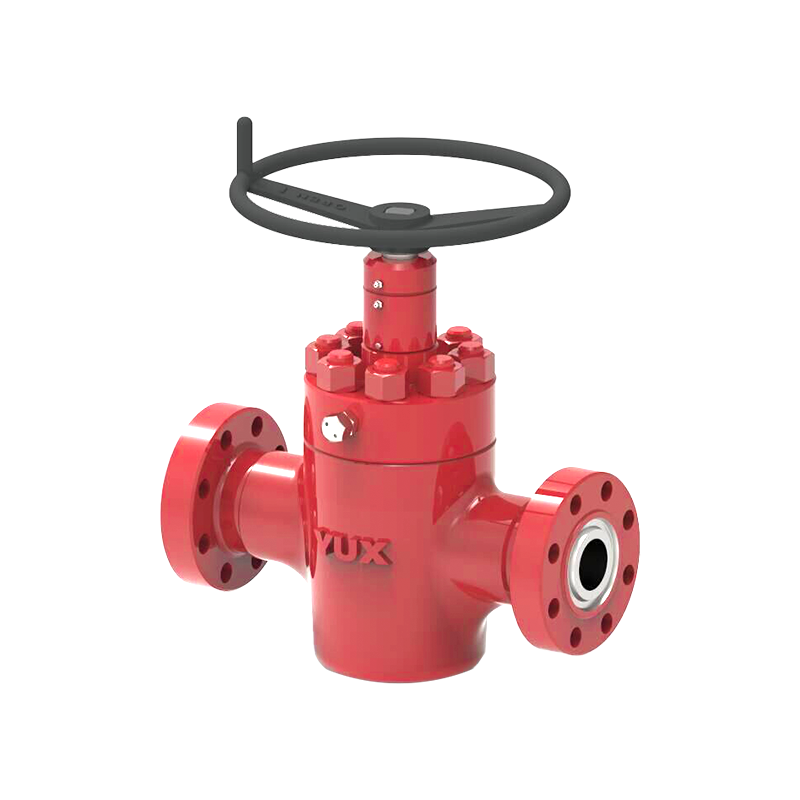
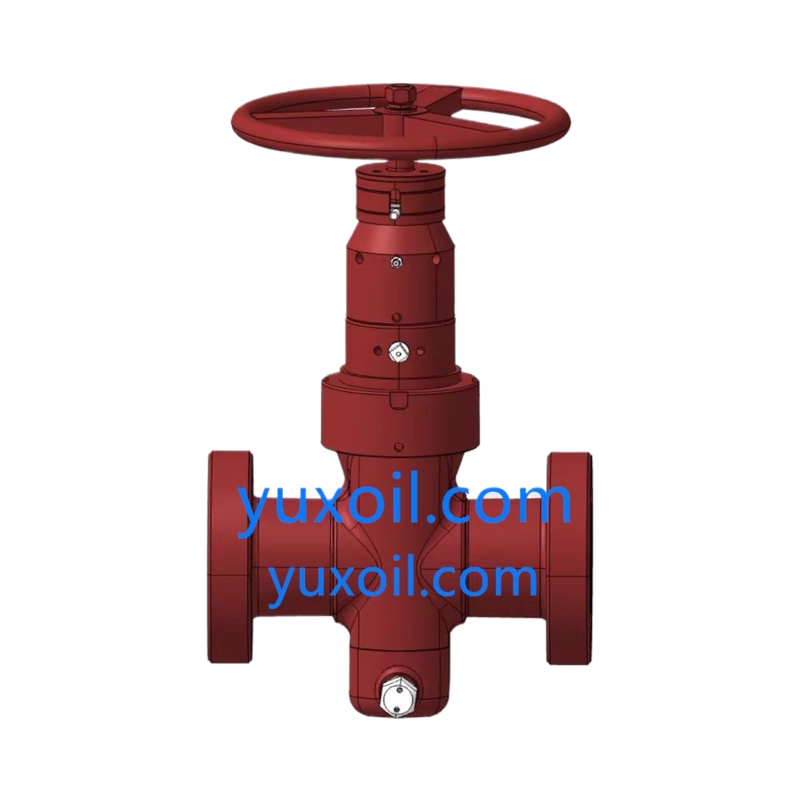
Gate valves do the heavy lifting on most wellheads and manifolds. In normal service they sit fully open or fully closed, which keeps wear on the sealing surfaces low and pressure drop across the valve almost negligible. Our API 6A gate valves, including expanding, FC, FLS and slab designs, are built for exactly this kind of duty. If you would like a more detailed explanation, we have written a closer look at the role of API 6A gate valves in oil and gas.
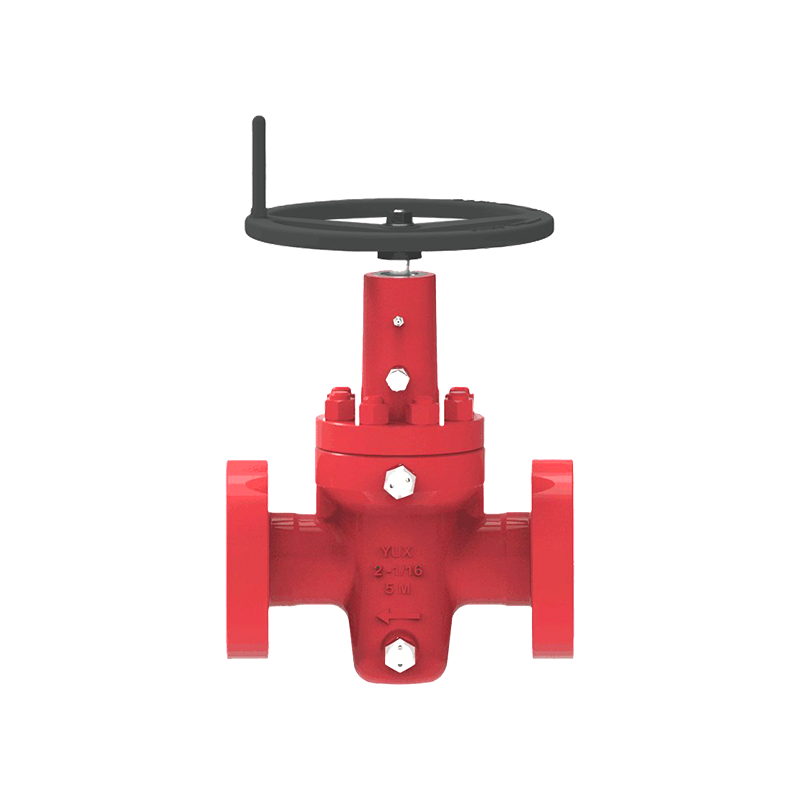 WKM Expanding Gate Valve for API 6A ServiceA closer look at the expanding gate design within the API 6A gate valve family, suited to high-pressure wellhead and manifold isolation.View Product →
It helps to remember that "valve" is a broad family rather than a single device. On a typical wellsite you will find several types working side by side:
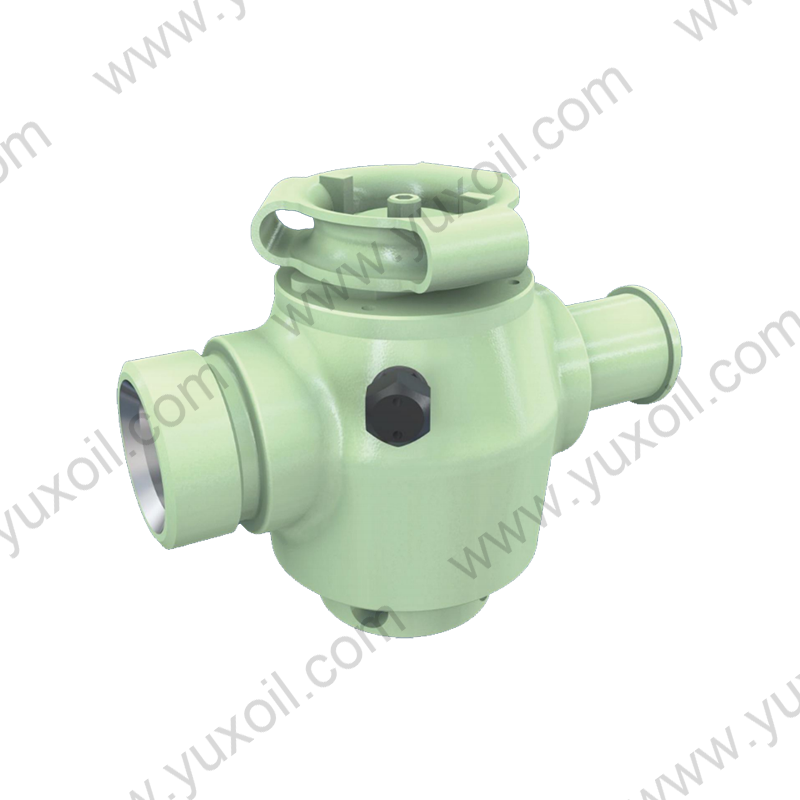
Plug valves deserve particular attention in high-pressure service. Because a plug rotates rather than slides, it can be cycled more often without the seat damage that a sliding gate sometimes suffers, and the seal is easy to verify visually during maintenance. That combination of quick operation and dependable sealing is why plug valves appear so often in manifolds and flow-control skids.
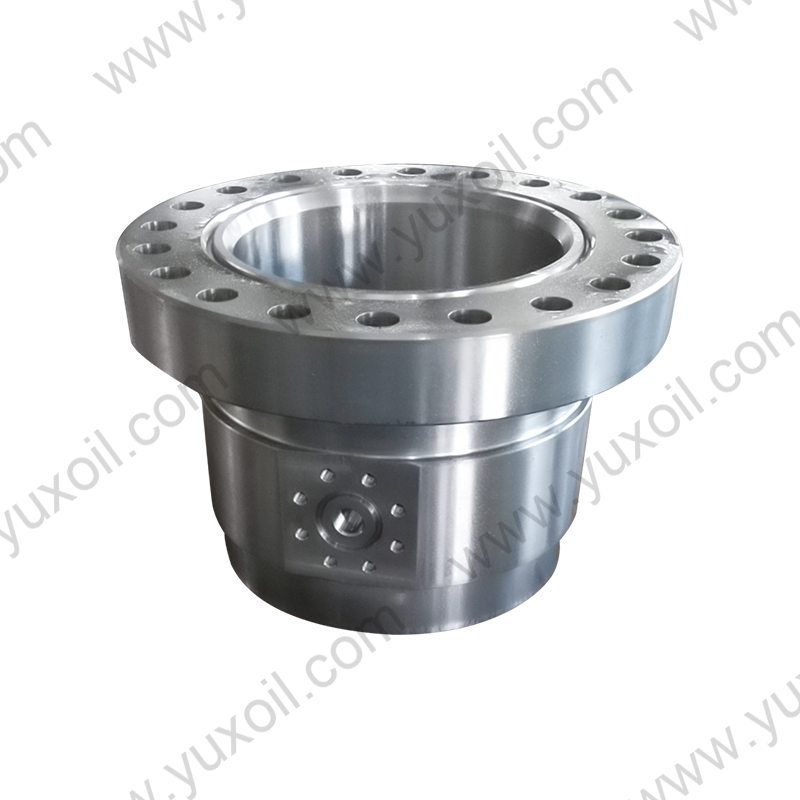
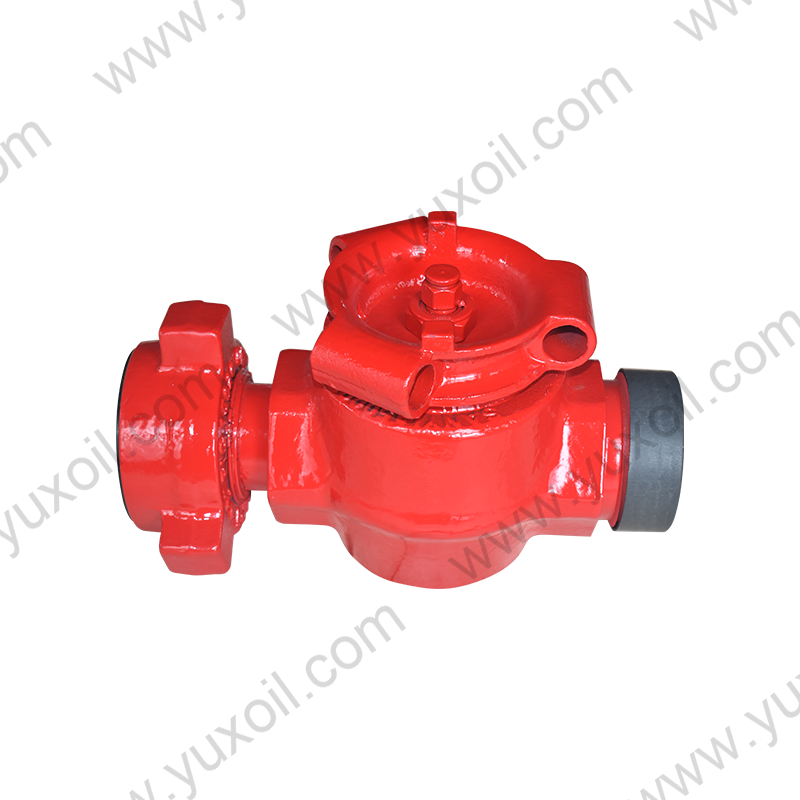 FMC Plug Valve for Well Stimulation and Fracturing LinesA compact API 6A plug valve with fast opening and reliable sealing, appearing in manifolds and flow-control skids during high-pressure fracturing work.View Product →
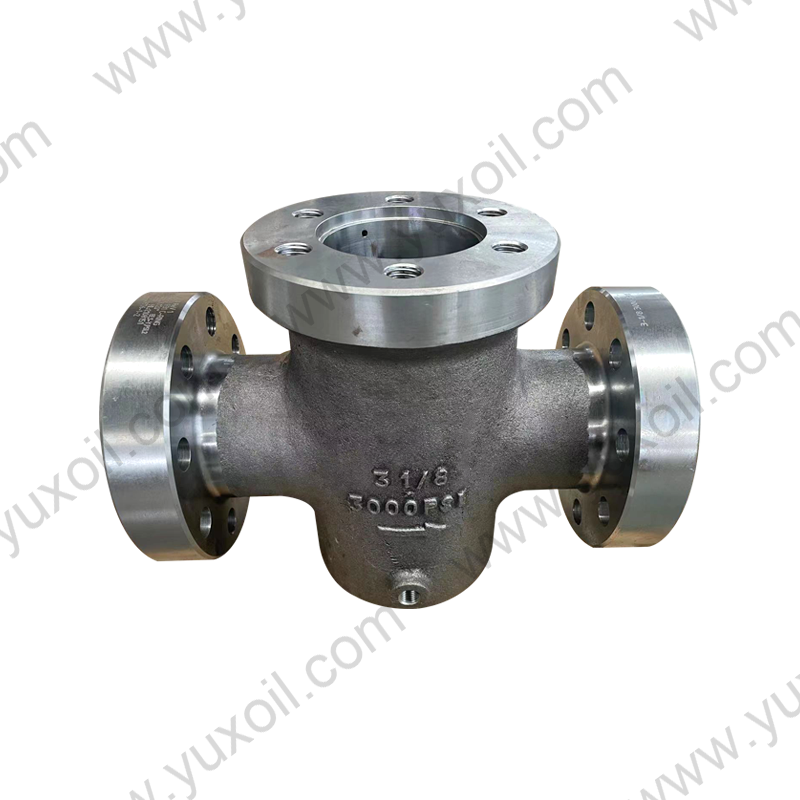
Stimulation work pushes valves to their limits. During a fracturing job, pumps drive fluid and proppant into the formation at high rates and high pressures, and that energy passes through the surface equipment on its way downhole. The frac head connects the treating lines to the wellhead, manifolds distribute flow between pump units and the well, tees and crosses split or combine streams, and crossover spools join components with different connection profiles.
In this part of the operation, a valve that opens slowly, seals poorly or erodes early does not just cost money. It puts people and the environment at risk, and it can end a job before the treatment is finished. Every component in the treating path therefore has to be selected for the pressure, the abrasive nature of the fluid and the number of cycles expected.
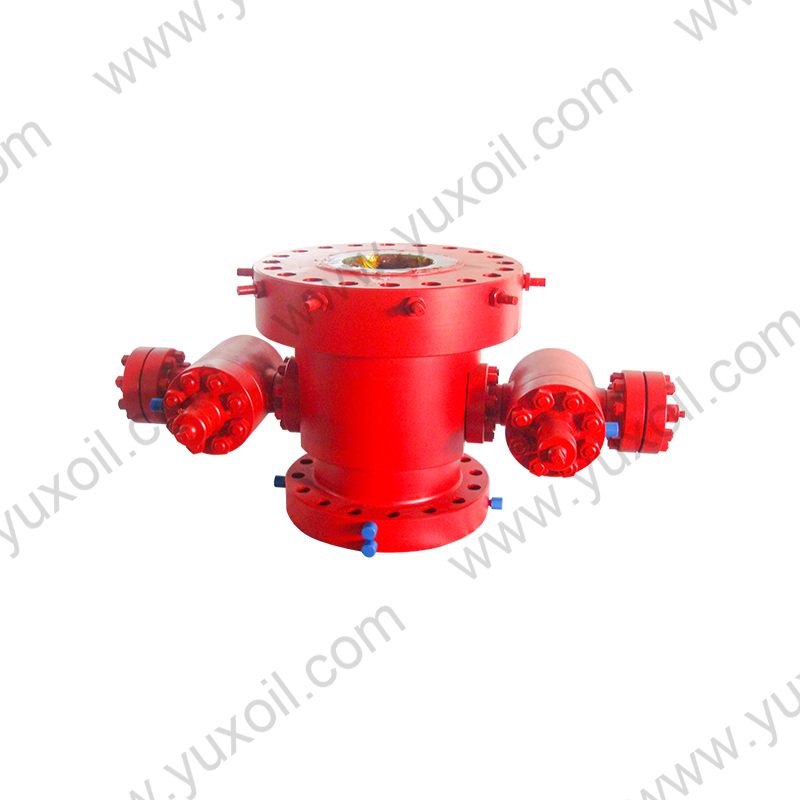
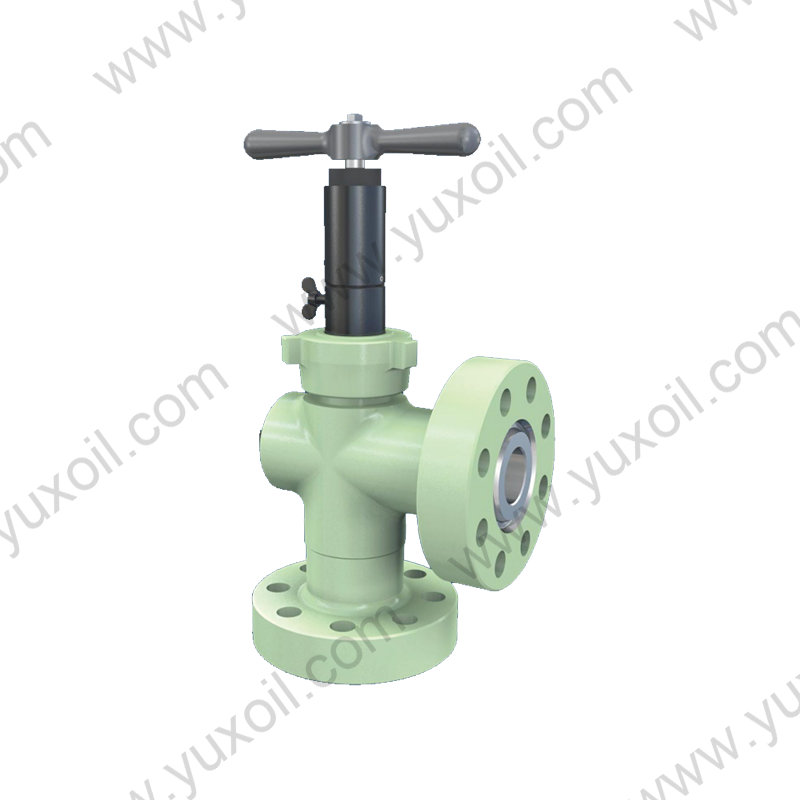
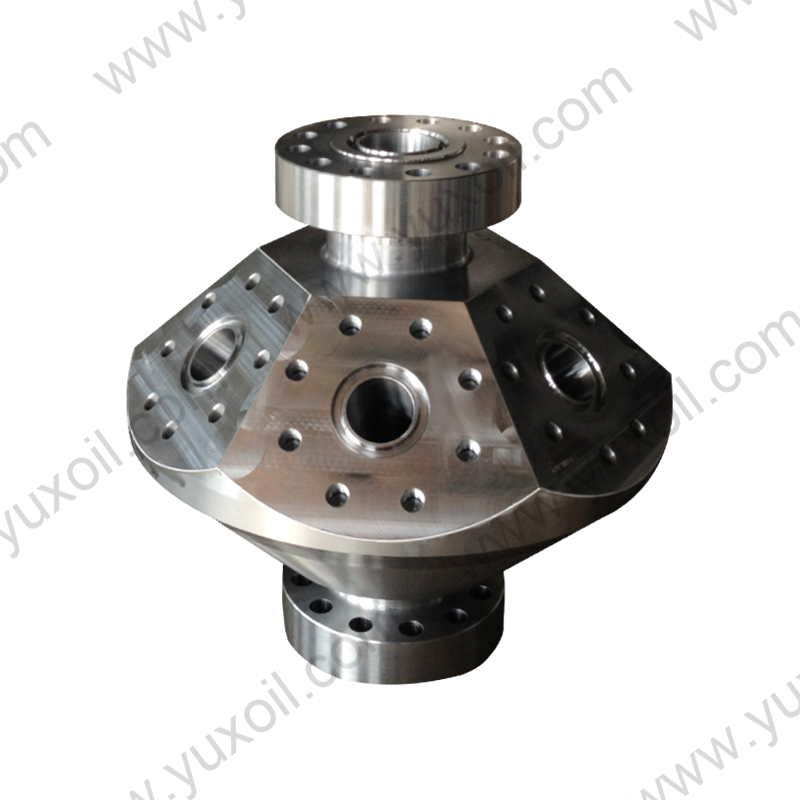 Frac Head Adapter for Hydraulic Fracturing OperationsA customizable frac adapter with multiple outlets and API connection compatibility, positioned for high-pressure well stimulation and complex fracturing operations.View Product →
Whether a valve is genuinely important or merely present comes down to how well it was made. Our own history explains why we feel strongly about this. The company began with a foundry in 1995, added machining capability in 2011, and extended into oil drilling and production equipment in 2019. Casting, machining and assembly sit close together, which means we can follow a component from raw material to finished pressure boundary rather than handing it between unrelated suppliers.
Testing matters just as much as manufacturing. Chemical and mechanical property testing confirms the material, non-destructive examination looks for internal defects, metrology keeps dimensions inside tolerance, and type testing verifies the design under representative conditions. You can read more about how our casting and machining lines work if the production side interests you.
If valves are the parts that keep a system under control, then choosing the right one is a decision worth slowing down for. In practice, these are the points that matter most:
They are small in size and large in consequence. A valve is usually the least expensive item in a flow path, yet it is the component that decides whether that path can be shut down, adjusted or protected. Take it away and the system becomes both unmanageable and unsafe.
It depends on where it sits. A leaking domestic valve means a wet floor. A failed heart valve means a medical emergency. A failed wellhead valve can release pressurised hydrocarbons, which is why inspection intervals and maintenance routines exist in the first place.
They do, and often for a simple reason: a small valve can be the only barrier protecting a large volume of fluid. Size tells you how much material was used, not how critical the function is.
From the four valves in a human heart to the gate valves on a fracturing spread, the story is consistent. Valves give people control over flow, and control is what makes pressure safe to work with.
We have been building valves and oilfield equipment for decades, and we still enjoy talking through the details with engineers, buyers and maintenance teams. If you are selecting equipment for a wellhead, a manifold or a fracturing job, get in touch and we will help you match the valve to the duty.
 No. 161, Yanhe Middle Road, Yanhe Town, Jianhu County, Yancheng City, Jiangsu Province, China
 +86-13961903990
 +86-515-86598285
 +86-515-86590688
Copyright © Jianhu Yuxiang Machinery Manufacturing Co., Ltd. All Rights Reserved.
 Login Wholesale High Pressure Wellhead/Drilling Equipment Manufacturer

 English
 русский
 Español