-

+86-13961903990

+86-13961903990
Industry News
 Home / News / Industry News / What Is a Wellhead? A Practical Guide to Oil and Gas Wellhead Equipment
 2026.11.09
 Industry News
Content
If you have ever driven past a completed oil or gas well, you have likely seen a wellhead even if no one pointed it out. It is the sturdy steel assembly at the surface that anchors the casing, supports the tubing, and gives operators a controlled way to reach the reservoir. In plain terms, a wellhead is the pressure-containing foundation of a well.
The word also shows up in drinking-water rules, where wellhead protection refers to guarding the land around a water well. This article focuses on the oil and gas meaning, because that is where the equipment, standards, and field decisions usually come together.
A wellhead is the surface equipment installed at the top of an oil or gas well. It provides structural support for casing strings and tubing, seals the space between those pipes, and allows pressure and fluids to be managed safely during drilling, completion, production, and workover operations.
You can think of it as the well's connection point to the surface. Everything below it is downhole; everything above or beside it, such as flowlines, valves, and pressure gauges, depends on the wellhead as a stable, sealed base.
Wellheads are not installed all at once. They are built up in stages as the well is drilled. After the conductor casing is set, a starting head or casing head is installed. As each additional casing string is run, a casing spool or hanger is added to support and seal it. By the time the well is ready for completion, the wellhead has become a stack of pressure-rated components matched to the casing program.
During completion, the tubing hanger is landed inside the wellhead. The tubing carries produced fluids to surface, while the annulus between tubing and casing remains sealed and monitored. Later, if the well needs intervention, the wellhead provides the foundation for pressure-control equipment and the access point for tools and wireline operations.
Although designs vary by field and operator, most wellheads perform the same basic jobs:
Those functions may sound simple, but they demand precise machining, reliable seals, and materials that can handle pressure, temperature, vibration, and corrosive fluids over many years.
Most oil and gas wellheads use a similar stack of components. The exact configuration depends on pressure, temperature, casing sizes, material requirements, and the operator's completion plan.
| Component | Main Purpose | Typical Location |
|---|---|---|
| Casing head | Supports and seals the first casing strings | Bottom of the wellhead stack |
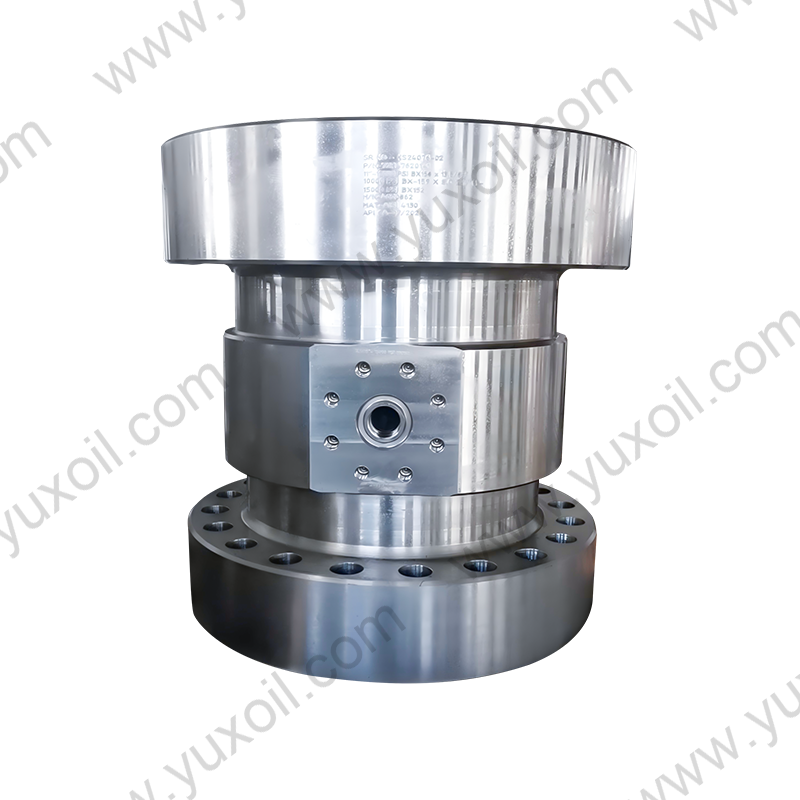
| Casing spool | Provides a landing point for additional casing strings | Above the casing head |
| Tubing head | Supports tubing and seals the tubing annulus | Upper wellhead section |
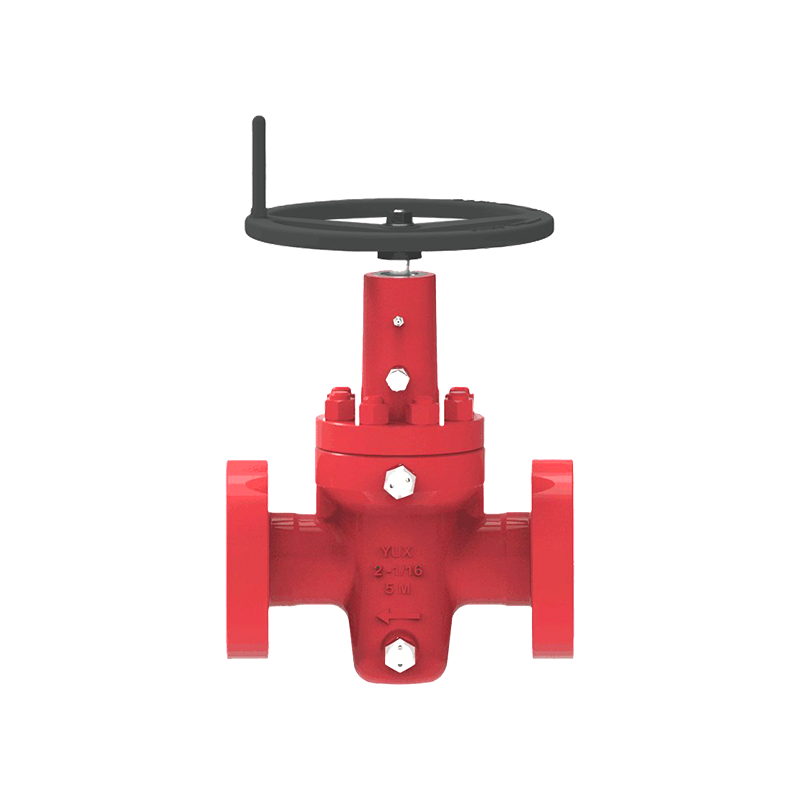
| Valves and outlets | Control flow, isolate pressure, and allow monitoring | On spools and adapters |
| Wellhead adapter | Connects the wellhead to a tree or pressure-control equipment | Top of the stack |
These parts are not chosen at random. They are matched to casing sizes, pressure ratings, material classes, and the expected service conditions of the well.
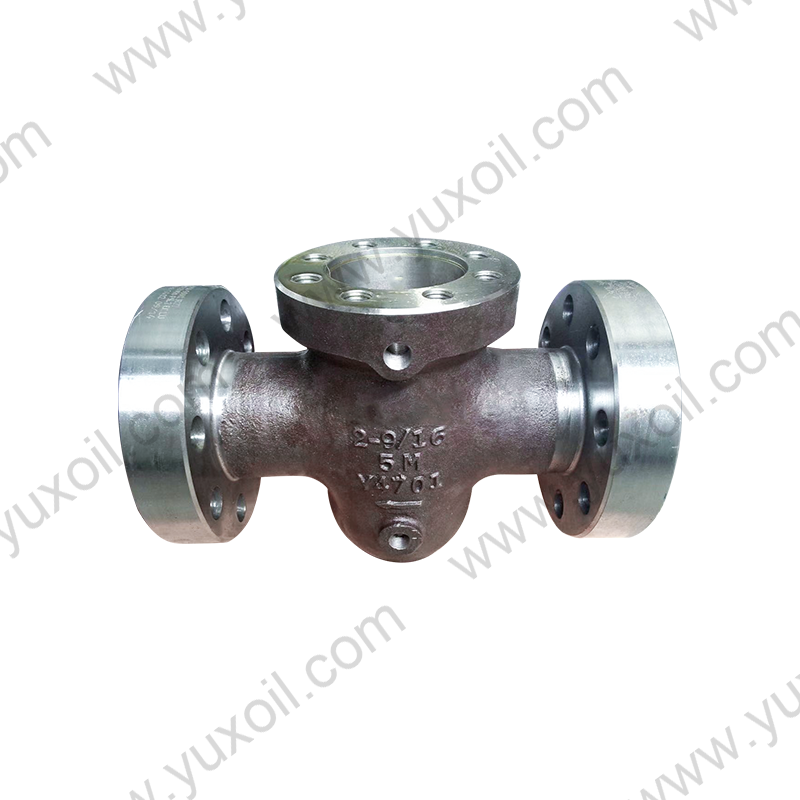
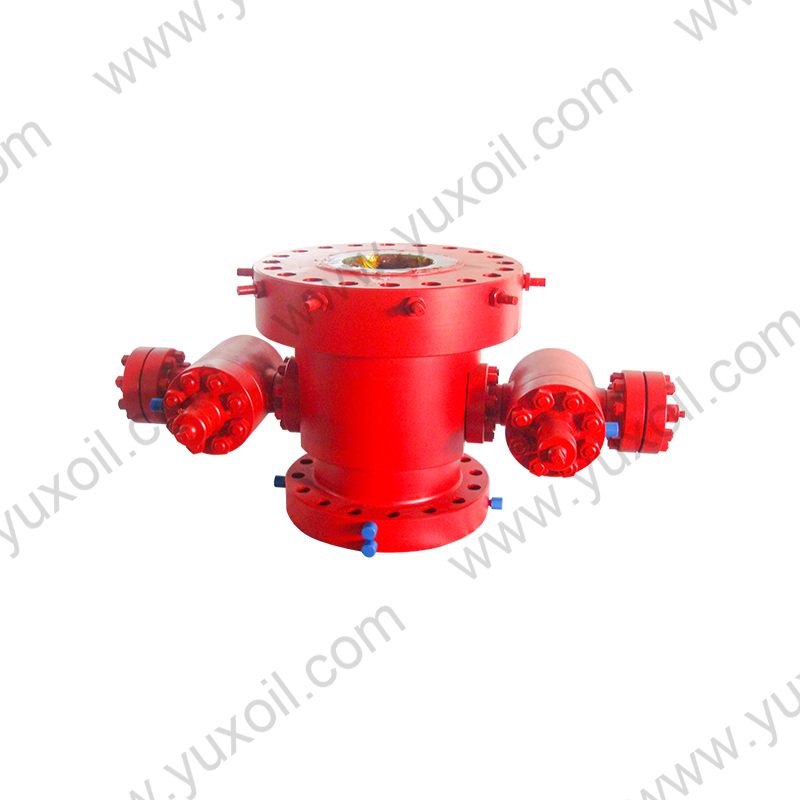 Casing Spool for Oilfield Wellhead Fluid ConnectionsA cross-shaped connection accessory for oilfield and industrial fluid systems, suited to wellhead setups where pressure containment and reliable sealing are important.View Product →
People often use the terms wellhead and Christmas tree as if they mean the same thing, but they serve different roles. The wellhead is the foundation and pressure boundary. It supports casing and tubing and remains part of the well's permanent surface equipment.
The Christmas tree is the valve assembly installed on top of the wellhead for production control. It routes flow, allows shut-in, and provides access for testing, gauging, and chemical injection. In some completions the tree is a separate unit; in others it is integrated with the wellhead system. The wellhead carries the structural and sealing load, while the tree controls the flow of produced fluids.
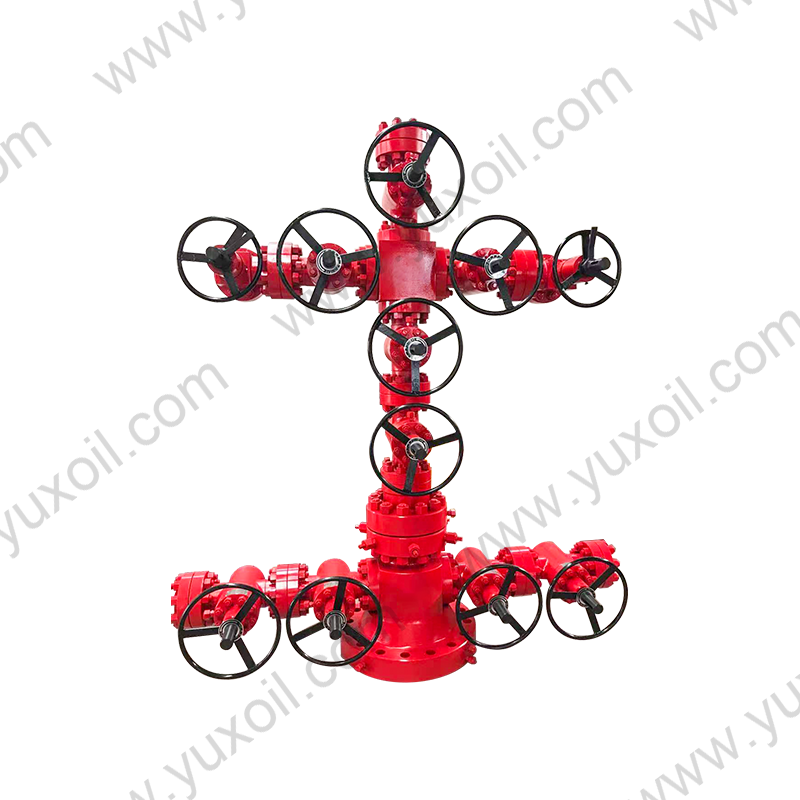 Christmas Tree Equipment for Oil and Gas Wellhead ControlA wellhead production control assembly that routes flow, supports shut-in, and can include safety valves for oil and gas operations.View Product →
Pressure control is at the heart of wellhead design. Wellhead equipment is commonly manufactured to API 6A and related specifications, with pressure ratings, temperature classes, material classes, and product specification levels selected for the job. During drilling, a blowout preventer stack is connected above the wellhead to provide emergency pressure control. During production, valves and outlets on the wellhead and tree allow operators to monitor pressure, bleed off trapped pressure, and isolate sections of the system.
Sealing performance matters just as much as strength. Wellhead seals must hold under changing pressure, thermal cycling, vibration, and exposure to produced fluids. Regular testing, torque checks, and seal inspection help confirm that the system remains tight. If you want a closer look at how high-pressure valves keep their seal in demanding service, this article on how high-pressure valves maintain a tight seal is a useful companion read.
Wellheads are used in onshore conventional fields, shale and tight-gas developments, offshore platforms, gas storage wells, and water-injection or disposal wells. The configuration changes with the application. A low-pressure onshore well may use a relatively simple casing and tubing head arrangement, while a high-pressure, high-temperature development may require a heavier stack, special metallurgy, and more elaborate testing.
Fracturing operations add another layer. A frac head is often installed at the wellhead during stimulation to connect the high-pressure pump lines to the well. The frac head must handle abrasive slurries, high pump rates, and rapid pressure changes. Once stimulation is complete, the frac equipment is removed and the production tree is installed or returned to service.
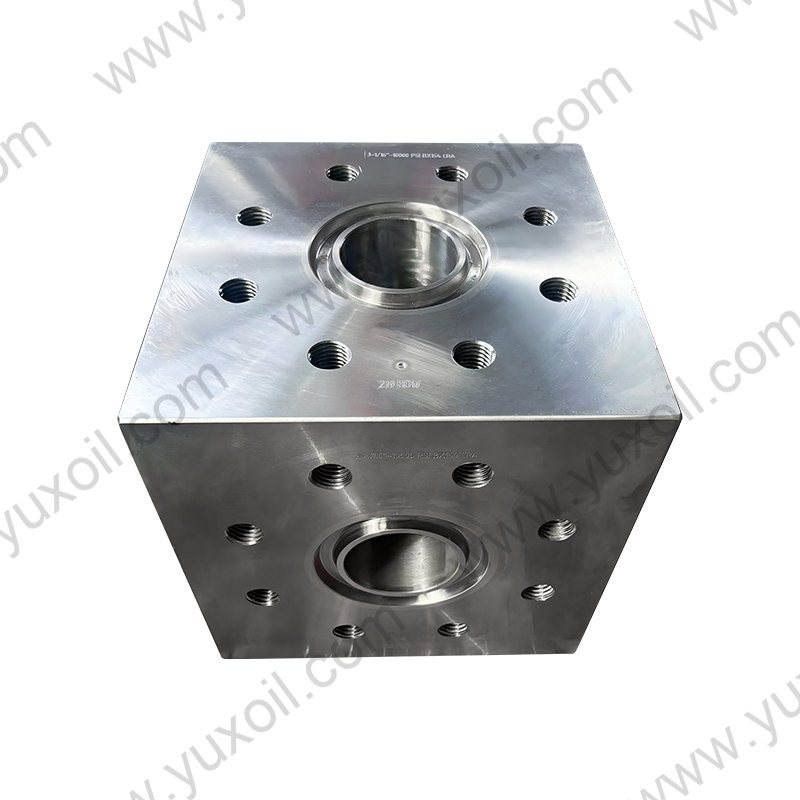
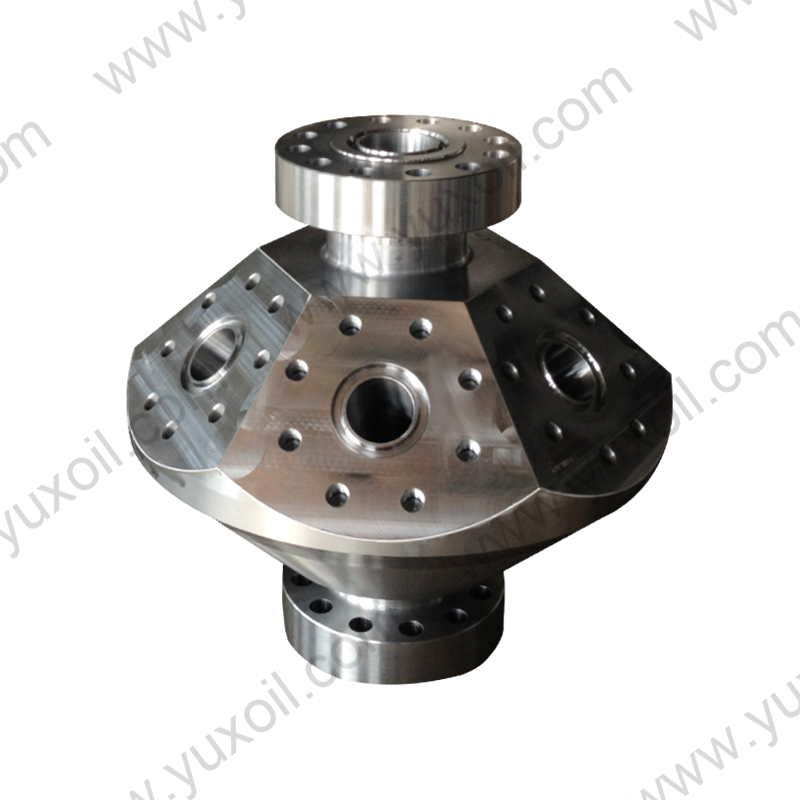 Frac Head Adapter for High-Pressure Oilfield Fracturing OperationsA customizable fracturing connection with multiple outlet options and API-compatible flange designs, suited to stimulation work where flexible flow routing is needed.View Product →
Selecting wellhead equipment starts with the well plan. Operators and engineers consider casing sizes and weights, maximum anticipated surface pressure, temperature range, produced fluid composition, and applicable standards. Material selection, seal type, and valve configuration follow from those inputs. Lead time, spare parts availability, and field service support also matter, especially for remote or offshore locations.
Maintenance is mostly about inspection and prevention. Greasing valves, checking torque on flange connections, monitoring pressure, and replacing seals at planned intervals can prevent small issues from becoming expensive failures. When components are sourced, documentation and traceability are important. At YUXOIL, we manufacture API 6A gate valves, casing spools, frac heads, and related wellhead components, and we know that a clear paper trail and consistent testing give field teams confidence. You can learn more about our manufacturing and quality control process if you are evaluating suppliers.
A wellhead is the well's surface foundation and pressure boundary. It supports casing and tubing, seals the spaces between them, and provides the connection points that make drilling, completion, and production possible. The Christmas tree controls flow; the wellhead holds everything together and keeps pressure where it belongs.
If you remember one sentence, make it this: the wellhead is the safe, sealed doorway between the reservoir and the surface. Whether you are planning a new completion, reviewing equipment specifications, or simply trying to understand what you see at a well site, that definition is a solid place to start.
 No. 161, Yanhe Middle Road, Yanhe Town, Jianhu County, Yancheng City, Jiangsu Province, China
 +86-13961903990
 +86-515-86598285
 +86-515-86590688
Copyright © Jianhu Yuxiang Machinery Manufacturing Co., Ltd. All Rights Reserved.
 Login Wholesale High Pressure Wellhead/Drilling Equipment Manufacturer

 English
 русский
 Español