-

+86-13961903990

+86-13961903990
Industry News
 Home / News / Industry News / Which API Standards Should You Verify Before Buying an Oilfield Plug Valve?
  2026.02.16
 Industry News
Content
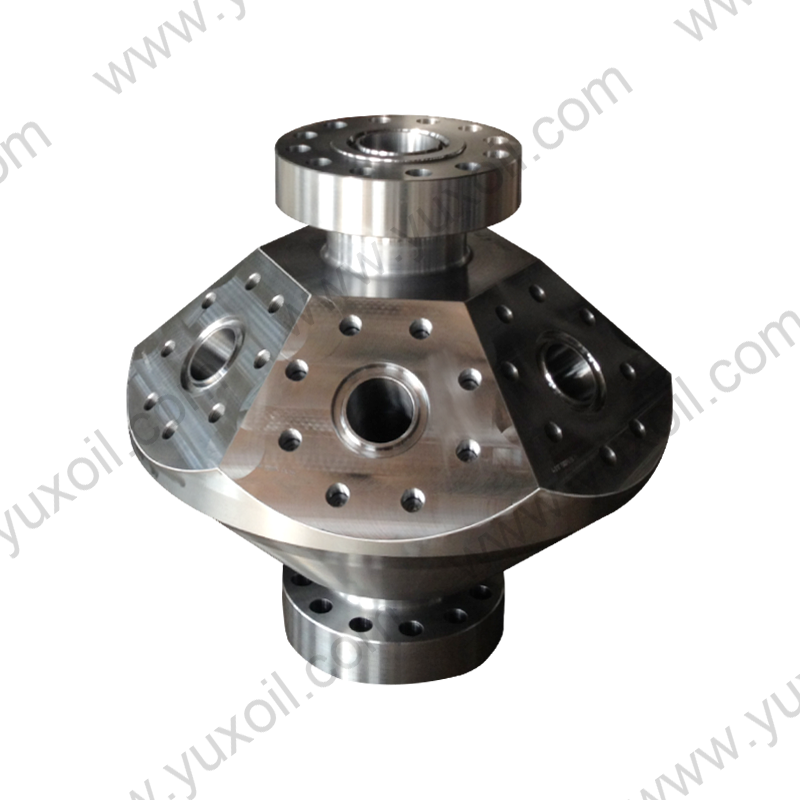
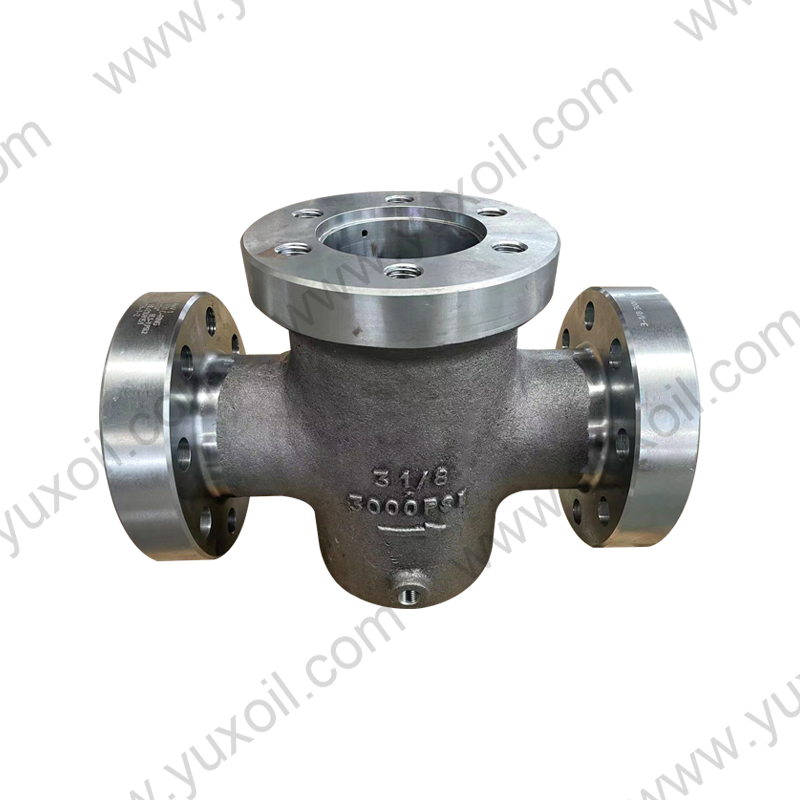
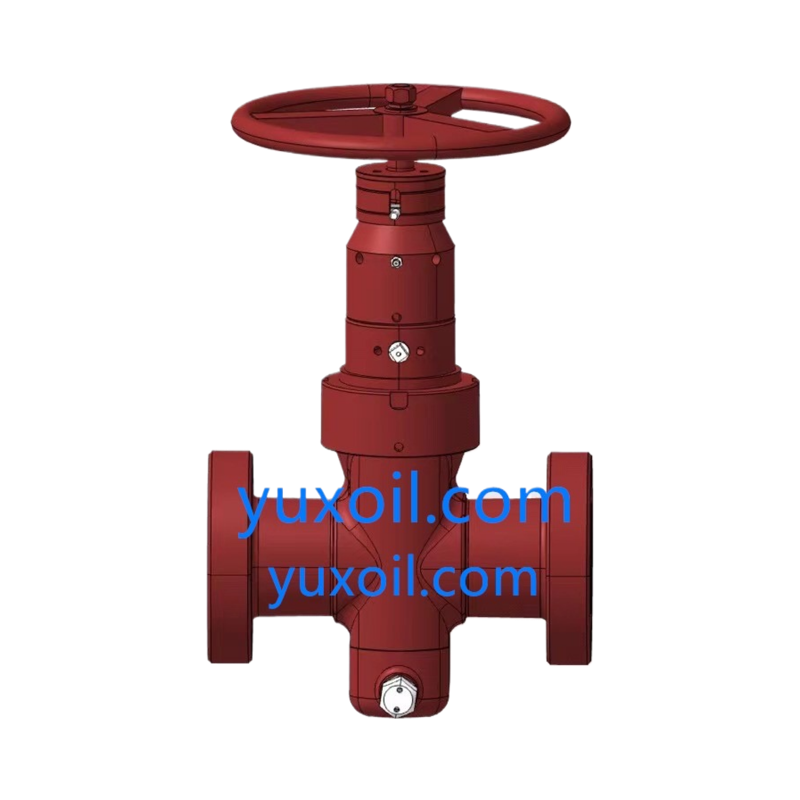
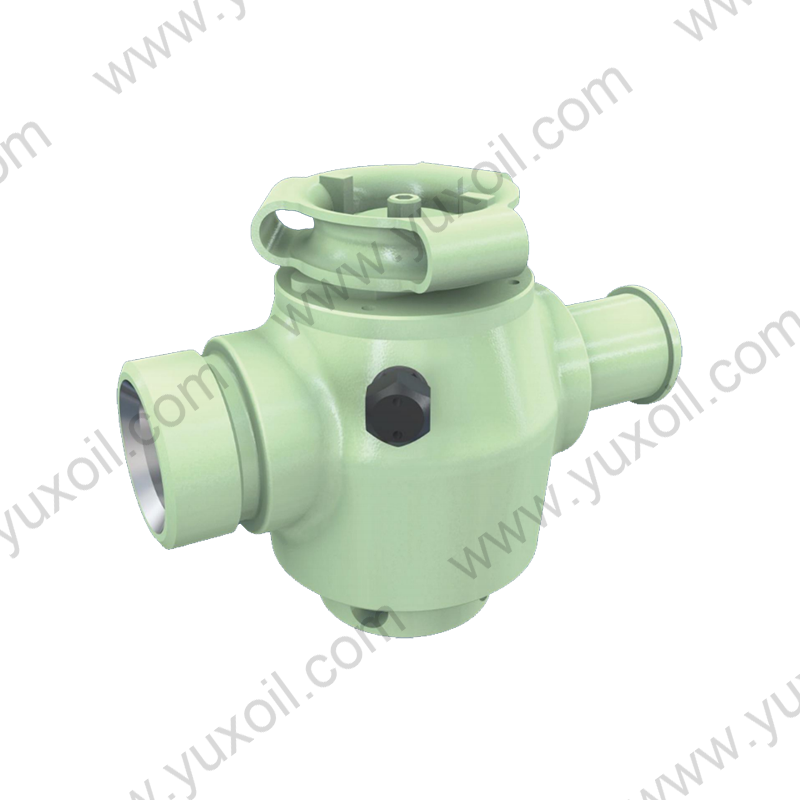
In the high-stakes environment of the oil and gas industry, an Oilfield Plug Valve often serves as the primary line of defense in high-pressure manifolds, fracturing operations, and drilling systems. Choosing the right plug valve is not merely a technical decision; it is a core strategic move concerning operational safety, production efficiency, and legal compliance. In this sector, API (American Petroleum Institute) standards are more than just guidelines—they are the global universal language of quality and reliability.
A typical oilfield plug valve is often required to handle working pressures ranging from 10,000 PSI to as high as 20,000 PSI. Without the rigorous constraints of API standards, the metallurgical integrity of the valve body cannot be guaranteed. API standards specify the minimum yield strength, tensile strength, and wall thickness calculation formulas for valve body forgings or castings. This means that when you select a plug valve certified under API Spec 6A, you are investing in safety verified by scientific calculation and rigorous pressure testing, effectively preventing catastrophic valve body ruptures in high-pressure environments.
Oilfield operations are frequently located in remote regions across the globe. Equipment failure leading to “Non-Productive Time (NPT)” can cost tens of thousands of dollars per hour. Another core contribution of API standards is the global standardization of components. Whether in the North Sea or the Middle Eastern deserts, if a valve is manufactured according to API standards, its flange connections, hammer union specifications, and end-to-end dimensions are uniform. This interchangeability ensures that when a plug valve requires maintenance or replacement, field engineers can quickly find matching parts without needing expensive custom modifications, thereby drastically boosting operational efficiency.
When reviewing the technical data sheet of an Oilfield Plug Valve, procurement engineers should prioritize identifying the following API designations. These standards cover the entire lifecycle, from design principles and manufacturing processes to quality control.
This is the most critical standard for the upstream sector. For plug valves installed on wellheads, Christmas trees, or fracturing manifolds, API 6A is the absolute mandatory threshold.
If your plug valve is intended for midstream transportation pipelines or pump stations, API 6D is the standard you must verify.
Verifying product standards (6A/6D) is only the first step; verifying the manufacturer’s quality management system (API Q1) is equally vital.
To help you make an informed decision during procurement, we have provided a quantitative comparison of these two most common standards:
| Technical Dimension | API Spec 6A (Wellhead Grade) | API Spec 6D (Pipeline Grade) |
|---|---|---|
| Primary Application | Fracking, Xmas Trees, Injection Manifolds | Oil Pipelines, Refineries, Terminals |
| Typical Pressure Rating | 3,000 to 20,000 PSI | ANSI Class 150 to 2500 |
| Testing Focus | Extreme Pressure Cycles, PSL Inspection | Long-term Hermetic Seal, Flow Coefficient () |
| Fluid Characteristics | Contains Sand, Silt, Slurry, Raw Crude | Filtered Refined Oil, Natural Gas |
| Maintenance Profile | Requires frequent service; easy part replacement | Focuses on long life and low maintenance |
In modern oilfield development, more projects involve high-sulfur (Sour Service) and high fire-safety requirements. This necessitates that plug valves meet additional specifications beyond basic API standards.
If your oilfield contains Hydrogen Sulfide (), a plug valve made of ordinary steel will undergo “Sulfide Stress Cracking (SSC)” in a very short time.
Oilfield fires are extremely dangerous. API 6FA certification ensures that in the event of a fire, even if the internal rubber seals are destroyed, the valve’s metallic auxiliary seals can still block the fluid, preventing the fire from spreading.
Genuine API-certified valves usually have the API Monogram cast or engraved on a prominent part of the valve body, along with the product grade (e.g., API 6A), working pressure, PSL level, and serial number. The safest method is to request a copy of the valid API certificate from the manufacturer and verify the license number on the API website’s Composite List.
The price difference mainly stems from materials and testing. An API-certified plug valve requires high-performance alloy steel and must undergo Magnetic Particle Inspection (MPI), pressure cycle testing, and detailed documentation. These processes ensure safety in extreme conditions; compared to the massive compensation costs of an accident, the premium for API certification is actually a highly cost-effective safety insurance.
Not necessarily. Due to its structural characteristics, a plug valve performs better than a ball valve when handling fluids containing solid particles (such as fracking sand) because its sealing surface can wipe away accumulation during operation. However, in large-diameter, low-torque requirements for long-distance pipelines, a ball valve may be more advantageous.
 No. 161, Yanhe Middle Road, Yanhe Town, Jianhu County, Yancheng City, Jiangsu Province, China
 +86-13961903990
 +86-515-86598285
 +86-515-86590688
Copyright © Jianhu Yuxiang Machinery Manufacturing Co., Ltd. All Rights Reserved.
 Login Wholesale High Pressure Wellhead/Drilling Equipment Manufacturer

 English
 русский
 Español