-

+86-13961903990

+86-13961903990
Industry News
 Home / News / Industry News / What Is an Oilfield Plug Valve and How Does It Control Flow in Oil and Gas Systems?
  2026.05.25
 Industry News
Content
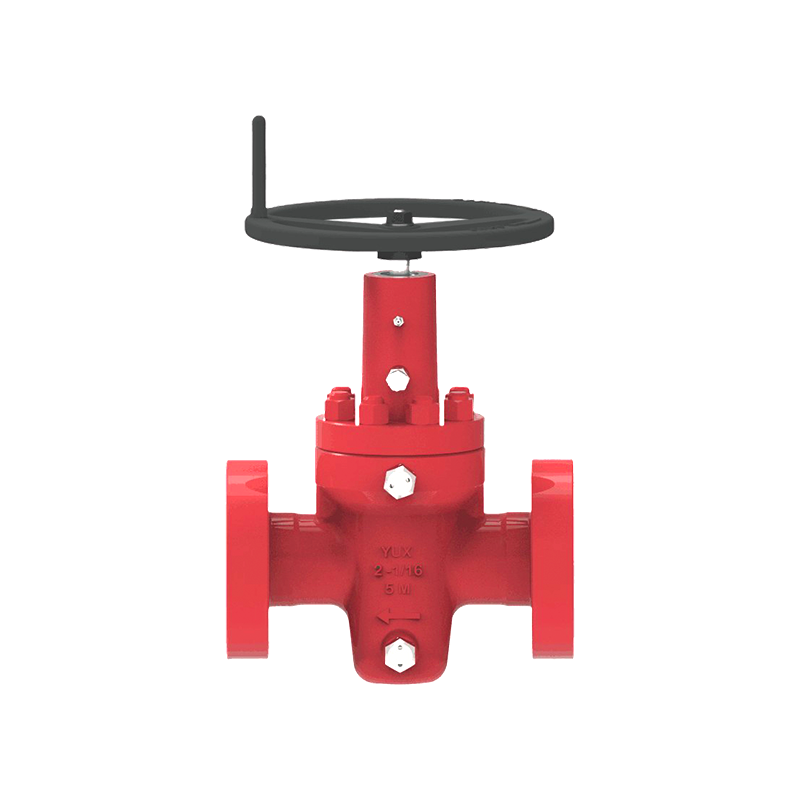
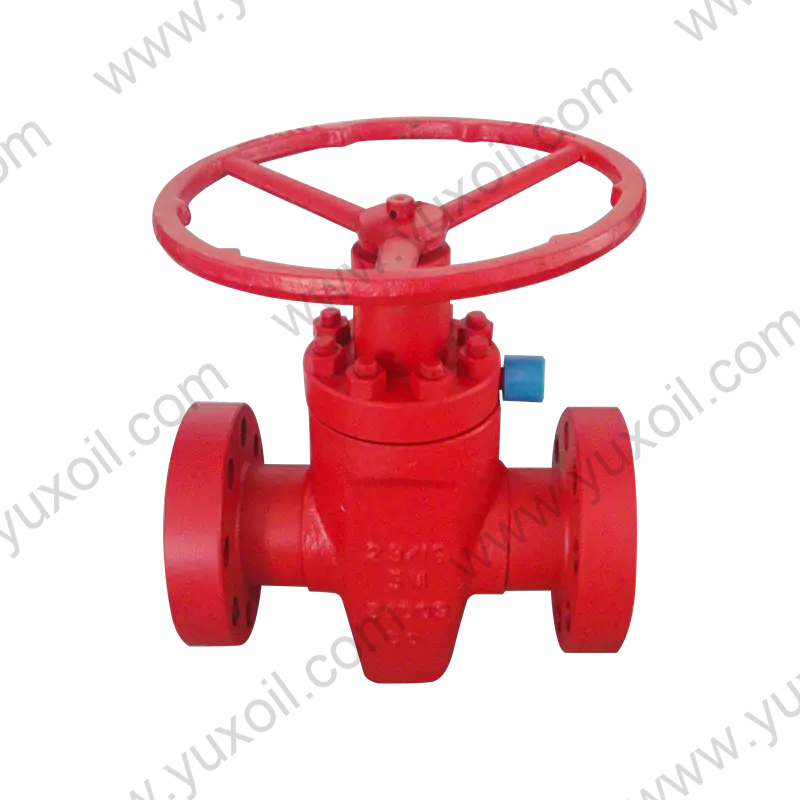
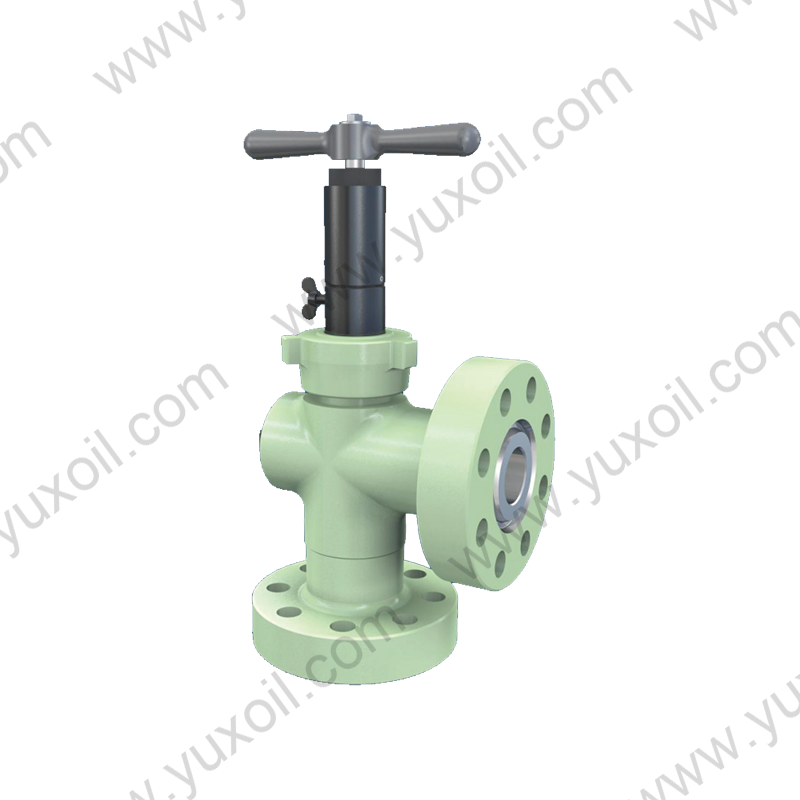
An oilfield plug valve is a quarter-turn rotary valve that uses a cylindrical or tapered plug with a through-bore to start, stop, or redirect the flow of oil, gas, produced water, and other wellstream fluids in upstream, midstream, and downstream applications. When the plug's bore aligns with the pipeline, flow passes freely; when rotated 90°, the solid body of the plug blocks flow completely. Plug valves are preferred in oilfield service because they provide a full-bore flow path, handle abrasive and viscous media, and deliver reliable shutoff under extreme pressure and temperature conditions where other valve types fail.
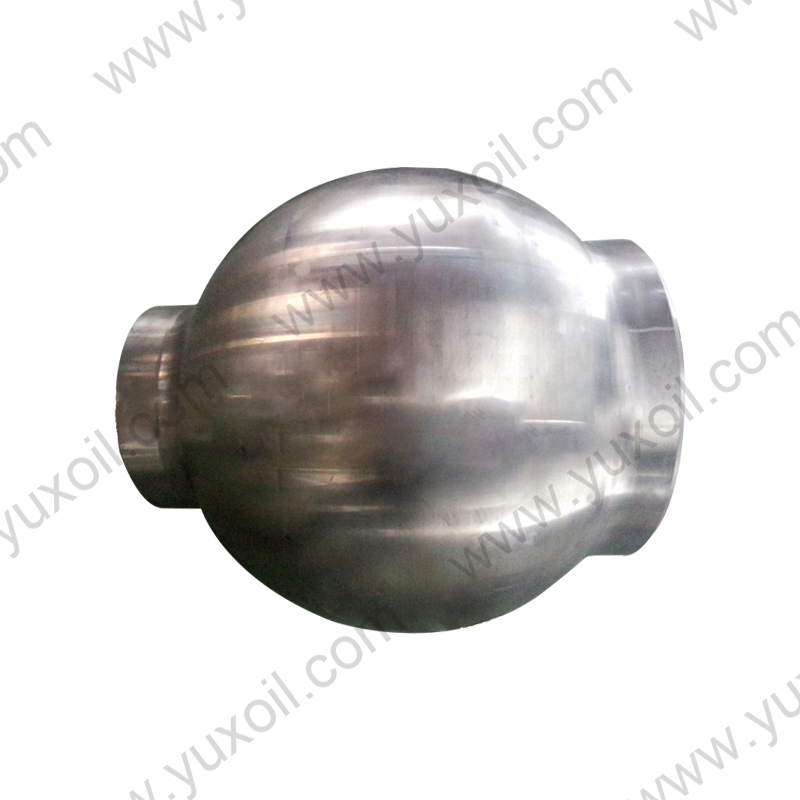
An oilfield plug valve consists of five core components working together to achieve flow control:
The operating principle is straightforward: the plug rotates exactly 90 degrees between fully open and fully closed. At 0°, the bore through the plug aligns with the pipeline bore and fluid flows with minimal restriction. At 90°, the solid wall of the plug faces the flow path and seals the line. This quarter-turn action makes plug valves significantly faster to operate than multi-turn gate valves, which can require 20 to 40 full handle rotations to open or close completely.
In oil and gas systems, plug valves are used to control flow in three distinct operational scenarios, each exploiting a different aspect of the plug's geometry:
The most common use. A two-port plug valve is installed inline and operated as a block valve — either fully open for production flow or fully closed for well isolation, pipeline maintenance, or emergency shutdown. In wellhead Christmas tree assemblies, plug valves serve as master valves capable of withstanding wellhead shut-in pressures exceeding 10,000 psi (690 bar) in high-pressure gas wells.
Three-way and four-way plug valves use a plug with multiple ports arranged in an L-shape, T-shape, or cross pattern. Rotating the plug directs flow from one inlet to one of several outlets — or simultaneously to multiple outlets — without requiring multiple separate valves. This is used extensively in:
Standard plug valves are not designed for throttling service because partial opening exposes the seating surfaces to erosive flow, rapidly degrading sealing performance. However, characterized plug valves — featuring a specially shaped port opening (V-port or contoured bore) — can provide controlled throttling with a defined flow characteristic. These are used in gas injection systems and chemical injection lines where precise flow modulation is required.
The sealing mechanism is the most critical differentiator between plug valve types, determining suitability for specific oilfield media, pressures, and temperatures.
The lubricated plug valve is the dominant design in upstream oilfield service. A specially formulated lubricant-sealant is injected under pressure through a fitting at the top of the stem and distributed through grooves machined into the plug surface. The lubricant serves three simultaneous functions: it seals the annular gap between plug and body, reduces operating torque, and protects metal surfaces from corrosion and erosion by abrasive particles.
Lubricated plug valves can handle pressures up to 15,000 psi (1,035 bar) and temperatures from -50°C to +260°C depending on the lubricant grade selected. They are the go-to choice for sour gas service (H₂S-containing fluids), high-sand production streams, and any application where the valve must remain operable after long periods of non-use.
Non-lubricated plug valves use an elastomeric or PTFE sleeve fitted between the plug and the body to provide sealing without injected lubricant. The sleeve deforms slightly under plug contact to create a leak-tight seal. These valves require no field lubrication maintenance and are well-suited to:
The sleeve material limits temperature range — PTFE sleeves are typically rated to 200°C maximum — and makes non-lubricated valves less suitable for high-abrasion service where sleeve wear becomes a maintenance issue.
The eccentric plug valve uses a half-plug or cam-action plug that swings away from the seat as it opens rather than rotating in contact with it. This dramatically reduces wear on the seating surface because the plug only makes contact at the fully closed position. Eccentric plug valves are used in abrasive slurry service, produced water with high solids content, and drilling mud systems where conventional plug-to-seat contact would cause rapid erosion.
Expanding plug valves use a mechanical mechanism to retract the plug away from the seats before rotation and re-engage the seats after rotation is complete. This eliminates sliding contact between the sealing surfaces entirely, providing double-block-and-bleed (DBB) capability in a single valve body. DBB is a mandatory requirement in many oilfield safety systems, pipeline isolation for maintenance, and subsea applications governed by API 6D and API 6A standards.
| Parameter | Typical Range | Governing Standard |
|---|---|---|
| Pressure rating | 150 to 15,000 psi (10–1,035 bar) | API 6A, API 6D, ASME B16.34 |
| Temperature range | -60°C to +345°C | API 6A temperature classes |
| Size range | ½ inch to 36 inches (DN 15–DN 900) | API 6D, ASME B16.10 |
| Body materials | ASTM A105, A182 F316, F51 Duplex | NACE MR0175 / ISO 15156 |
| Seat leakage class | API 598 Class I to Class VI | API 598, ISO 5208 |
| End connections | Flanged (RF, RTJ), butt-weld, threaded | ASME B16.5, API 6A |
| Actuation | Manual, pneumatic, hydraulic, electric | ISO 5211 actuator interface |
Plug valves appear at multiple points across the oil and gas production and processing chain, each location imposing different demands on the valve:
At surface wellheads, plug valves serve as master gate valves, wing valves, and kill valves on Christmas tree assemblies. API 6A-compliant plug valves at this location must withstand full shut-in wellhead pressure, potentially contain H₂S concentrations above 1,000 ppm, and remain operable after years of static service. Material requirements under NACE MR0175 are mandatory for sour service wells.
Multiport plug valves in production manifolds allow operators to route individual well streams to test separators, production separators, or injection systems without shutting in production. A single three-way plug valve replaces what would otherwise require two or three separate block valves and associated piping, reducing manifold footprint by up to 40% in compact platform installations.
In long-distance oil and gas pipelines, plug valves function as mainline block valves, scraper (pig) trap isolation valves, and pressure control station block valves. API 6D governs pipeline valve design in this application, requiring full-bore construction so that pipeline inspection tools (smart pigs) can pass through the valve without obstruction.
During drilling operations, plug valves are used in blowout preventer (BOP) choke and kill manifolds, mud return lines, and cementing operations. The ability to handle dense drilling mud, cement slurry, and abrasive cuttings-laden fluids at high pressure makes lubricated or eccentric plug valves the valve of choice over ball or gate valves in these services.
Subsea plug valves are installed on subsea Christmas trees, manifolds, and pipeline end terminations (PLETs) at water depths exceeding 3,000 meters in deepwater fields. These valves are hydraulically actuated from surface, require zero maintenance access for service life spanning 20–25 years, and must maintain sealing integrity under combined external hydrostatic pressure and internal wellbore pressure.
Ball valves have displaced plug valves in many general industrial applications due to lower torque requirements and simpler construction. However, plug valves retain significant advantages in specific oilfield conditions:
| Characteristic | Plug Valve | Ball Valve |
|---|---|---|
| Abrasive/sand-laden service | Excellent — lubrication flushes particles | Poor — seats erode rapidly |
| Sour gas (H₂S) service | Excellent with correct lubricant | Good with NACE-compliant materials |
| Multiport flow diversion | Available in 3- and 4-way configurations | Limited multiport options |
| Operating torque | Higher (especially at high pressure) | Lower |
| Double block and bleed | Single valve (expanding type) | Requires DBB-specific design |
| Maintenance in field | Lubricant injection without shutdown | Requires depressurization for seat service |
The ability to inject lubricant-sealant under pressure while the valve remains in service is a unique operational advantage of lubricated plug valves — it allows field technicians to restore sealing performance and reduce operating torque without taking the valve offline, a significant benefit in continuous production environments where any shutdown carries a direct revenue cost.
Oilfield plug valves must comply with a specific set of standards depending on their service location and application:
 No. 161, Yanhe Middle Road, Yanhe Town, Jianhu County, Yancheng City, Jiangsu Province, China
 +86-13961903990
 +86-515-86598285
 +86-515-86590688
Copyright © Jianhu Yuxiang Machinery Manufacturing Co., Ltd. All Rights Reserved.
 Login Wholesale High Pressure Wellhead/Drilling Equipment Manufacturer

 English
 русский
 Español