The Direct Answer: What Proper Installation Actually Requires
Properly installing an API 6A gate valve on a wellhead assembly means three things done in the correct sequence: verifying the ring gasket and flange face condition before makeup, achieving the correct stud bolt torque in a cross-pattern sequence to the API 6A Annex D specified values, and confirming pressure integrity with a post-installation low-pressure gas test before returning the well to service. Skip any one of these and you risk an uncontrolled wellbore leak — the leading cause of wellhead equipment failure during intervention.
The torque values are not one-size-fits-all: a 2-1/16 in. 5,000 psi WP flange requires approximately 150–200 ft-lb on 3/4 in. B7 studs, while a 7-1/16 in. 10,000 psi WP flange can require 600–900 ft-lb on 1-3/8 in. studs — always verify against the manufacturer's torque chart and the applicable API 6A Annex D table.
Pre-Installation Inspection: What to Check Before Any Bolt Is Tightened
Most installation failures originate before the first wrench turn. Carry out all of the following before positioning the valve:
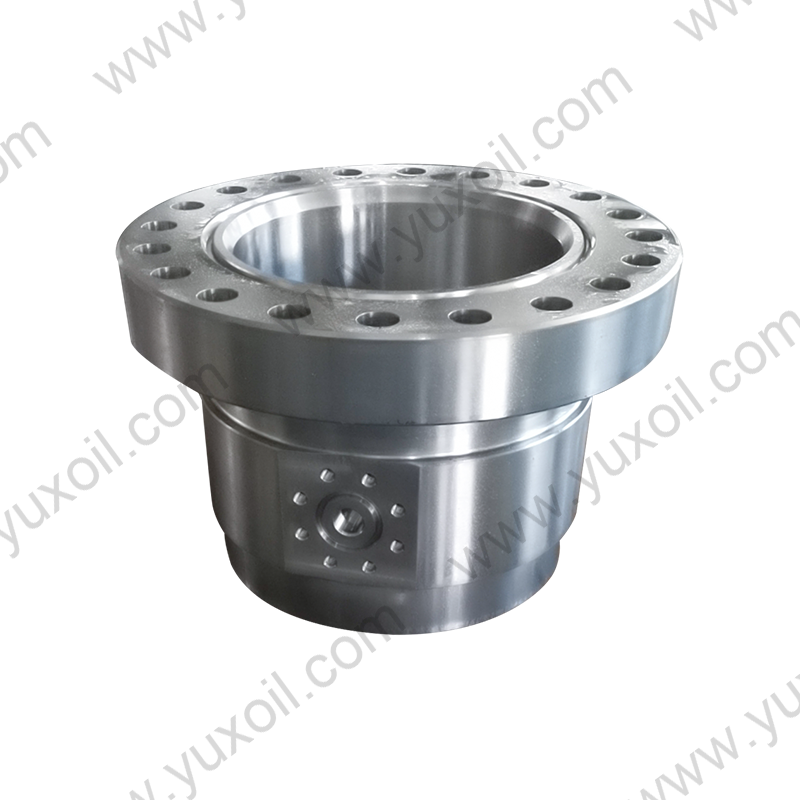
Ring groove and flange face condition
- Inspect the RX or BX ring groove using a ring groove gauge. Groove depth and width tolerances are specified in API 6A Table E.1 — a groove worn beyond tolerance will not seal regardless of torque applied
- Look for radial scratches, pitting, or corrosion on the sealing surface. Any scratch deeper than 0.031 in. (0.8 mm) or running radially across the groove is a rejection criterion — do not attempt to seal over it
- Confirm the ring groove designation matches the ring gasket: RX-23, BX-154, and similar designations are not interchangeable even when the flange bore looks similar
- Never reuse a ring gasket — API 6A expressly prohibits it. A used ring is deformed to the previous groove geometry and will not achieve the required line contact on a different (or even the same) flange
Stud and nut condition
- Verify stud bolt material (ASTM A193 B7 is standard for most service; B7M required for sour service per NACE MR0175) and nut grade (A194 2H for B7 studs)
- Check thread condition — damaged threads cause false torque readings. A bolt that seizes at 30% of target torque due to galling will appear fully torqued on the wrench but will be under-loaded on the joint
- Apply the correct thread lubricant: Molykote or anti-seize with a known nut factor (K). The API 6A Annex D torque tables assume a specific lubrication condition — using dry or zinc-based lubricant instead of molybdenum-based will shift actual bolt load by ±20%, invalidating the table value
Valve orientation and bore alignment
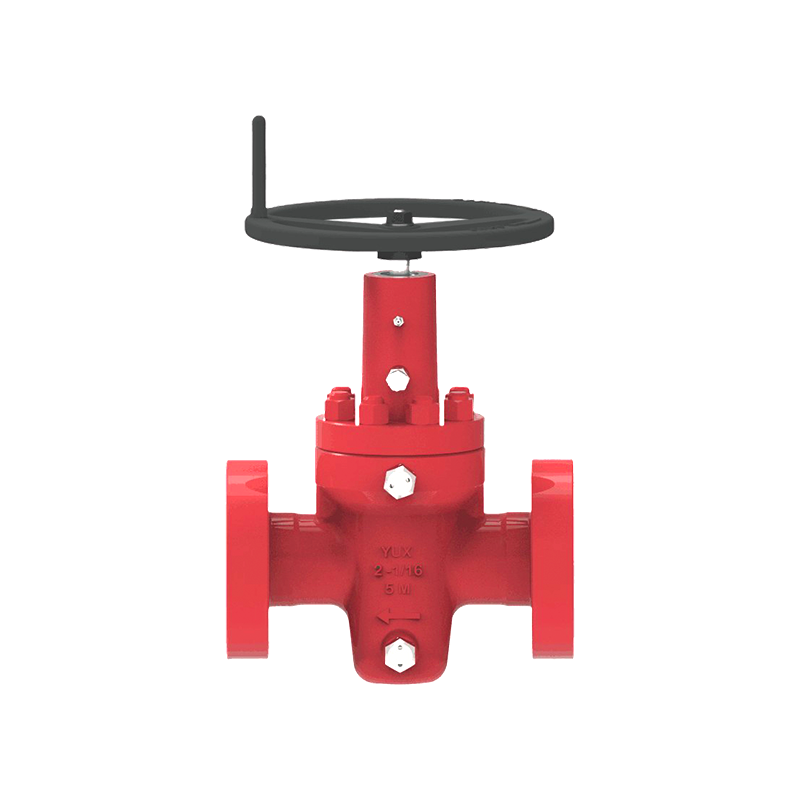
- Confirm the valve flow arrow or body marking aligns with the intended flow direction — API 6A slab gate valves are bidirectional in most pressure classes, but expanding gate designs may be unidirectional
- Check that the valve bore matches the wellhead bore — a mismatch as small as 1/8 in. can restrict wireline tools and create turbulence that accelerates erosion in high-rate gas wells
- Verify the valve is in the fully open position before installation to prevent gate-to-flange contact damage during makeup
Torque Sequence: The Cross-Pattern Method and Why It Matters
Incorrect torque sequencing is the single most common cause of ring gasket leaks on new installations. Tightening bolts in a circular sequence creates an uneven load that cocks the flange, crushing one side of the ring gasket while leaving the opposite side unseated.
The required three-pass cross-pattern procedure
- Hand-tighten all nuts to snug (finger-tight plus one full turn with a wrench), working in a star/cross pattern around the flange. This seats the ring gasket evenly in both grooves before any load is applied
- First torque pass at 30–50% of final target value, again in cross pattern. For an 8-bolt flange, the sequence is 1→5→3→7→2→6→4→8. Confirm the flange gap is closing uniformly — if one quadrant is closing faster, back off and redistribute
- Second torque pass at 75–80% of final value, same cross pattern. Check that the ring gasket is not extruding beyond the groove face — extrusion indicates over-compression or a wrong-size ring
- Final torque pass at 100% of target value, cross pattern. Then perform one full clockwise circular pass (all bolts, in order) to confirm no bolt has relaxed — this is the "verification pass," not an additional torque increment
For flanges with 12 or more bolts, split the flange into quadrants and complete each quadrant before moving to the next, still following the cross-pattern within each quadrant.
Reference torque values by flange size and pressure class
Indicative torque ranges for API 6A flanges with B7 studs and molybdenum-based lubricant. Always verify against manufacturer's torque table.
| Flange Size |
Pressure Class |
Stud Size |
Bolt Count |
Target Torque (ft-lb) |
| 2-1/16 in. |
5,000 psi |
3/4 in. |
8 |
150–200 |
| 2-1/16 in. |
10,000 psi |
7/8 in. |
8 |
250–320 |
| 3-1/8 in. |
5,000 psi |
7/8 in. |
8 |
220–280 |
| 3-1/8 in. |
10,000 psi |
1 in. |
8 |
350–430 |
| 4-1/16 in. |
5,000 psi |
1 in. |
8 |
300–380 |
| 4-1/16 in. |
10,000 psi |
1-1/8 in. |
8 |
480–580 |
| 7-1/16 in. |
5,000 psi |
1-1/8 in. |
12 |
400–500 |
| 7-1/16 in. |
10,000 psi |
1-3/8 in. |
12 |
600–900 |
Post-Installation Pressure Testing Requirements
API 6A requires a two-stage pressure test after any flange makeup on wellhead equipment. Do not skip the low-pressure stage — it is more sensitive to small leaks than the high-pressure test and catches the majority of ring gasket defects.
Low-pressure gas test (mandatory first stage)
- Test medium: nitrogen or clean dry air
- Test pressure: 200–300 psi (1.4–2.1 MPa) per API 6A Section 11
- Hold time: minimum 15 minutes with no visible pressure decay on a calibrated gauge (±2% full-scale accuracy required)
- Apply leak detection fluid (soapy water or proprietary solution) to all ring grooves and stud bolt areas — any bubble formation is a failure
High-pressure test (second stage)
- Test pressure: rated working pressure (RWP) of the assembly — not 1.5× RWP, which is the factory shell test; field tests are conducted at RWP
- Test medium: inhibited water or hydraulic fluid for field tests where gas testing at RWP presents a safety hazard
- Hold time: minimum 15 minutes with zero pressure decay and no visible leaks
- Document gauge readings at start and end of hold period — this record is required for API 6A compliance documentation and is often audited by operators and regulators
If a leak is detected
Depressurize fully before any remedial action. Do not attempt to torque bolts under pressure — this is both ineffective (the gasket is already set) and a serious safety hazard. Break out the flange, replace the ring gasket, re-inspect the groove, and restart the makeup procedure from the beginning.
Hydraulic Torque Wrench vs. Manual: Which to Use and When
For flanges above 3-1/8 in. or pressure classes above 5,000 psi, manual torque wrenches become impractical and inaccurate at the required torque values. The decision rule is straightforward:
Torque tool selection guide for API 6A gate valve flange makeup
| Condition |
Recommended Tool |
Accuracy |
Notes |
| Target torque < 300 ft-lb |
Calibrated click-type torque wrench |
±4% |
Calibrate every 6 months or after a drop |
| Target torque 300–600 ft-lb |
Electronic torque wrench or small hydraulic unit |
±3% |
Electronic models log data for compliance records |
| Target torque > 600 ft-lb |
Hydraulic torque wrench (square drive or low-profile) |
±3% |
Requires calibrated pump; verify pump gauge accuracy before use |
| Sour service or HPHT |
Hydraulic wrench with electronic data logging |
±2% |
Torque record required for regulatory compliance |
Impact wrenches are never acceptable for final torque on API 6A flanges — they cannot be controlled to the precision required and frequently over-torque the studs, yielding the threads or stretching the bolt past its elastic limit, which reduces actual clamp load below the target value.
Special Considerations for Sour Service and HPHT Installations
Standard installation procedures require several modifications when working in H₂S-bearing or high-pressure/high-temperature environments:
- Stud bolt hardness verification: NACE MR0175 limits B7M studs to a maximum hardness of 22 HRC. Even a single out-of-spec stud can initiate sulfide stress cracking (SSC) under wellbore H₂S partial pressures above 0.05 psia — verify hardness with a portable Rockwell tester before installation if MTRs are not available on-site
- Ring gasket material upgrade: standard soft iron rings are insufficient for sour service above certain H₂S concentrations. Specify Inconel 625 or 316 SS rings per the valve manufacturer's recommendation for the specific H₂S partial pressure and temperature combination
- Thermal relaxation re-torque: for HPHT installations where the first operating temperature cycle will exceed 200°F (93°C), schedule a re-torque of all flange bolts after the first thermal cycle. Bolt load can drop 10–15% after the initial heat soak due to gasket creep and bolt relaxation — this is not a failure, it is an expected and manageable phenomenon
- Documentation requirements: regulatory bodies in UKCS, US GOM, and most Middle Eastern jurisdictions require a signed installation record including stud serial numbers or heat numbers, lubricant batch, torque wrench calibration certificate number, and witnessed test data for any HPHT or sour service wellhead makeup
Most Common Installation Errors and How to Avoid Them
- Wrong lubricant or no lubricant: using SAE 30 motor oil instead of moly-based anti-seize shifts the nut factor K from ~0.12 to ~0.18, meaning the same wrench torque delivers 33% less bolt load than the table assumes. Always use the lubricant specified in the torque table header
- Circular torque sequence: tightening bolts 1-2-3-4-5-6-7-8 in order around the flange produces a flange gap that is 0.010–0.020 in. narrower on the first-tightened side, permanently cocking the ring gasket
- Reusing a ring gasket "just this once": a deformed ring may hold pressure initially but will relax within the first few thermal or pressure cycles. The cost of a ring gasket (typically $15–$150 depending on size and material) is negligible compared to the cost of an unplanned workover
- Skipping the low-pressure leak test: high-pressure water tests can mask small leaks that will weep gas in service. The low-pressure nitrogen test at 200–300 psi with leak detection fluid is more sensitive to small defects than any liquid test at high pressure
- Using an uncalibrated torque wrench: a click-type wrench that has been dropped even once may read 15–20% high, making it impossible to achieve actual target bolt load. Calibration stickers do not survive drops — verify calibration with a torque analyzer before any critical makeup


 Home / News / Industry News / How Do You Properly Install and Torque an API 6A Gate Valve on a Wellhead Assembly?
  2026.05.18
 Industry News
 No. 161, Yanhe Middle Road, Yanhe Town, Jianhu County, Yancheng City, Jiangsu Province, China
  +86-13961903990
  +86-515-86598285
  +86-515-86590688
  Login Wholesale High Pressure Wellhead/Drilling Equipment Manufacturer
 English
 русский
 Español