-

+86-13961903990

+86-13961903990
Industry News
 Home / News / Industry News / What Is an API 6A Gate Valve and How Does It Meet High-Pressure Wellhead Requirements?
  2026.06.22
 Industry News
Content
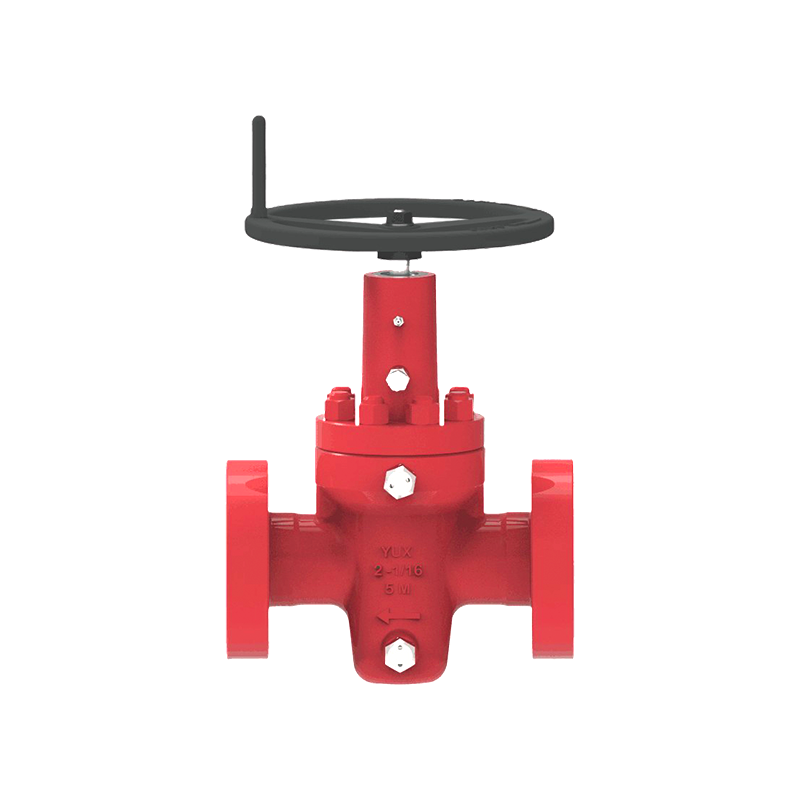
An API 6A gate valve is a quarter-turn valve manufactured and tested in strict conformance with the American Petroleum Institute's Specification 6A — the governing standard for wellhead and Christmas tree equipment used in oil and gas production. In short: it is the industry's baseline safety and performance benchmark for any valve deployed at the wellhead, where pressures can exceed 20,000 psi and fluids may be toxic, abrasive, or corrosive.
API Specification 6A (currently in its 21st edition) defines mandatory requirements across design, materials, manufacturing, testing, and quality management for surface wellhead and Christmas tree equipment. For gate valves specifically, the standard covers:
Unlike API 6D (pipeline valves) or ASME B16.34 (general industrial valves), API 6A is the only standard purpose-built for wellhead pressures, bore geometry, and the API ring-joint (RTJ) flange connection system used on Christmas trees and tubing heads.
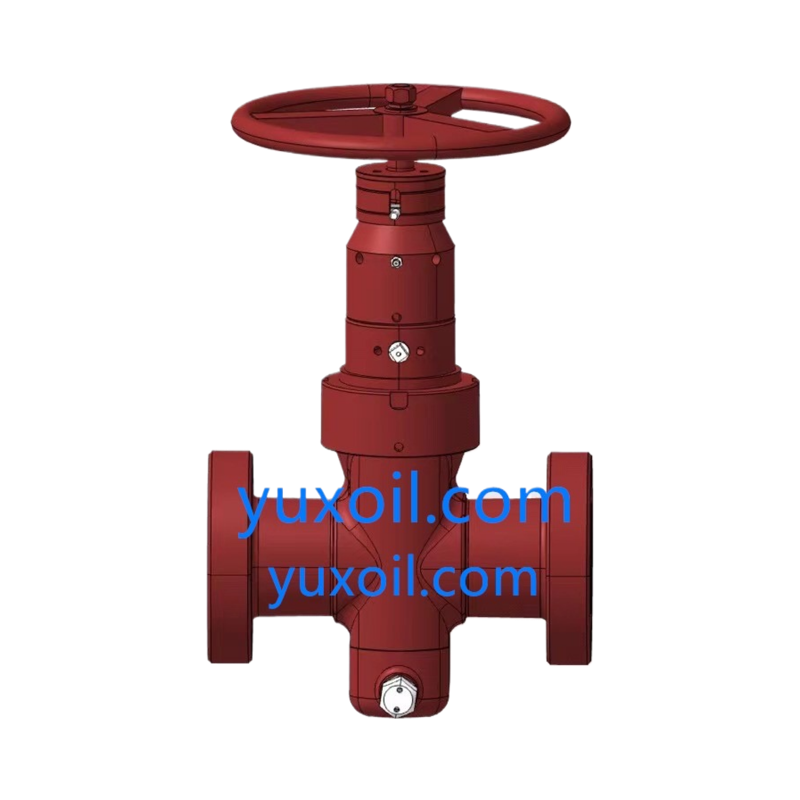
A gate valve controls flow by raising or lowering a solid gate (the "slab" or "expanding" gate) perpendicular to the flow path. This geometry makes it inherently suited for high-differential-pressure shut-off because the line pressure itself helps energize the downstream seat seal. Key design features that enable wellhead performance include:
Most API 6A gate valves use an expanding gate assembly — a two-piece gate-and-segment that wedges outward under actuation load, forcing each seat hard against its sealing surface. This achieves bi-directional, double-block-and-bleed (DBB) isolation, a key requirement on wellheads where both upstream and downstream isolation must be independently verified. Slab-gate designs are simpler but typically limited to 5,000 psi working pressure in wellhead service.
Elastomeric seats fail above ~350 °F and degrade in H₂S or CO₂-rich environments. API 6A gate valves for high-pressure service rely on metal-to-metal seat sealing, with seat contact surfaces typically hardened to 55–60 HRC via tungsten carbide or Stellite overlays. This eliminates temperature and chemical limits on the primary seal while still meeting the ≤0 cc/min (gas) seat leak allowance under PR2 testing.
The stem seal must contain wellbore pressure while allowing manual or actuated stem movement. API 6A gate valves use pressure-energized chevron or lip-seal packing stacks that tighten as upstream pressure increases — the opposite of a conventional gland packing that can leak under shock-load pressure surges. A secondary back-seat provides a final barrier if the primary packing fails, allowing safe packing replacement under live well conditions.
The table below summarizes the most common API 6A gate valve configurations specified by operators and procurement teams:
| Working Pressure (psi) | Typical Bore Sizes (inches) | End Connection | Common Application |
|---|---|---|---|
| 3,000 | 1 13/16 – 7 1/16 | API RTJ or Flanged | Low-pressure gas wells, surface pipelines |
| 5,000 | 1 13/16 – 7 1/16 | API RTJ Flanged | Conventional oil wells, tubing head spools |
| 10,000 | 1 13/16 – 4 1/16 | API RTJ Flanged | High-pressure gas wells, Christmas trees |
| 15,000 | 1 13/16 – 3 1/8 | API RTJ Flanged | HPHT wells, deepwater Christmas trees |
| 20,000 | 1 13/16 – 2 9/16 | API RTJ Flanged | Ultra-HPHT exploration wells |
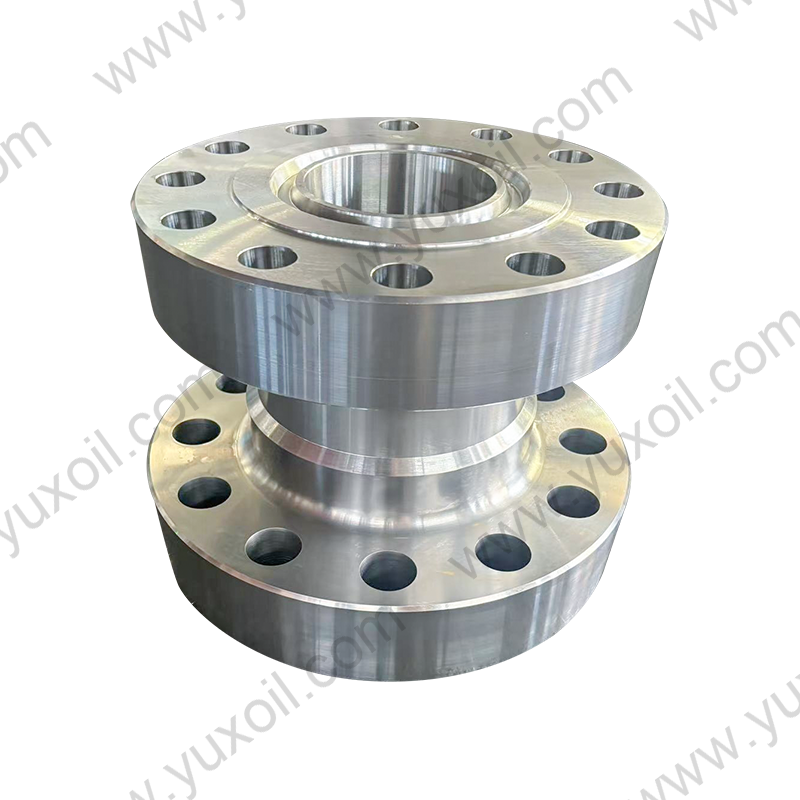
The API ring-joint (RTJ) flange connection is a defining feature: the grooved RX or BX ring seal is machined to API 6A dimensional tolerances and creates a metal-to-metal pressure-energized seal that tightens as wellbore pressure rises — fundamentally different from ASME raised-face flanges sealed with spiral-wound gaskets.
Hydrogen sulfide (H₂S) is present in a large proportion of global reservoirs and causes sulfide stress cracking (SSC) in high-strength steels — a catastrophic failure mode that can destroy a valve body within hours at wellhead pressures. API 6A Material Class HH specifies:
For CO₂-rich or chloride environments (common in offshore and deepwater wells), operators specify CRA (corrosion-resistant alloy) trim — Inconel 625 or Alloy 825 — with full CRA weld overlay on wetted body surfaces. This adds 20–35% to valve cost but eliminates the risk of pitting corrosion perforating the valve body over a 20-year field life.
A common and costly mistake is specifying API 6D gate valves on wellhead equipment. The two standards serve different systems and are not interchangeable:
| Parameter | API 6A Gate Valve | API 6D Gate Valve |
|---|---|---|
| Primary application | Wellhead & Christmas tree | Transmission pipeline |
| Max working pressure | 20,000 psi | ~2,220 psi (Class 1500) |
| End connection | API RTJ flange (BX/RX ring) | ASME/ANSI flange (RF or RTJ) |
| Seat sealing direction | Bi-directional (DBB) | Typically uni-directional |
| Quality system | PSL 1–4 with traceability | ISO 9001 / API Q1 |
| Sour service designation | Material Class EE / FF / HH | Supplemental "S" designation |
The Product Specification Level (PSL) defines the minimum quality and testing rigor. Operators must specify the correct PSL in their purchase orders — PSL 1 valves are not suitable for sour or HPHT service, even if the pressure rating matches.
Gate valves at 10,000–20,000 psi working pressure require substantially higher stem torques than low-pressure industrial valves. A 3 1/8-inch bore, 15,000-psi gate valve can require 800–1,200 ft-lb of operating torque. Operators choose actuation based on response time, power availability, and safety system integration:
When preparing a purchase order or data sheet, engineers must define all of the following parameters to ensure the valve meets well conditions and regulatory requirements:
An API 6A gate valve is not simply a "heavy-duty" version of a standard industrial valve — it is a purpose-engineered, rigorously tested pressure-containment device built to survive the most demanding conditions in upstream oil and gas production. The standard's layered requirements — pressure class, temperature class, material class, PSL, and PR — ensure that every valve leaving the manufacturer's facility has been proven capable of sealing wellbore fluids at working pressures up to 20,000 psi without failure.
For engineers and procurement professionals, the critical takeaway is specificity: a valve order that does not define all six or seven specification parameters is incomplete and risks delivering equipment that technically meets "API 6A" but is wholly unsuitable for the actual well conditions. Getting the specification right at the purchase order stage is significantly less expensive than a wellhead valve failure in service.
 No. 161, Yanhe Middle Road, Yanhe Town, Jianhu County, Yancheng City, Jiangsu Province, China
 +86-13961903990
 +86-515-86598285
 +86-515-86590688
Copyright © Jianhu Yuxiang Machinery Manufacturing Co., Ltd. All Rights Reserved.
 Login Wholesale High Pressure Wellhead/Drilling Equipment Manufacturer

 English
 русский
 Español