-

+86-13961903990

+86-13961903990
Industry News
 2026.03.02
 Industry News
Content
The primary distinction between API 6A and API 6D gate valves begins with their operational environment. While both are used to control the flow of hydrocarbons, they occupy different segments of the energy value chain. Understanding the “service location” is the first step in ensuring the safety and longevity of your infrastructure.
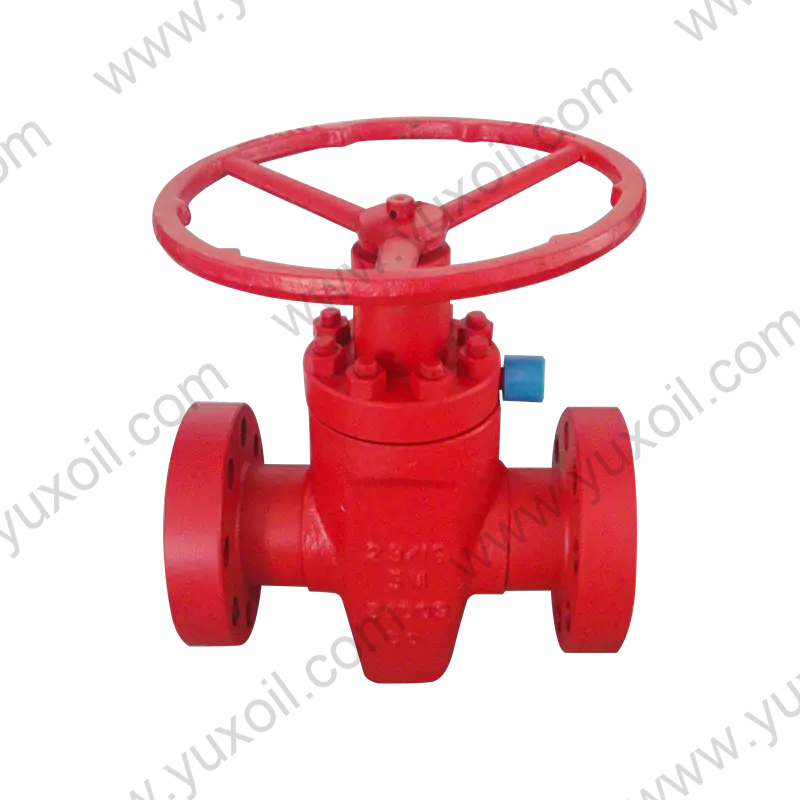
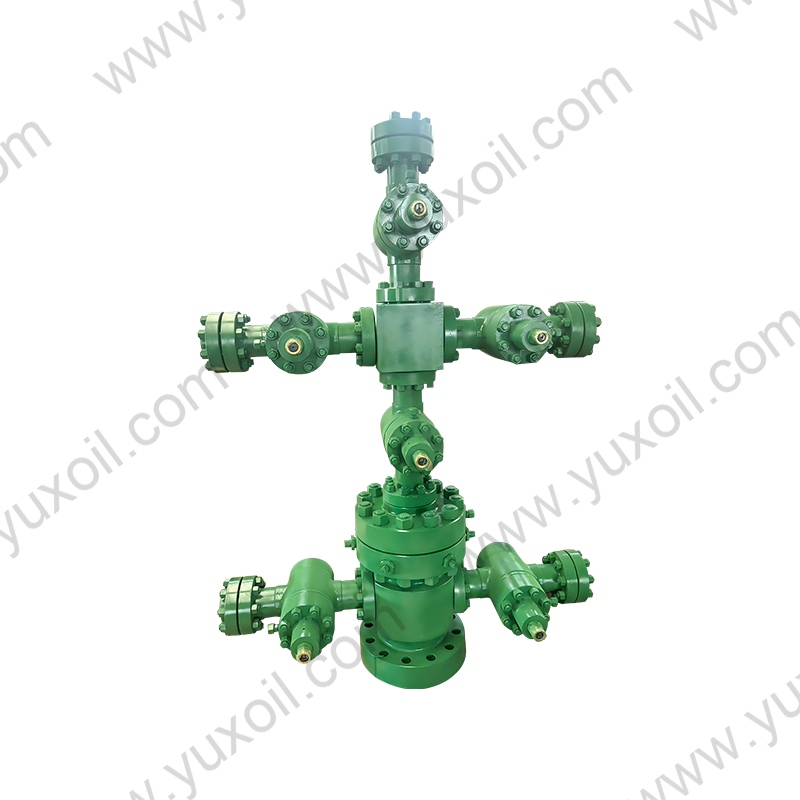
The API 6A Gate Valve is specifically engineered for upstream applications, primarily within wellhead and Christmas tree equipment. These valves are the first line of defense, installed where the raw reservoir fluid exits the earth. Because they deal with “un-killed” well pressure, they must withstand high-velocity fluids, abrasive sand, and highly corrosive gases like hydrogen sulfide () and carbon dioxide (). The API 6A standard is governed by extremely tight tolerances because a failure at the wellhead can result in a catastrophic blowout, environmental disaster, and massive financial loss.
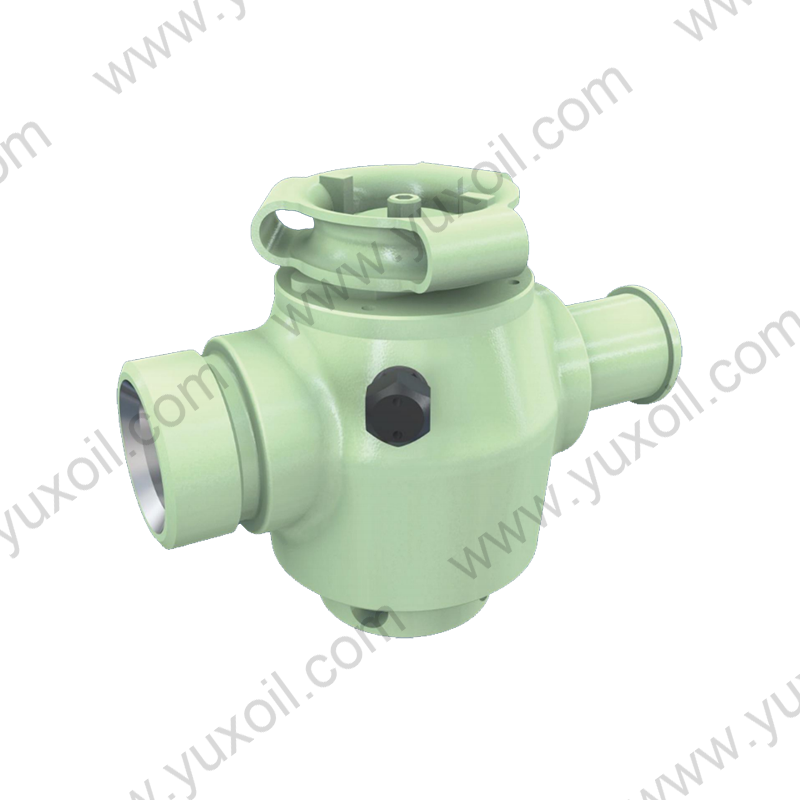
In contrast, API 6D is the standard for pipeline valves. These are found in the midstream and downstream sectors, where processed or semi-processed oil and gas are transported over long distances. While an API 6D valve can be massive in size (up to 60 inches or more), it usually operates under more stable conditions than a wellhead valve. The fluid is typically filtered or “cleaner,” and the pressure surges are generally more predictable. The focus of API 6D is on long-term sealing integrity and ease of pigging (cleaning the pipeline), which is why full-bore designs are a staple in this category.
When you compare an API 6A high-pressure gate valve to an API 6D pipeline valve, the technical specifications reveal why these two standards are not interchangeable. The engineering philosophy behind each is tailored to the specific risks of the application.
API 6A valves are built to handle extreme pressures, with standard ratings of 2,000, 3,000, 5,000, 10,000, 15,000, and even 20,000 psi. These are “working pressures,” and the safety factors required for certification are significantly higher than those in general industrial standards. On the other hand, API 6D valves follow ASME pressure classes (Class 150 through 2500). While a Class 2500 valve is robust, it generally tops out at approximately 6,250 psi—less than half the capacity of a high-tier API 6A valve.
The internal design of an API 6A Gate Valve often utilizes a Slab Gate or a Mechanical Expanding Gate. These designs prioritize a metal-to-metal seal between the gate and the seat to resist the “sand-blasting” effect of raw well fluids. API 6D valves frequently feature Double Block and Bleed (DBB) capabilities. This allows the operator to vent the pressure in the valve cavity to verify that the seals are holding on both the upstream and downstream sides—a critical safety feature for pipeline maintenance that is less common in standard API 6A wellhead configurations.
| Feature | API 6A Gate Valve | API 6D Gate Valve |
|---|---|---|
| Primary Location | Wellheads, Christmas Trees, Manifolds | Transmission Pipelines, Pump Stations |
| Pressure Rating Method | Specific API 6A PSI Ratings (e.g., 10K, 15K) | ASME Class (e.g., 600, 900, 1500, 2500) |
| Standard Testing Media | Water or Nitrogen (PSL 3G) | Water and Air |
| Common Bore Sizes | 1-13/16" to 11" (standard) | 2" to 60" (standard) |
| Design Focus | Erosion resistance & high-pressure containment | Flow efficiency & pipeline pigging |
The material science behind a sour service gate valve compliant with API 6A is one of the most complex areas of oilfield engineering. Because these valves are exposed to raw chemicals straight from the reservoir, the standard defines specific Material Classes to prevent metallurgical failure.
API 6A categorizes valves by their resistance to corrosion and temperature. For instance, Material Class DD-NL signifies that the valve is suitable for sour service and complies with NACE MR0175/ISO 15156. This means every metallic component, from the gate to the body bolts, must be processed to resist sulfide stress cracking (SSC). While API 6D also has provisions for sour service, the level of volumetric testing and chemical analysis for an API 6A valve is far more exhaustive.
A unique aspect of API 6A is the Product Specification Level (PSL).
In procurement and field operations, “close enough” is never sufficient. A common mistake is assuming that an API 6D valve can be used at a wellhead simply because its ASME pressure rating matches the well’s pressure. This can lead to catastrophic failure due to differences in flange geometry and bolting requirements.
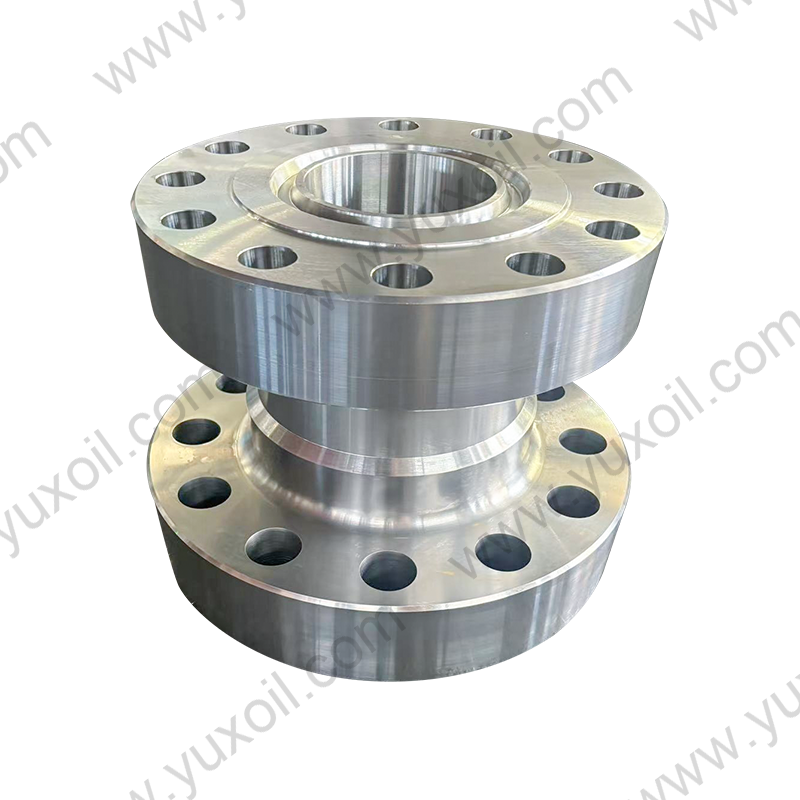
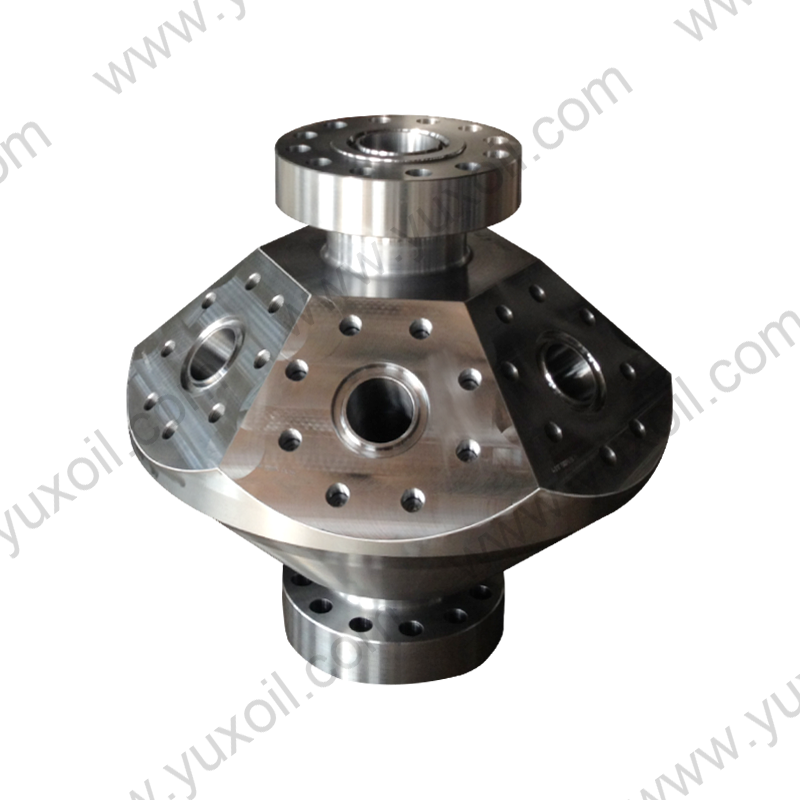
API 6A flanges, specifically Type 6B and 6BX, are designed with different ring groove dimensions than the standard ASME B16.5 flanges used for API 6D valves. API 6A flanges are thicker and use specialized ring-type joints (RTJ) like the BX ring gasket, which is designed for pressures up to 20,000 psi. Attempting to mate an API 6D valve to an API 6A wellhead often results in a mismatch where the seal cannot be energized, leading to immediate leaks upon pressurization.
An API 6A manual gate valve is designed to be field-serviceable and endure thousands of cycles in abrasive environments. Its internal components are often cladded with Inconel 625 or hard-faced with Stellite to resist erosion. API 6D valves, while highly durable, are designed for infrequent cycling. Using a pipeline valve in a wellhead manifold where it is opened and closed daily under high-velocity flow will likely lead to “wiredrawing” or seat erosion within weeks, necessitating an expensive workover or replacement.
1. Is an API 6A gate valve always more expensive than API 6D?
Generally, yes. Due to the higher pressure ratings, more stringent testing (PSL levels), and specialized materials (like 4130 alloy steel), an API 6A valve will carry a higher price tag than a similarly sized API 6D valve.
2. Can I use API 6D valves in a Christmas Tree assembly?
No. API 6D valves are not certified for wellhead service. Regulatory bodies and insurance providers require API 6A certified equipment for all well-control applications.
3. What is the difference between a Slab Gate and an Expanding Gate in API 6A?
A Slab Gate relies on high fluid pressure to push the gate against the downstream seat to create a seal. An Expanding Gate uses a mechanical wedge to force the gate segments against both seats, providing a positive seal even at very low pressures.
4. Does API 6A cover actuators?
Yes. API 6A includes specifications for both manual and actuated valves. When a gate valve is used as a Surface Safety Valve (SSV), it must be equipped with a fail-safe actuator (usually hydraulic or pneumatic) that meets API 6A Annex F requirements.
 No. 161, Yanhe Middle Road, Yanhe Town, Jianhu County, Yancheng City, Jiangsu Province, China
 +86-13961903990
 +86-515-86598285
 +86-515-86590688
Copyright © Jianhu Yuxiang Machinery Manufacturing Co., Ltd. All Rights Reserved.
 Login Wholesale High Pressure Wellhead/Drilling Equipment Manufacturer

 English
 русский
 Español