-

+86-13961903990

+86-13961903990
Industry News
 Home / News / Industry News / How to Select the Right Casing Spool Tees and Crosses Frac Head for Sour Service?
  2026.02.23
 Industry News
Content
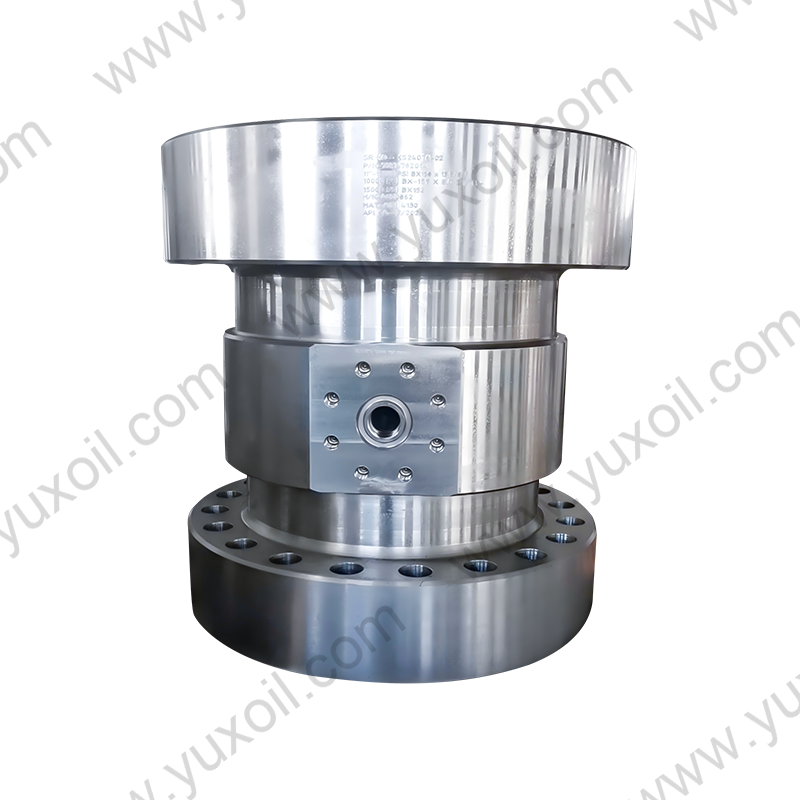
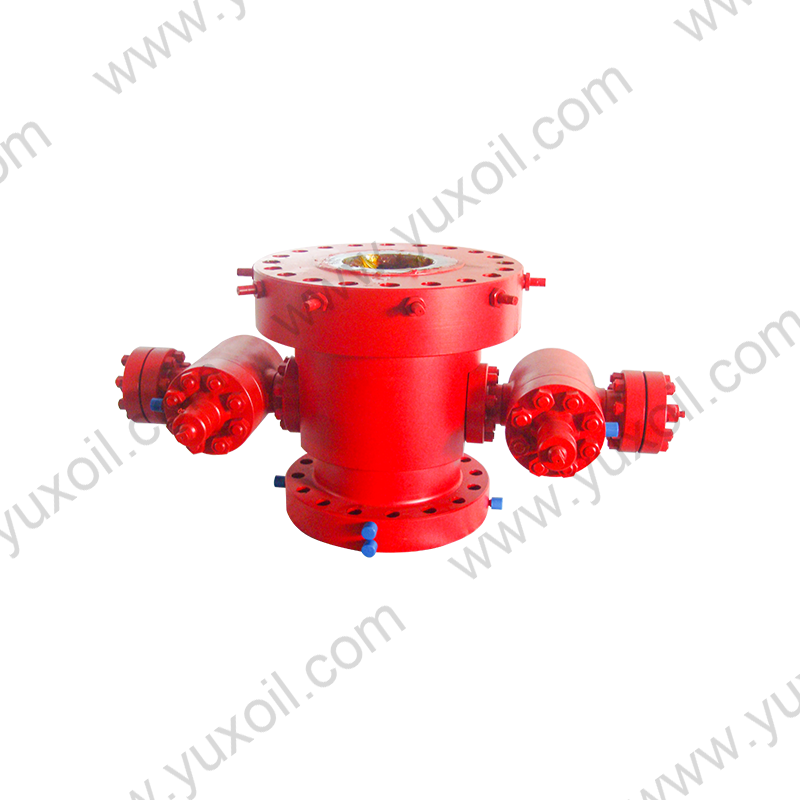
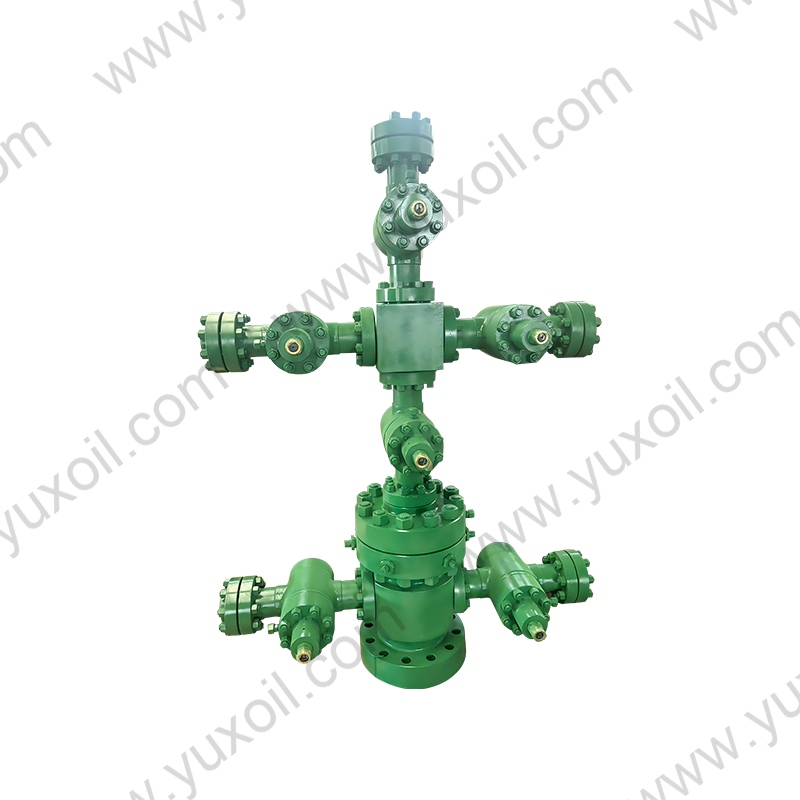
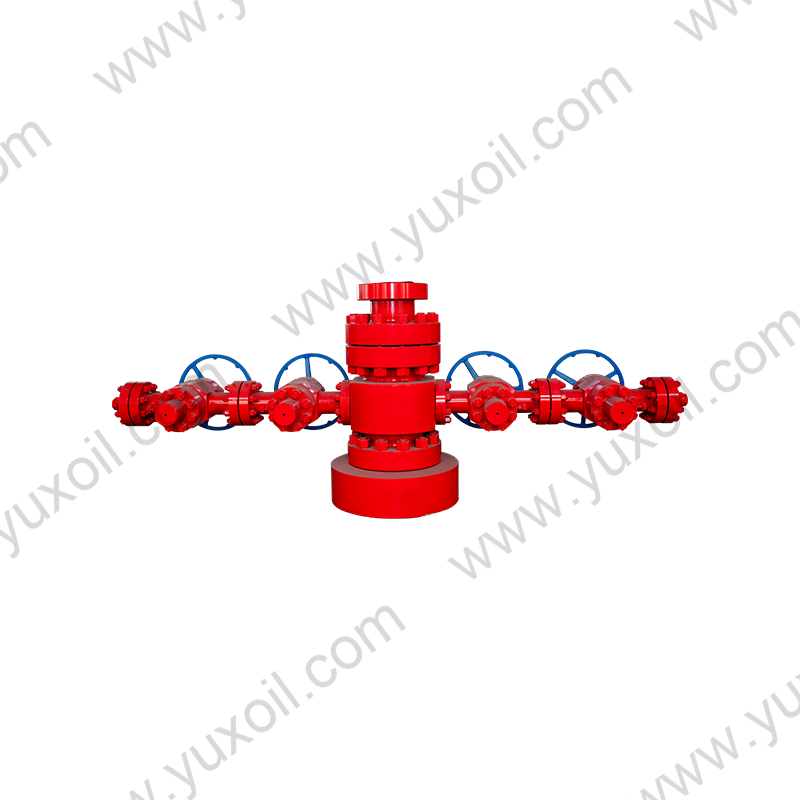
Hydraulic fracturing in wells containing Hydrogen Sulfide () is one of the most demanding tasks in oil and gas development. In these “sour service” environments, selecting the right Casing Spool, Tees, Crosses, and Frac Head assembly requires moving beyond basic pressure ratings. Without considering specific metallurgical properties, standard carbon steel equipment can suffer catastrophic Sulfide Stress Cracking (SSC) in a very short time. To ensure operational safety, minimize Non-Productive Time (NPT), and meet strict regulatory requirements, engineering teams must evaluate equipment based on material science, manufacturing standards, and advanced sealing technologies.
Hydrogen Sulfide is not only highly toxic; its corrosive effect on metal is uniquely deceptive. In a sour environment, moisture reacts with to release atomic hydrogen, which easily penetrates the lattice structure of high-strength steel, causing the material to become brittle.
When selecting a Casing Spool Tees and Crosses Frac Head, it is mandatory to ensure the supplier provides material certifications compliant with top international specifications. If these two standards cannot be verified, the equipment poses an unacceptable operational risk.
This is the globally recognized “gold standard” for material selection in sour environments. It defines the specific metallurgical indicators that metallic components must meet when in contact with -bearing fluids.
API 6A categorizes equipment into different material classes based on the corrosivity of the fluid. For sour fracturing operations, buyers should focus on the following:
To visually demonstrate the technical differences, we have compiled the following table as a reference for engineering selection:
| Technical Feature | Standard Service (General) | Sour Service (H2S Environment) | Selection Priority |
|---|---|---|---|
| Base Material | AISI 4130 / 4140 Alloy Steel | NACE Compliant 4130 Steel | Chemical Stability |
| Max Hardness | No strict limit (often >22 HRC) | Strictly 22 HRC | SSC Prevention |
| Bore Protection | Standard Machined Surface | Optional Inconel 625 Cladding | Erosion/Corrosion Balance |
| Sealing Material | Nitrile (NBR) | Viton (FKM) / FFKM | Gas Permeation Resistance |
| API PSL Level | PSL 1 or PSL 2 | PSL 3 or PSL 3G (Gas Tested) | Enhanced NDT Testing |
In ultra-high-pressure fracturing tasks, standard component stacking may not meet safety demands. Modern Frac Head designs have evolved toward integration and high-performance coatings.
In extremely aggressive sour wells, manufacturers utilize a “Weld Overlay” or “Cladding” process. A layer of nickel-based alloy, approximately 3mm thick, is welded into the seal pockets of the Casing Spool and the central flow path of the Frac Head.
For sour service, the highest principle of engineering design is to minimize the number of potential leak paths.
According to NACE MR0175, if the partial pressure of in the gas phase exceeds 0.05 psi, the well is defined as “Sour.” Even at low concentrations, high pressure allows hydrogen atoms to penetrate the steel, triggering SSC. To mitigate legal and safety risks, it is recommended to use NACE-compliant equipment whenever is detected.
This is a common observation. Because NACE-compliant steel is heat-treated to a lower hardness ( 22 HRC), its erosion resistance is slightly lower than that of harder standard steels. To resolve this, it is suggested to use thickened designs at high-turbulence flow turns or utilize wear-resistant coatings and Inconel cladding in the internal bore.
The “G” stands for Gas Testing. For a Casing Spool Tees and Crosses Frac Head in a sour environment, a hydrostatic (water) test is often insufficient. Since is a gas, gas testing more accurately simulates the molecular-level sealing integrity required in the field.
 No. 161, Yanhe Middle Road, Yanhe Town, Jianhu County, Yancheng City, Jiangsu Province, China
 +86-13961903990
 +86-515-86598285
 +86-515-86590688
Copyright © Jianhu Yuxiang Machinery Manufacturing Co., Ltd. All Rights Reserved.
 Login Wholesale High Pressure Wellhead/Drilling Equipment Manufacturer

 English
 русский
 Español