-

+86-13961903990

+86-13961903990
Industry News
 Home / News / Industry News / Gate Valve Versus Ball Valve: Key Differences for Oil and Gas Industry Applications
 2026.10.19
 Industry News
Content
When selecting a valve for high-pressure oil and gas applications, engineers frequently debate the choice between a gate valve and a ball valve. Both serve as isolation valves—they are designed to allow or stop flow—but their internal mechanisms and performance characteristics differ significantly. At YUXOIL, after decades of manufacturing API 6A gate valves and plug valves for wellhead and fracturing systems, we have seen how the wrong valve selection can lead to inefficiency, increased maintenance, or even unsafe conditions. This guide breaks down the practical differences between gate valves and ball valves, providing the technical insight you need to make an informed decision.
A gate valve uses a wedge-shaped or parallel-sided gate that moves up and down perpendicular to the flow path. When the valve is fully open, the gate retracts completely into the bonnet, leaving a straight-through bore with minimal obstruction. This design results in very low pressure drop when the valve is fully open. However, operating a gate valve requires multiple turns of the handwheel—typically 10 to 20 rotations—which makes it a slow-acting valve. Gate valves are intended for fully open or fully closed service; they should never be used for throttling because the high-velocity flow will erode the gate and seat surfaces over time.
A ball valve employs a spherical ball with a central bore. Rotating the ball 90 degrees (quarter turn) aligns the bore with the flow path to open, or positions the solid side of the ball against the flow to close. This rapid quarter-turn operation makes ball valves ideal for quick on/off service. Ball valves also offer good sealing performance—especially in soft-seated designs—and can handle a wider range of throttling duties compared to gate valves, though they are still primarily used for isolation.
The operational speed difference is substantial. In an emergency shutdown scenario, a ball valve can be closed in under a second with a lever or actuator. A gate valve requires multiple turns, taking 10 to 30 seconds or longer depending on the size and gear ratio. For applications where fast isolation is critical—such as wellhead kill lines or high-pressure manifold systems—a ball valve holds the advantage.
| Feature | Gate Valve | Ball Valve |
|---|---|---|
| Sealing element | Gate (wedge or slab) against seat rings | Ball against seat seals (PTFE, nylon, or metal) |
| Stem movement | Linear (rise or non-rising) | Rotary (quarter-turn) |
| Number of turns to full open | 10–30 (typical for large bore) | ¼ turn (90°) |
| Bonnet design | Bolted or pressure-seal bonnet | Body-end caps or top-entry |
| Flow path when fully open | Straight-through, full bore | Straight-through, full bore (standard) |
| Bidirectional sealing | Usually one direction (unless double-seal) | Bidirectional in most designs |
| Compactness | Tall profile, long face-to-face | Shorter profile, more compact |
Both gate valves and ball valves, when fully open, offer a nearly straight flow path with minimal turbulence. In a fully open gate valve, the gate is completely out of the flow stream, resulting in a pressure drop equivalent to a short section of pipe. For ball valves, the bore through the ball is typically the same size as the pipe (full-port design), so pressure drop is similarly low. However, where ball valves may create slightly more turbulence due to the spherical cavity around the ball, gate valves generally exhibit slightly lower pressure drop in the fully open position. This makes gate valves the preferred choice in applications where pressure drop must be minimized at all costs—such as in large-diameter transmission pipelines. For most oilfield manifold and wellhead installations, the difference is negligible.
Gate valves achieve sealing through the mechanical force applied by the gate pressing against the seat. In metal-seated designs, this relies on very tight machining tolerances and can be affected by thermal expansion or particulate matter. Soft-seated gate valves exist but are less common. Over time, repeated cycling can cause wear on the gate and seat surfaces, gradually reducing sealing effectiveness. Ball valves, particularly those with flexible seats (e.g., PTFE or reinforced polymer), can provide a bubble-tight seal even after many cycles. The ball rotates against the seat, and the sealing force is generated by the pressure itself (in floating ball designs) or by preloaded seats (trunnion ball valves). For high-pressure oil and gas applications, 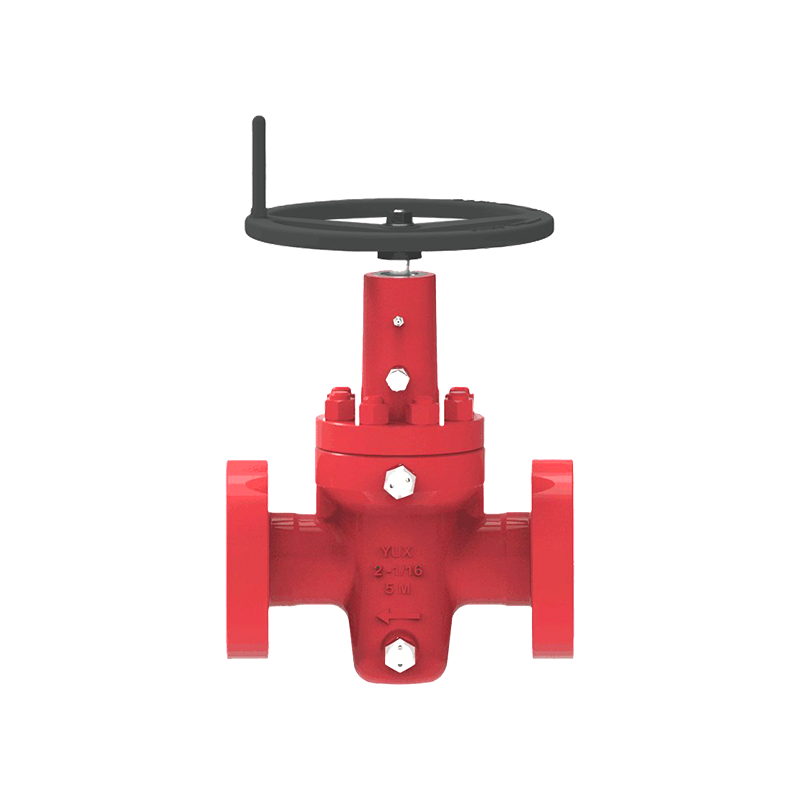 WKM Expanding Gate Valve with API 6A ComplianceThis expanding gate valve uniquely combines low pressure drop with positive double-block-and-bleed capability, making it a valuable choice where both gate and ball valve benefits are needed.View Product → combine the low-pressure-drop benefits of a gate with a positive double-block-and-bleed capability, offering a unique solution that bridges the performance gap between gate and ball valves.
The choice between a gate valve and a ball valve is heavily influenced by the service environment. In oil and gas production, here are the common scenarios:
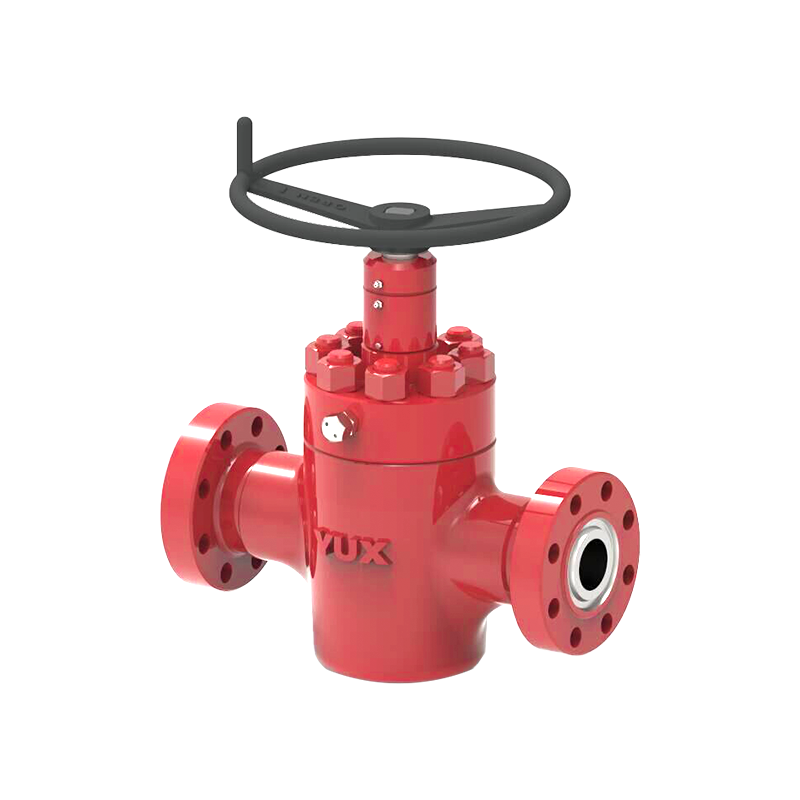 FC Gate Valve for Drilling Manifold ApplicationsDesigned for infrequent cycling in oilfield service, this gate valve features hard-alloy sealing surfaces for corrosion and erosion resistance, ensuring durability in high-pressure drilling environments.View Product → is designed for such demanding conditions, with a full-bore design and corrosion-resistant materials.
Gate valves typically have a longer service life in oilfield applications when used as intended (full open/full closed, infrequent cycling). The gate and seat can be resurfaced during maintenance. However, if used for partial opening, gate valves wear quickly. Ball valves, especially with soft seats, may require seat replacement after a number of cycles, but they are easier to operate manually and often more tolerant of infrequent cycling. In sour service (H₂S), material selection becomes critical for both valve types. Ball valves also have a higher risk of trapped pressure inside the ball cavity, which must be addressed with cavity relief mechanisms. Overall, for installations where the valve is rarely operated, a gate valve often provides the lowest lifecycle cost. For applications with frequent cycling, a ball valve or a 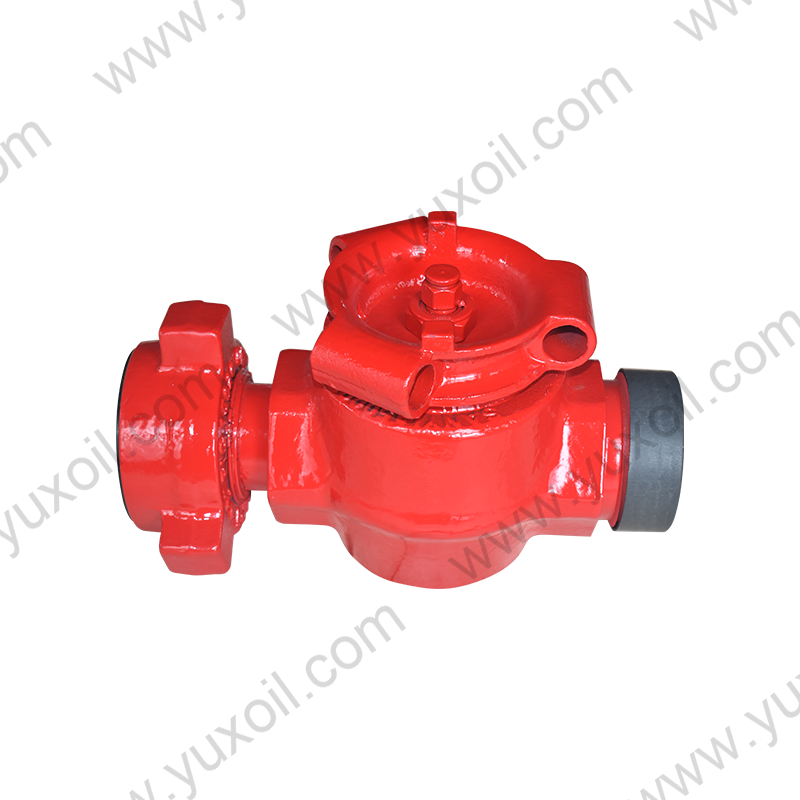 FMC Plug Valve for Cementing and FracturingCompact and easy to maintain, this plug valve offers low torque operation and metal-to-metal sealing, making it an efficient choice for high-pressure well control during consolidation and fracturing.View Product → can offer better reliability.
For the same pressure class and size, gate valves are generally less expensive than ball valves in larger diameters (e.g., 4 inches and above) because of simpler machining and fewer components. In smaller sizes (1–2 inches), ball valves can be cost-competitive or even cheaper. However, when considering automation (actuator addition), ball valves typically require smaller, less costly actuators because the quarter-turn torque is lower than the rotational torque needed for a multi-turn rising stem. Maintenance costs also differ: rebuilding a gate valve is often simpler and cheaper than replacing ball valve seats and seals.
Neither valve type is universally “better.” The gate valve vs. ball valve decision comes down to the specific operational demands of your system—whether quick actuation, low pressure drop, high cycling frequency, or long-term reliability under harsh conditions. Over our years of manufacturing API 6A gate valves and plug valves for oil and gas customers worldwide, we have found that understanding the subtle differences in sealing mechanics and wear patterns leads to better procurement decisions. We always recommend discussing your exact pressure, temperature, media, and actuation requirements with an experienced valve engineer before finalizing a specification.
 No. 161, Yanhe Middle Road, Yanhe Town, Jianhu County, Yancheng City, Jiangsu Province, China
 +86-13961903990
 +86-515-86598285
 +86-515-86590688
Copyright © Jianhu Yuxiang Machinery Manufacturing Co., Ltd. All Rights Reserved.
 Login Wholesale High Pressure Wellhead/Drilling Equipment Manufacturer

 English
 русский
 Español