-

+86-13961903990

+86-13961903990
Industry News
 Home / News / Industry News / Ball Valve Design Essentials: Floating vs Trunnion, Seals, and Standards
  2026.10.12
 Industry News
Content
A produced-water injection manifold at a Permian Basin facility had a 4-inch ball valve fail its shutoff test after ninety days. The PTFE seat had cold-flowed around the ball, and the floating-ball design had transferred the full upstream pressure into the downstream seat, accelerating wear on a seat that was never intended for that load. The service specification called for intermittent flow with solids and moderate pressure, but nothing in the product data sheet said which design choices were inside. The valve had to be pulled and replaced with a trunnion-mounted ball valve with metal seats and a sealant injection system.
The lesson from that failure applies to every ball valve purchase: ball valve design is not a single product decision but a set of choices, including ball support, seat material, stem retention, body rating, and secondary features, that must match the service. Read those choices early, and it is possible to separate a durable, low-maintenance valve from a recurring problem.
The most fundamental choice in ball valve design is how the ball is supported. In a floating ball valve, the ball is not fixed to a shaft; it sits between two seats, and line pressure pushes the ball against the downstream seat to create a seal. That construction is simple, economical, and adequate for small sizes and low to moderate pressure classes. Its weakness is that the sealing load depends on pressure: when pressure climbs, seat load climbs with it, raising operating torque and accelerating seat wear.
In a trunnion-mounted ball valve, the ball is captured by upper and lower shafts, so it cannot be pushed downstream. The seats, usually spring-energized, are loaded against the ball. Pressure does not increase seat load in the same way, so torque stays low and predictable even at high pressures. Trunnion designs also allow double block and bleed capability and body cavity pressure relief, which makes them the default choice for oil and gas production, injection, and fracturing service.
| Design parameter | Floating ball | Trunnion ball |
|---|---|---|
| Ball support | Free between seats | Top and bottom shafts |
| Seal mechanism | Pressure pushes ball into seat | Spring-energized seats contact ball |
| Torque when pressure rises | Increases significantly | Low and stable |
| Typical size range | 1/2 to 4 in | 2 to 48 in and larger |
| Typical pressure range | Class 150 to 600 | Class 150 to 2500 |
| Oil and gas applications | Instrument and utility lines | Pipelines, injection, wellhead, fracturing |
The implication for buyers is direct: if the service is above approximately Class 600, the line size is above 4 inches, or the media contains solids, select a trunnion-mounted design. A floating design can perform acceptably at a lower initial cost, but only when the duty is clean and the pressure class is modest.
The seat is the first part to wear and the part that defines the shutoff class. Soft seats made of PTFE provide bubble-tight shutoff and handle clean fluids below approximately 230°C (450°F). PTFE, however, is susceptible to cold flow and extrusion under high load. PEEK seats extend the temperature limit to about 260°C and resist deformation better, which is why high-pressure ball valves commonly use PEEK instead of PTFE.
For abrasive media, high temperatures, or fire-safe requirements, metal seats are required. A metal-seated ball valve is rated to a seat leakage class per ANSI/FCI 70-2 or ISO 5208; standard production valves commonly achieve Class II or III, lapped seats reach Class IV, and a sealant-injected design can approach Class V or VI. If the application needs bubble-tight metal-seated closure, the design must add a secondary sealing mechanism.
Many trunnion ball valves and plug valves are equipped with a sealant injection system: drilled channels run from the body to the seat area, and a sealant compound is injected under pressure to restore the seal on a scratched or worn seat without removing the valve from the line. This feature extends service life considerably on solids-bearing fluids and is one of the most practical details to verify when reviewing a valve design.
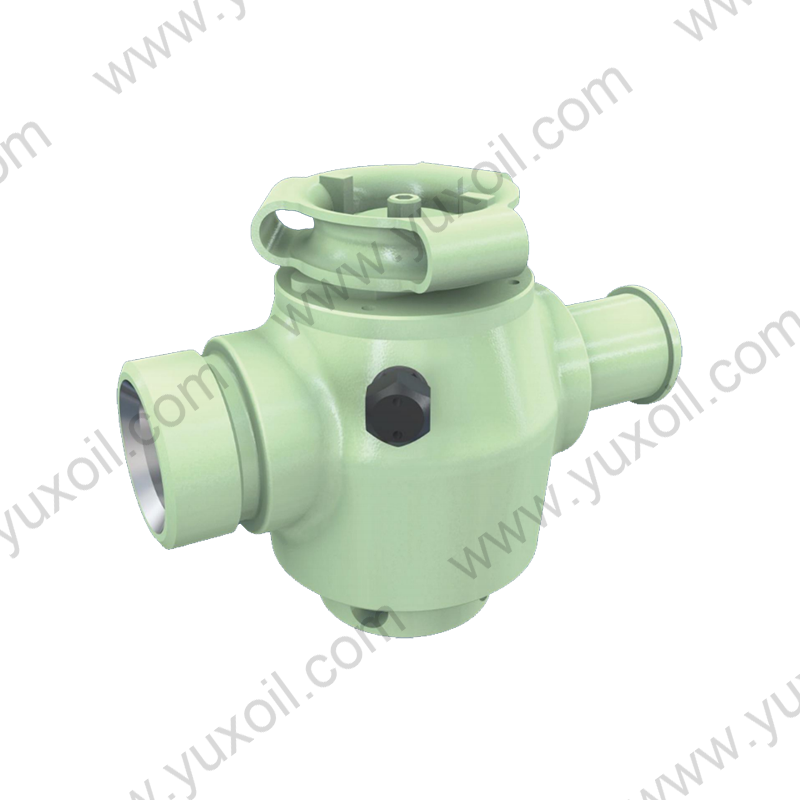
The same quarter-turn architecture appears in plug valves, where a tapered plug rotates inside the body against a seat and uses a similar sealant-assisted sealing concept. The design logic is close enough that maintenance crews comfortable with plug valves adapt quickly to trunnion ball valves, and vice versa. The way the design of a plug valve minimizes leakage is explained in a related article on this site.
A ball valve's stem is the only part that penetrates the pressure boundary under dynamic load, so design details on that side are critical. An anti-blowout stem is retained by a shoulder or a retaining ring inside the body so that internal pressure can never eject the stem if the packing gland or flange fails. This is a non-negotiable feature for flammable hydrocarbon service, and many operators will not accept a design without it.
Fire-safe design is equally important. A valve qualified to API 607 or ISO 10497 is tested through a fire, allowed to burn out the soft seat, and must still seal against the metal seat. The construction usually includes a soft primary seat plus a metal secondary seat located so that thermal destruction of the soft parts does not open the flow path. Ask for the fire-safe test certificate and confirm the test pressure, temperature, burn duration, and leakage limits.
Anti-static features keep the ball, stem, and body electrically continuous through grounding springs, preventing the accumulation of static charge inside the valve bore. In gas service, especially with dry gas and non-conductive seats, a static discharge can ignite the flowing medium.
Packing selection determines how well the valve meets fugitive emission limits. Live-loaded packing, usually pre-compressed Belleville spring washers over a PTFE or graphite packing set, maintains sealing load as the packing wears. Designs tested to ISO 15848-1 or API 641 carry measurable methane emission classifications; when the project has environmental reporting obligations, specify one of those classifications explicitly.
A ball valve design is only as good as its material specification. ASME B16.34 establishes the pressure-temperature ratings for common body materials: WCB carbon steel for general sweet service, CF8M stainless steel for corrosion resistance, LCC for low-temperature service, and duplex or super-duplex for sour gas and high-chloride environments. When the produced fluid contains hydrogen sulfide, NACE MR0175 / ISO 15156 restricts the hardness of wetted materials to prevent sulfide stress cracking. Confirm the material class, impact test requirements, and hardness limits in the purchase specification.
Product standards also matter. API 6D covers pipeline and piping ball valves, including trunnion types, and is commonly required for transmission service; API 608 addresses Class 150 and 300 metal ball valves; ISO 17292 covers general-purpose ball valves for petroleum and petrochemical service.
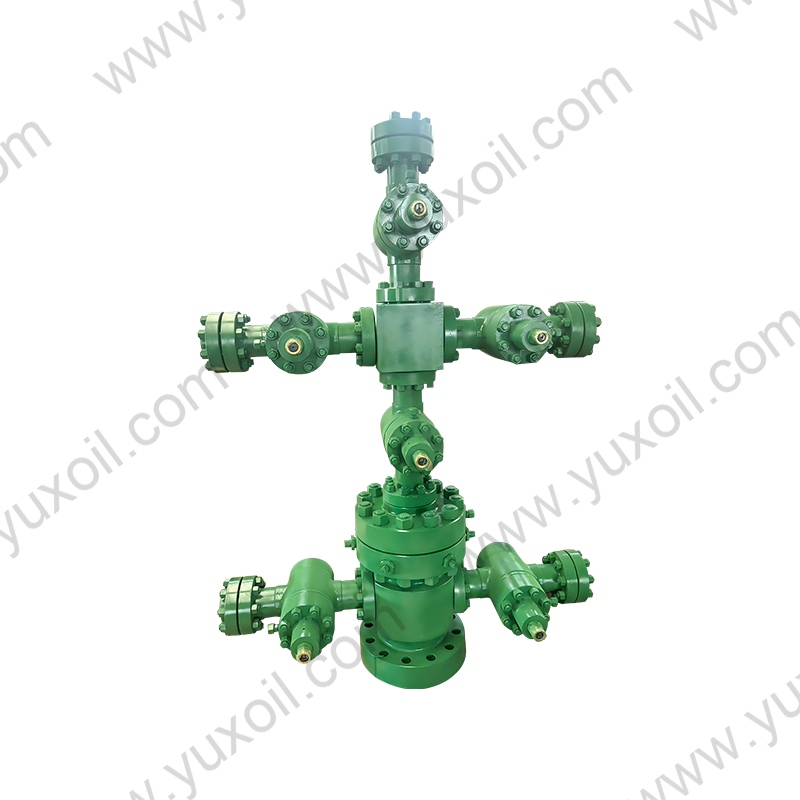
On the wellhead side, a different standard governs the primary control devices. API 6A is the accepted specification for wellhead and Christmas tree equipment, and many surface trees use expanding gate valves for their positive sealing characteristics in low-temperature and solids-laden environments. The design review for a tree-mounted valve is therefore different from a pipeline ball valve review, even though the two share the same pressure boundary principles. YUXOIL's expanding gate valve is built for this tree-service duty, alongside its other API 6A gate valve configurations.
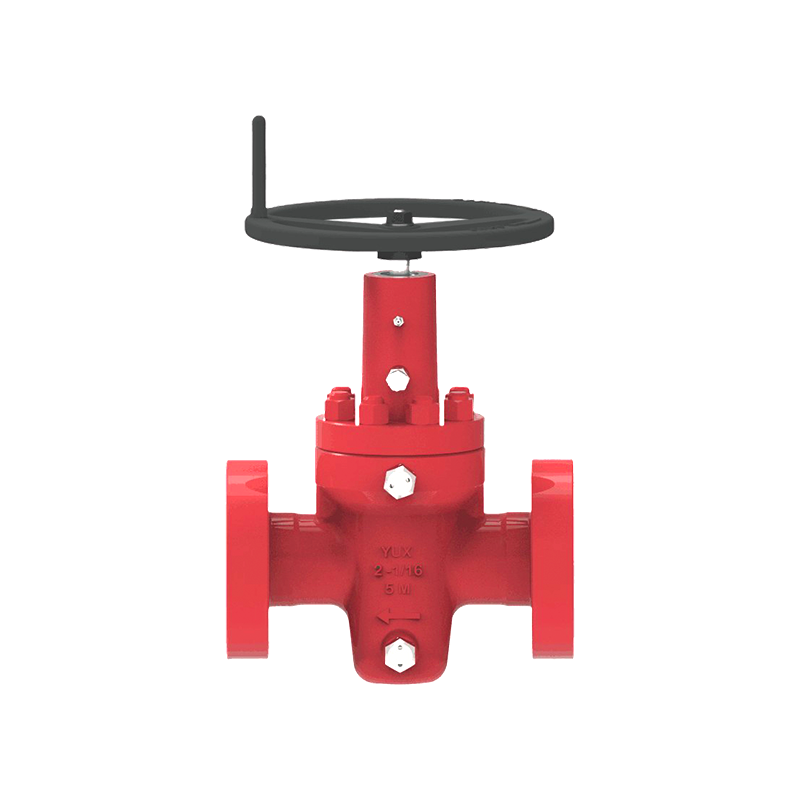 API 6A Expanding Gate Valve for Wellhead and Christmas Tree ServiceThis expanding gate valve is built for tree-mounted duty, meeting API 6A standards with flanged or threaded ends. Its forged or cast body, low operating torque, and metal seals suit low-temperature, solids-laden environments.View Product →
| Service condition | Body material | Ball and seat material |
|---|---|---|
| Sweet gas, moderate temperature | WCB or CF8M | 316 SS ball, PEEK seats |
| Sour gas with H2S | LCC or duplex | Duplex trim, Inconel overlay |
| Abrasive slurry or conventional fracturing | Carbon steel or duplex | Tungsten carbide-coated ball, metal seat |
| High-temperature or fire-safe duty | CF8M or WCB | Metal seat, graphite packing |
When you specify a ball valve, put the design facts on the table before comparing prices. At minimum, the documentation should answer these questions:
Testing is as important as the drawing. A standard ball valve is hydrostatically shell-tested at 1.5 times the rated pressure and seat-tested according to API 598 or MSS SP-61 criteria. Confirm that the certificate shows the applied pressure and hold time, not just a pass mark.
Manufacturing quality also shows up in design consistency. A manufacturer with in-house casting, machining, and inspection can control dimensional accuracy and seal surface quality far better than a trader that fragments production across subcontractors. YUXOIL's plant runs a valve factory and a casting factory side by side, and its manufacturing capabilities page describes the machining and inspection steps applied to each order.
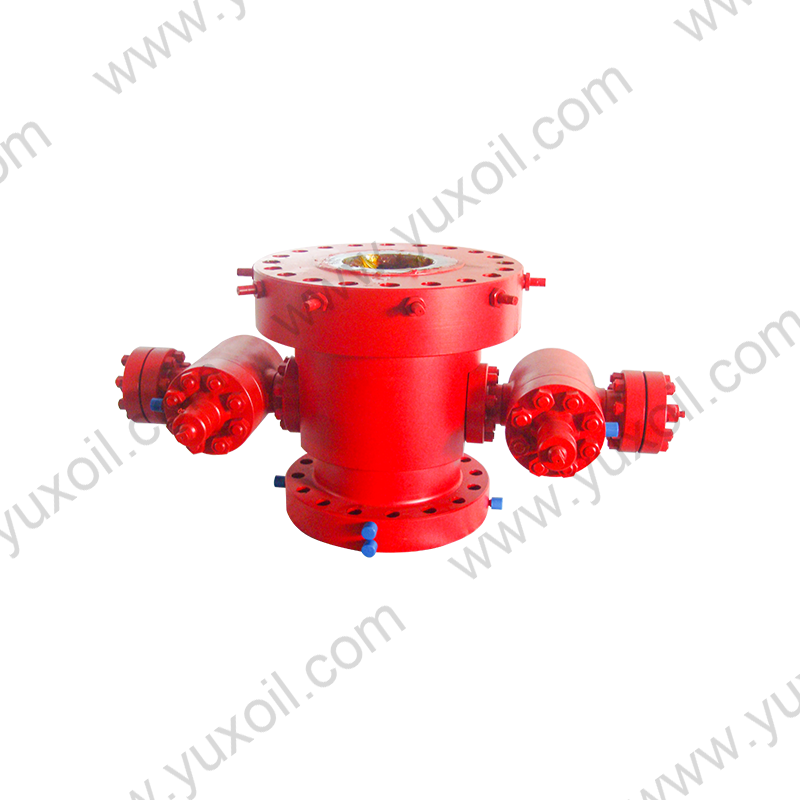
For fracturing and well stimulation work, the ball valve design is part of a larger pressure envelope that includes the treating manifold and the wellhead. The frac head is the structural interface that connects the treating lines to the casing head, and the valves upstream must match its pressure rating, bore size, and connection type. Keep the whole envelope in mind during the design review.
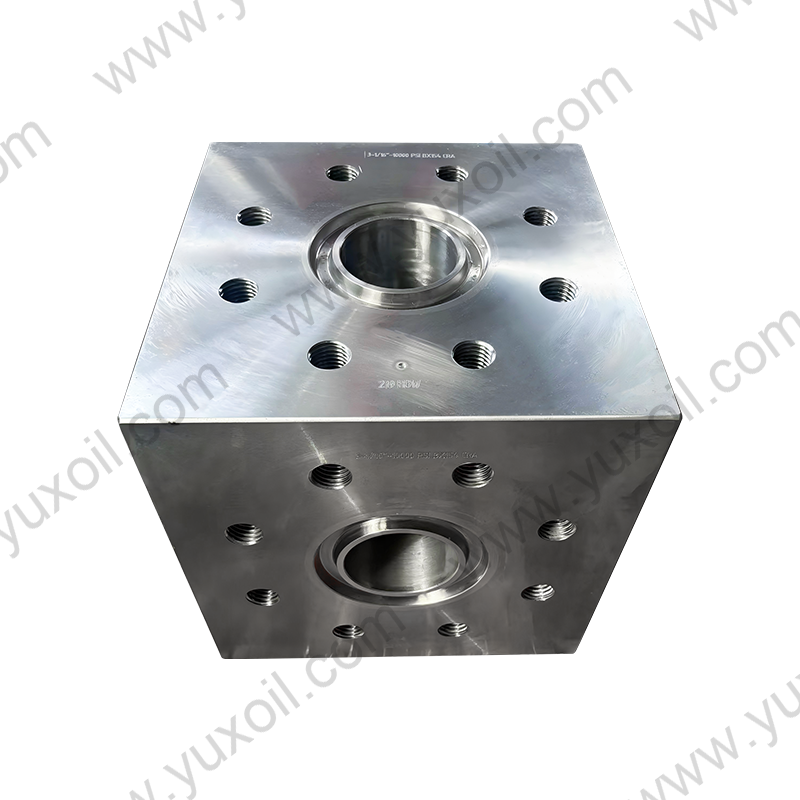
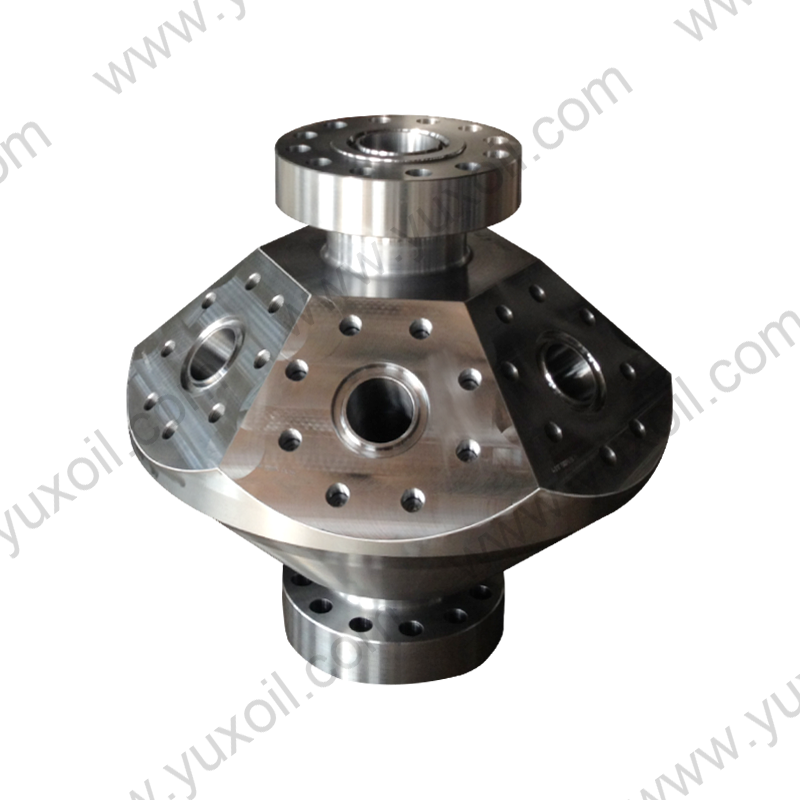 Frac Head Adapter with Multiple Outlets for High-Pressure StimulationThis frac head adapter matches the pressure envelope of treating manifolds and wellheads, offering four to six outlets and API-compatible connections. Its size range from 1-13/16 to 7-1/16 inches suits various fracturing operations.View Product →
The value of reviewing ball valve design at the specification stage is that the main performance traits are visible before installation. Ball support, seat materials, retained stem, fire-safe construction, and certified tests tell a consistent story about how the valve will behave in your service. Reading those details early is what separates a reliable surface installation from a recurring maintenance cost.
 No. 161, Yanhe Middle Road, Yanhe Town, Jianhu County, Yancheng City, Jiangsu Province, China
 +86-13961903990
 +86-515-86598285
 +86-515-86590688
Copyright © Jianhu Yuxiang Machinery Manufacturing Co., Ltd. All Rights Reserved.
 Login Wholesale High Pressure Wellhead/Drilling Equipment Manufacturer

 English
 русский
 Español