-

+86-13961903990

+86-13961903990
Industry News
 2026.06.08
 Industry News
Content
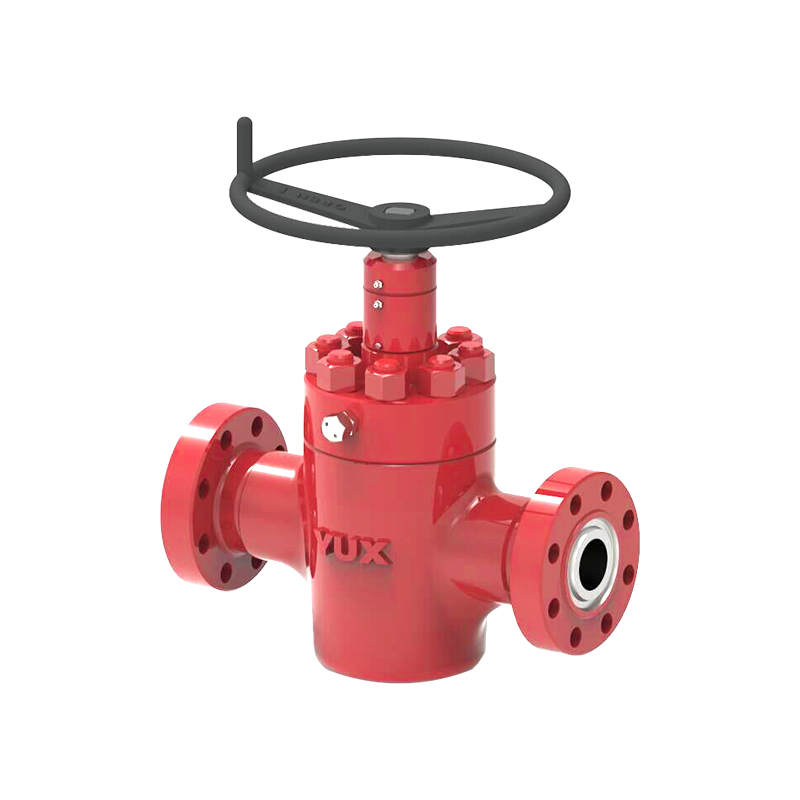
An API 6A gate valve is a quarter-turn or linear-motion shutoff valve designed and tested to meet API Specification 6A — the governing standard for wellhead and Christmas tree equipment used in oil and gas production. It provides a straight-through, full-bore flow path with minimal pressure drop when fully open, and a positive metal-to-metal seal when closed.
In practical terms: if your application involves wellhead pressure control, Christmas tree assemblies, choke manifolds, or high-pressure flowline isolation, an API 6A gate valve is the industry-standard solution — and selecting the wrong pressure class or material specification can result in catastrophic failure.
API Spec 6A (currently in its 21st edition) is published by the American Petroleum Institute and sets mandatory requirements for design, materials, dimensions, testing, and quality control of wellhead equipment. For gate valves, it specifies:
A valve marked "API 6A" without a full designation (e.g., 5000 PSI / PSL 3 / PR2 / Material Class DD / Temperature Class L) is incomplete and potentially non-compliant. Always request the full nameplate data.
The gate valve operates by moving a flat or wedge-shaped gate perpendicular to the flow path. When the gate is fully retracted into the bonnet, the bore is completely open; when driven down by the stem, it seats against two sealing surfaces and blocks flow entirely.
API 6A gate valves use one of two gate mechanisms:
Most API 6A gate valves use a non-rising stem (NRS) design — the stem rotates but does not travel axially, which minimizes overall height and protects the stem from external damage. Rising stem (RS) designs are used where visual indication of open/closed position is critical.
Pressure class selection is the most critical decision in specifying an API 6A gate valve. The working pressure must exceed the maximum anticipated wellhead shut-in pressure (WHSIP) — not just the normal operating pressure.
| Pressure Class | Max Working Pressure | Hydrostatic Test Pressure | Typical Application |
|---|---|---|---|
| 2,000 psi | 138 bar | 207 bar | Low-pressure onshore wells, water injection |
| 3,000 psi | 207 bar | 310 bar | Shallow onshore production, gas gathering |
| 5,000 psi | 345 bar | 517 bar | Standard onshore/offshore wellheads |
| 10,000 psi | 690 bar | 1,034 bar | High-pressure offshore, deep gas wells |
| 15,000 psi | 1,034 bar | 1,551 bar | Deepwater subsea, HPHT wells |
| 20,000 psi | 1,379 bar | 2,068 bar | Ultra-HPHT exploration wells |
Never select a pressure class equal to your operating pressure. Industry practice mandates a minimum 10% safety margin above maximum anticipated WHSIP, and regulatory bodies in many jurisdictions require selecting the next standard pressure class above the calculated maximum.
API 6A defines material classes AA through HH based on the corrosive species present — primarily H₂S (hydrogen sulfide) and CO₂ content. Selecting the wrong material class in a sour service environment is one of the leading causes of valve body cracking and catastrophic failure.
| Material Class | Base Material | Sour Service (H₂S) | Typical Use |
|---|---|---|---|
| AA | Carbon / Low-alloy steel | Not suitable | Sweet service, low-cost onshore |
| BB | Carbon / Low-alloy steel | Not suitable | Sweet service with stainless trim |
| CC | Stainless steel | Limited | Mildly corrosive service |
| DD | Low-alloy steel (NACE MR0175) | Yes | Sour gas / H₂S environments |
| EE | Low-alloy steel (NACE MR0175) | Yes | Sour service with stainless trim |
| FF | Stainless steel (NACE MR0175) | Yes | Highly corrosive sour service |
| HH | Corrosion-resistant alloy (CRA) | Yes (severe) | Aggressive sour / CO₂ / chlorides |
For sour service applications, material selection must also comply with NACE MR0175 / ISO 15156, which sets hardness limits (typically HRC ≤ 22 for body and bonnet) to prevent sulfide stress cracking (SSC). Using a Class AA valve in an H₂S environment, even briefly, risks SSC-induced brittle fracture within hours of exposure.
Two additional classification axes define how rigorously a valve is manufactured and tested — and they significantly affect both cost and lead time.
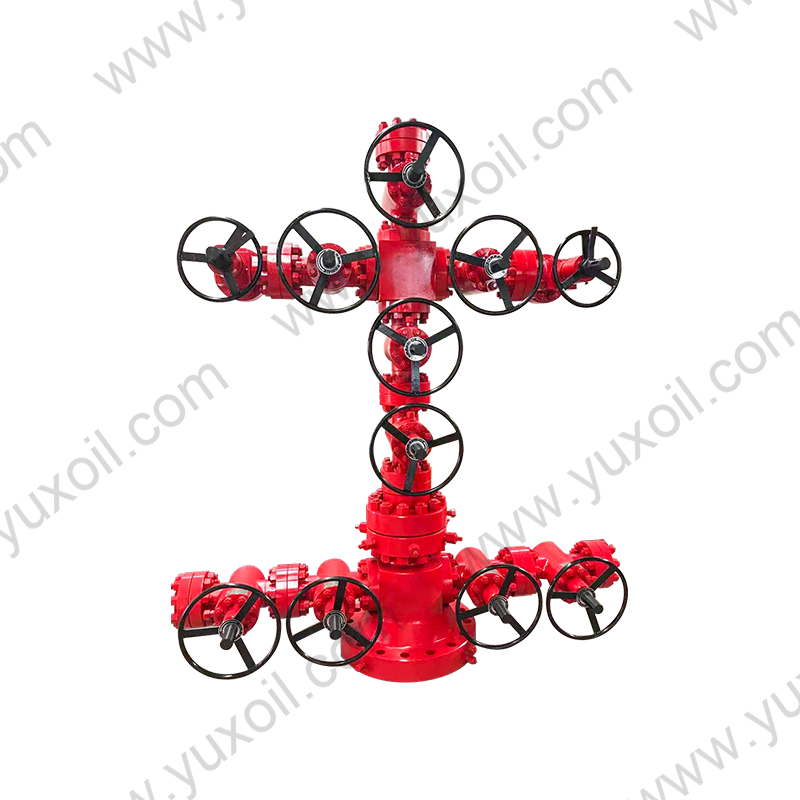
Understanding the anatomy of an API 6A gate valve helps in both specification and troubleshooting:
Gate valves are not always the right choice. Here is how they compare to the main alternatives used in wellhead and production service:
| Valve Type | Flow Restriction | Throttling | Best Use | Limitation |
|---|---|---|---|---|
| Gate valve (API 6A) | Minimal (full bore) | Not suitable | Isolation / shutoff | Slow actuation; no throttling |
| Ball valve (API 6D) | Minimal (full bore) | Limited | Fast isolation, pipeline | Less common above 10,000 psi |
| Choke valve | High (variable) | Yes (primary purpose) | Wellhead flow rate control | Not a shutoff device |
| Check valve | Low | No | Backflow prevention | No manual control |
Gate valves must never be used for throttling. Partially open gate positions cause high-velocity fluid to erode the seating surfaces within hours, rendering the valve unable to seal. Any flow control requirement must be addressed by a dedicated choke valve downstream.
Manufacturer selection affects not only product quality but also spare parts availability, technical support, and API monogram traceability. Key players in the market include:
Always verify the API monogram license number of any supplier against the official API database (api.org/monogram) before approving a purchase order. Counterfeit API 6A markings have been documented on valves recovered from failed wellhead incidents.
Proper installation and maintenance directly determine valve service life and seal integrity. Key requirements include:
Use this checklist to ensure a complete, unambiguous valve specification before procurement:
A complete specification prevents change orders, delays, and the risk of receiving a non-compliant valve on a critical-path wellhead project.
 No. 161, Yanhe Middle Road, Yanhe Town, Jianhu County, Yancheng City, Jiangsu Province, China
 +86-13961903990
 +86-515-86598285
 +86-515-86590688
Copyright © Jianhu Yuxiang Machinery Manufacturing Co., Ltd. All Rights Reserved.
 Login Wholesale High Pressure Wellhead/Drilling Equipment Manufacturer

 English
 русский
 Español