-

+86-13961903990

+86-13961903990
Industry News
 Home / News / Industry News / What Is a Casing Spool Tees And Crosses Frac Head and How Does It Work in Wellhead Systems?
  2026.05.04
 Industry News
Content
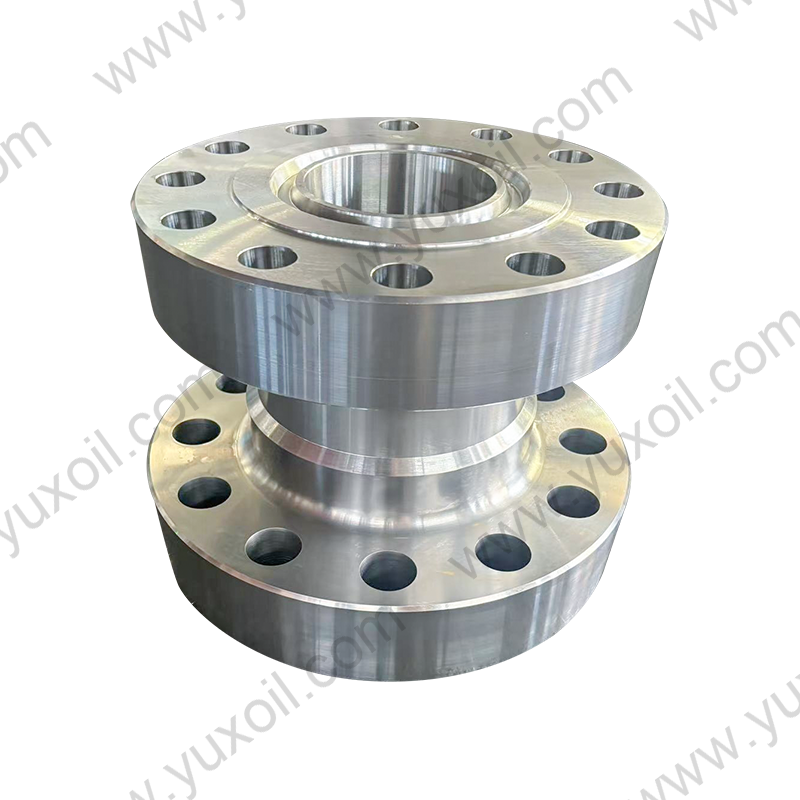
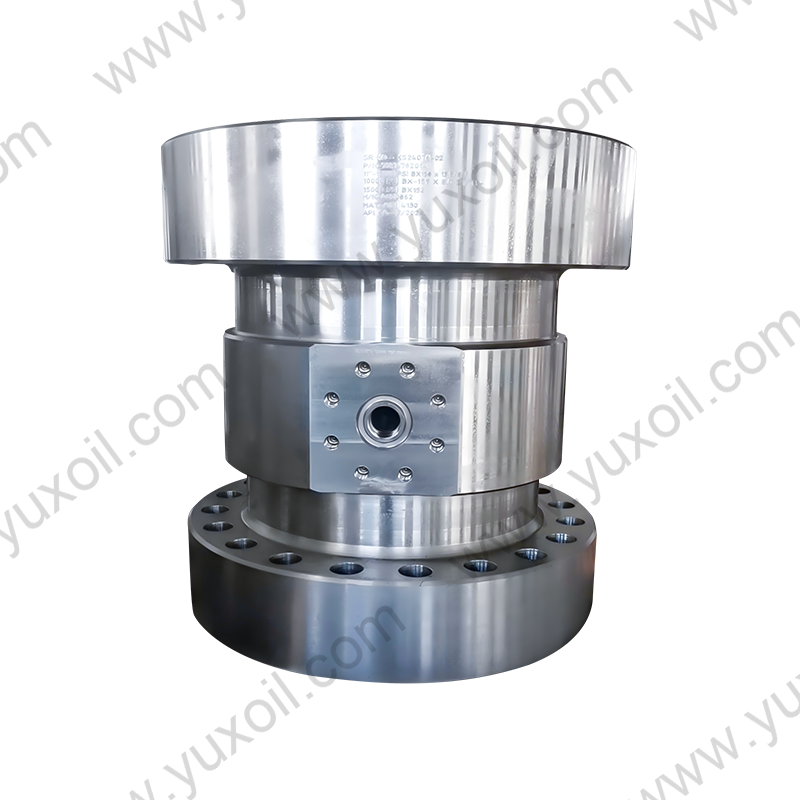
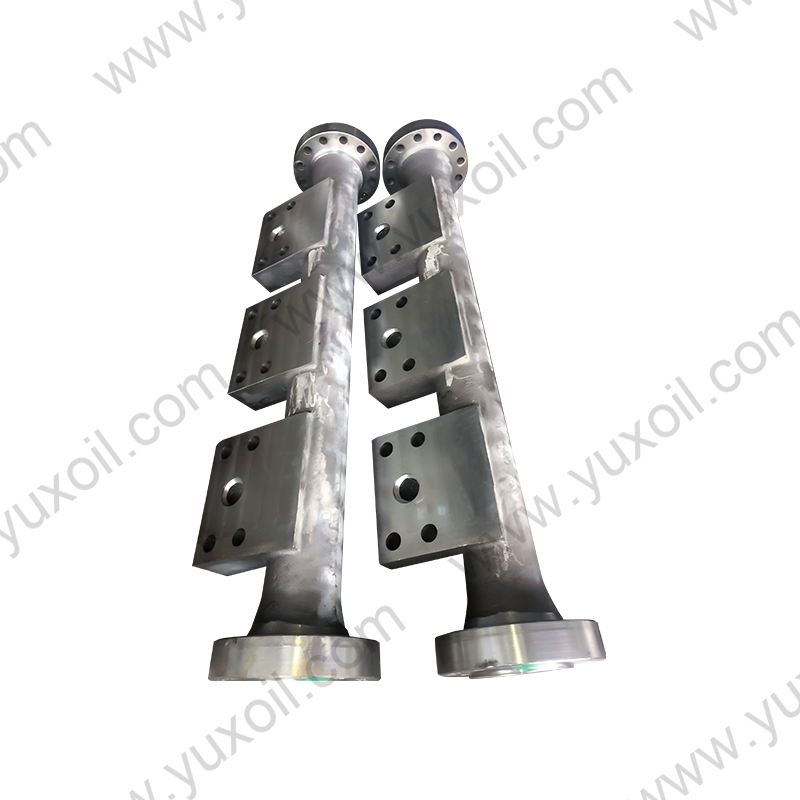
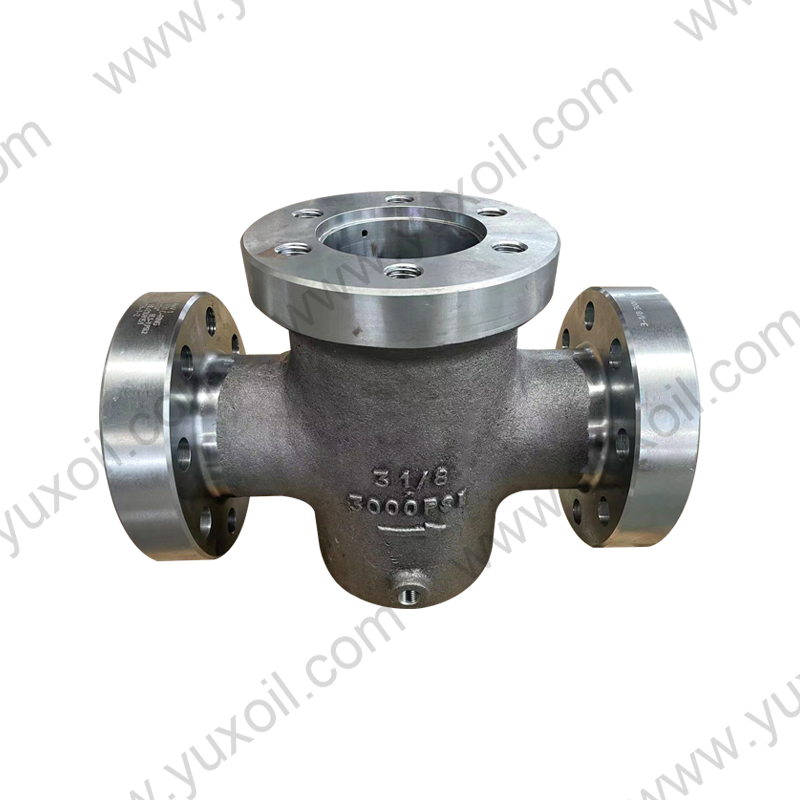
A Casing Spool Tees And Crosses Frac Head is a specialized wellhead assembly component used during hydraulic fracturing (fracking) operations to control and direct high-pressure fluid flow into the wellbore. It integrates casing spool geometry — tee (T-shaped) or cross (X-shaped) outlet configurations — with a frac head to allow simultaneous injection of fracturing fluids while maintaining wellbore integrity. In practical terms, it serves as the critical pressure interface between surface pumping equipment and the cased wellbore, rated typically from 5,000 psi to 15,000 psi working pressure, depending on formation requirements.
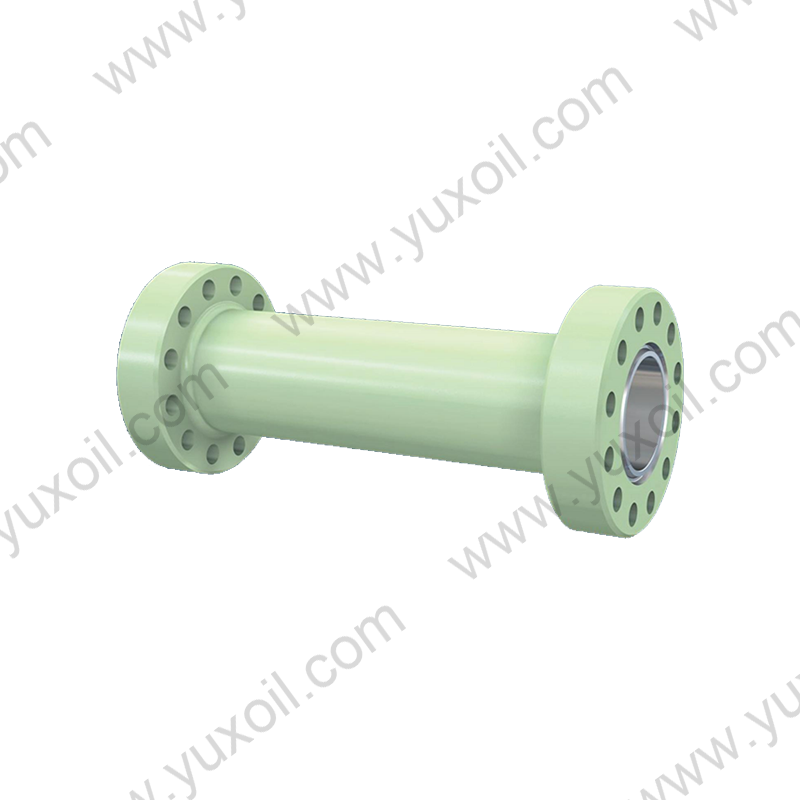
A casing spool is a flanged, cylindrical body installed between the casing head and the tubing head (or BOP stack) in a wellhead system. It provides the structural housing for casing hangers and offers side outlet ports for annular access and pressure monitoring.
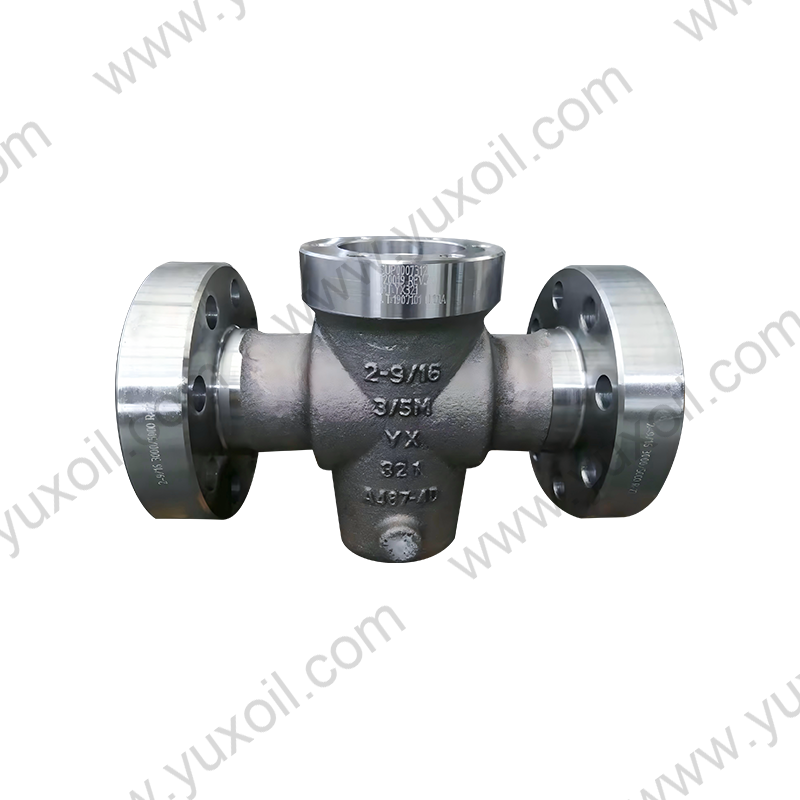
When configured as a tee or cross, the spool adds one or two additional lateral outlets:
These outlets are typically flanged to API 6A or 16A standards, with common sizes ranging from 2-1/16" to 4-1/16" in diameter on lateral ports and a main bore of 7-1/16" to 13-5/8" to accommodate various casing sizes.
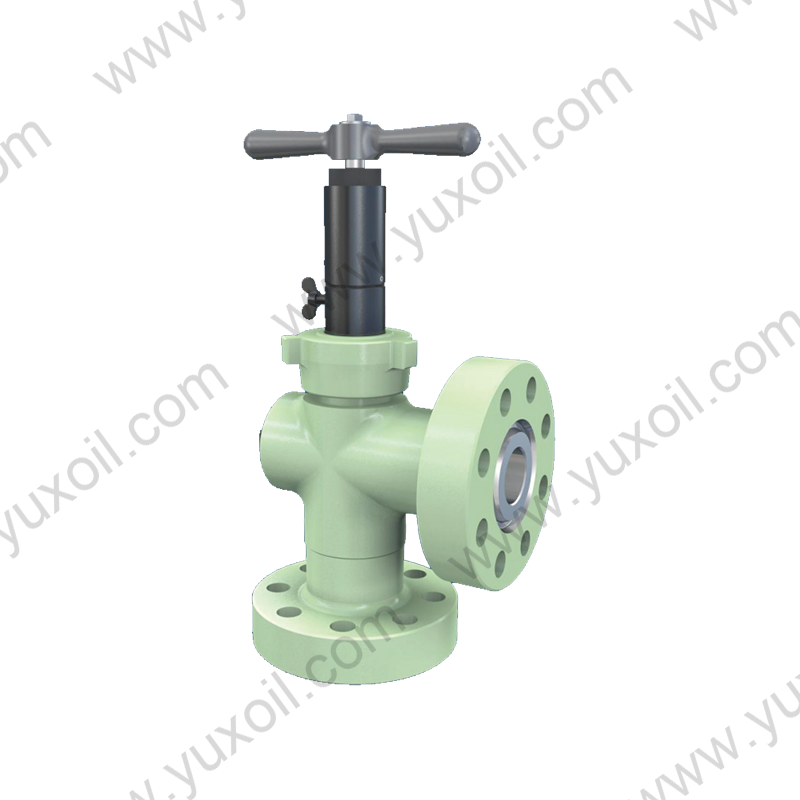
A frac head (also called a fracturing head or frac manifold head) is a compact, high-pressure valve assembly mounted on top of the wellhead or casing spool during a fracturing job. Its primary function is to provide a sealed, multi-port entry point for fracturing fluid from surface pumps.
Key functional roles of the frac head include:
When the frac head is integrated with a casing spool tee or cross, the combined assembly allows operators to inject fluid into multiple zones or annuli simultaneously — a key requirement in modern multi-stage fracturing programs.
The Casing Spool Tees And Crosses Frac Head operates as an integrated pressure management system during well stimulation. Here is how it functions during a typical frac job:
Selecting the correct assembly requires matching the equipment specification to the well's design pressure, casing size, and formation characteristics. The table below summarizes typical specifications:
| Parameter | Typical Range | Common Standard |
|---|---|---|
| Working Pressure | 5,000 – 15,000 psi | API 6A / API 16A |
| Main Bore Size | 7-1/16" – 13-5/8" | API 6A flange spec |
| Lateral Outlet Size | 2-1/16" – 4-1/16" | API 6A flange spec |
| Material Grade | AISI 4130 / 4140 steel | NACE MR0175 (sour service) |
| Temperature Rating | -60°F to 250°F (PU to T) | API 6A temperature classes |
| Configuration | Tee (1 lateral) / Cross (2 laterals) | Customer-specified |
| Seal Type | BX / RX ring gasket | API 6A ring groove |
The choice between a tee and a cross configuration depends on the number of annular spaces that need access and the operational complexity of the frac program.
Best suited for simpler single-annulus wellheads. A tee provides one side outlet that can be used for fluid injection, pressure monitoring, or annular kill line access. For example, on a 9-5/8" casing string with a single annulus, a tee spool efficiently handles both frac fluid delivery and pressure gauge attachment without over-engineering the wellhead.
Required when two separate lateral connections are needed — for example, when one outlet connects to a pump manifold and the opposite outlet is used for real-time annular pressure monitoring or a chemical injection line. Cross spools are standard in dual-string completions and complex multi-annulus wellheads, such as those used in deepwater or high-pressure/high-temperature (HPHT) wells.
To understand where this assembly fits, consider a typical onshore well stack from bottom to top:
The casing spool tee/cross acts as the pressure bridge between the permanent wellhead and the temporary fracturing equipment. Once the frac program is complete, the frac head is removed and the spool outlets are capped or fitted with gate valves for production-phase annular monitoring.
Because this assembly operates at the highest pressures seen on any wellhead component during the life of the well, pressure integrity is non-negotiable. Key safety requirements include:
Casing Spool Tees And Crosses Frac Heads are used across a wide variety of fracturing contexts:
Recommended Products
 No. 161, Yanhe Middle Road, Yanhe Town, Jianhu County, Yancheng City, Jiangsu Province, China
 +86-13961903990
 +86-515-86598285
 +86-515-86590688
Copyright © Jianhu Yuxiang Machinery Manufacturing Co., Ltd. All Rights Reserved.
 Login Wholesale High Pressure Wellhead/Drilling Equipment Manufacturer

 English
 русский
 Español