-

+86-13961903990

+86-13961903990
Industry News
 Home / News / Industry News / How to Choose the Right API 6A Gate Valve? A Guide to Size, Pressure, and Material
  2026.02.02
 Industry News
Content
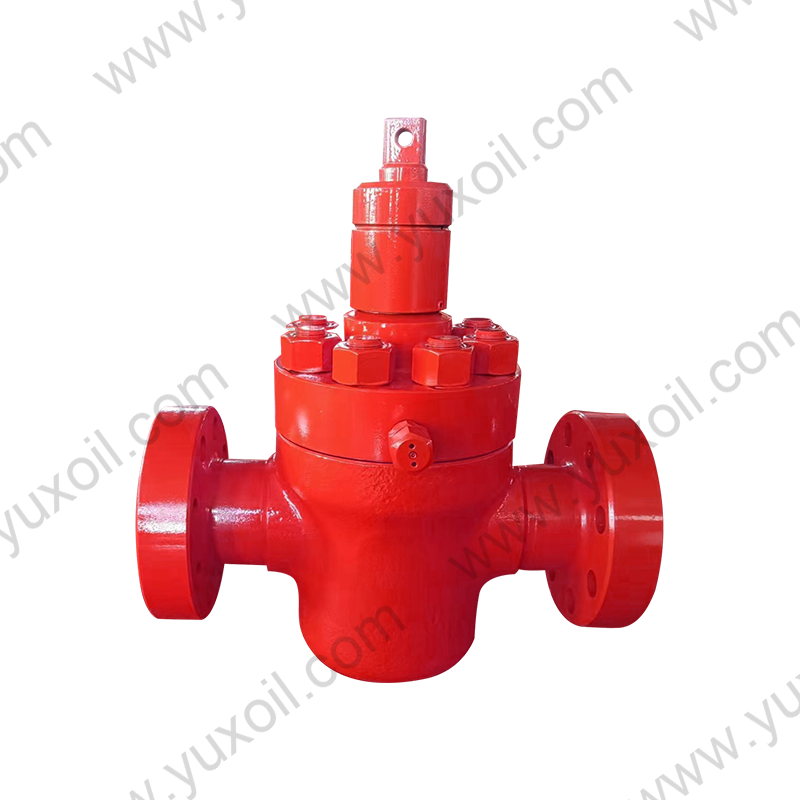
The API 6A gate valve is the cornerstone of high-pressure flow control in the upstream oil and gas industry. Specifically engineered for wellhead and Christmas tree systems, these valves are designed to operate under the most grueling conditions on earth—from high-pressure, high-temperature (HPHT) reservoirs to highly corrosive sour gas environments. Understanding the technical intricacies of API 6A specifications is not merely a matter of compliance; it is a critical requirement for ensuring the safety of personnel, protecting the environment, and optimizing the life-cycle costs of oilfield assets.
The sizing and pressure classification of an API 6A gate valve are fundamentally different from those used in midstream or downstream piping (such as ASME or API 6D). In the context of wellhead equipment, the valve must maintain a seamless interface with the tubing and casing strings that extend miles underground. Selecting the correct size and pressure rating is the first step in maintaining the mechanical integrity of the entire well-bore pressure envelope.
API 6A gate valves are categorized by their nominal bore sizes, which typically range from 1-13/16 inch to 7-1/16 inch, with larger specialized sizes available for high-capacity systems. Unlike standard industrial valves, most API 6A valves utilize a “full-bore” through-conduit design. This means the internal diameter of the valve is perfectly aligned with the pipe’s internal diameter, creating a smooth, unobstructed path for the fluid. This design is critical for “pigging” operations and for the deployment of wireline or coiled tubing tools. Any restriction in the bore could lead to catastrophic tool entrapment or localized erosion caused by turbulent flow at high velocities. When specifying size, engineers must also consider the “drift” diameter, ensuring that the valve can accommodate the maximum outer diameter of any tool intended to pass through it during the well’s productive life.
The pressure ratings in API 6A are standardized into direct increments: 2,000, 3,000, 5,000, 10,000, 15,000, and 20,000 psi. These ratings represent the maximum allowable working pressure (MAWP) at which the valve can operate continuously. However, the engineering safety factor built into these valves is substantial. During the manufacturing process, each valve undergoes rigorous hydrostatic shell testing at 1.5 times its rated pressure to ensure there are no casting or forging defects. Furthermore, the seat test—often performed with nitrogen gas for high-pressure applications—verifies that the metal-to-metal seals can maintain zero leakage even when the valve is subjected to its full rated differential pressure. For HPHT (High-Pressure High-Temperature) wells, the pressure rating must be derated based on the operating temperature, a calculation that is vital for preventing the mechanical yielding of the valve body or bonnet.
The chemical composition of the fluid produced from a well is rarely pure. It often contains a mixture of oil, gas, brine, sand, and corrosive gases such as Hydrogen Sulfide (H2S) and Carbon Dioxide (CO2). Consequently, the material selection for an API 6A gate valve is categorized into “Material Classes” that dictate the metallurgy of the wetted parts and the body.
API 6A defines material classes from AA (General Service) to HH (Highly Corrosive Service). For general service where corrosion is not a concern, carbon steel or low-alloy steels are sufficient. However, as the concentration of CO2 increases, Material Class CC (Stainless Steel) is required to prevent “sweet corrosion,” which can cause rapid pitting. The most challenging environments involve “Sour Service,” where H2S is present. In these cases, the materials must comply with NACE MR0175/ISO 15156 standards. H2S can trigger sulfide stress cracking (SSC) in high-strength steels, leading to sudden, brittle failure. Material classes DD through HH utilize specialized heat-treatment processes to control the hardness of the steel, typically keeping it below 22 HRC. Class HH is reserved for the most extreme conditions, often requiring the internal cavities of the valve to be clad with high-nickel alloys like Inconel 625 through an automated welding process.
Beyond chemistry, the physical state of the material is tested through Performance Requirement levels, specifically PR1 and PR2. A PR2-rated valve undergoes significantly more rigorous testing, including temperature cycling and high/低 pressure cycles, to simulate a lifetime of service in the field. This is often coupled with the Temperature Rating, designated by letters (K through V). For example, Temperature Class U covers a range from -18 degrees Celsius to 121 degrees Celsius. Selecting a valve with an inappropriate temperature rating can lead to the failure of elastomeric seals (such as O-rings and back-up rings) or the loss of structural ductility in the metal components. In sub-arctic or deep-water environments, low-temperature toughness (Charpy V-Notch testing) becomes a mandatory requirement to prevent brittle fracture during cold-start operations.
A common area of confusion in industrial procurement is the distinction between API 6A and API 6D gate valves. While both are used to control fluid, they serve entirely different sectors of the energy value chain and are designed with different safety philosophies.
API 6A valves are “Upstream” equipment. They are installed at the wellhead where the pressure is highest and the fluid is “raw.” Because they must handle sand and solids (proppant) returning from the well, the internal sealing surfaces are often hardened with Tungsten Carbide coatings. API 6D valves, conversely, are “Midstream” or “Pipeline” valves. They handle refined or filtered products over long distances. While API 6D valves focus on “bubble-tight” shutoff over thousands of miles of pipeline, API 6A valves focus on “containment” and “erosion resistance” under extreme pressure. An API 6D valve should never be used on a wellhead, as its seals and body thickness are not designed to handle the dynamic spikes and abrasive nature of raw wellbore fluids.
One of the most critical differentiators within the API 6A standard is the Product Specification Level (PSL). This defines the level of quality control and non-destructive testing (NDT) performed on the valve. PSL 1 is the base level, suitable for low-risk, onshore wells. As the risk profile increases—such as in offshore platforms, subsea installations, or wells located near populated areas—the PSL level increases. A PSL 3 or PSL 4 valve requires 100 percent radiographic inspection of all castings, ultrasonic testing of forgings, and comprehensive material traceability. PSL 3G (Gas) includes additional gas-pressure testing to ensure the integrity of the seals against the smallest gas molecules. Higher PSL levels significantly increase the cost of the valve but provide the necessary assurance for high-risk, high-consequence operations.
| Technical Parameter | Options and Range | Industry Standards / Compliance |
|---|---|---|
| Bore Size Range | 1-13/16" to 7-1/16" (Standard) | API 6A Full-Bore / Through-Conduit |
| Pressure Ratings | 2,000, 3,000, 5,000, 10,000, 15,000, 20,000 psi | API 6A Hydrostatic Shell & Seat Test |
| Material Class | AA, BB, CC, DD, EE, FF, HH | NACE MR0175 / ISO 15156 (Sour Service) |
| Product Level (PSL) | PSL 1, PSL 2, PSL 3, PSL 3G, PSL 4 | Quality Control & NDT Requirements |
| Temperature Class | K, L, N, P, S, T, U, V (-60C to +121C) | Thermal Stability & Seal Integrity |
A Slab Gate valve uses a solid, one-piece gate. It relies on the actual fluid pressure to push the gate against the downstream seat to create a seal. It is simpler and highly effective for high-pressure service. An Expanding Gate valve consists of two pieces that mechanically expand against the seats when the valve is closed, providing a positive seal even at very low or zero pressure.
The service interval depends on the “Performance Requirement” (PR) level and the well conditions. For wells with high sand content or corrosive fluids, a quarterly inspection of the stem packing and greasing of the seat area is recommended. Most API 6A valves feature grease injection ports to allow for maintenance while the valve is in service.
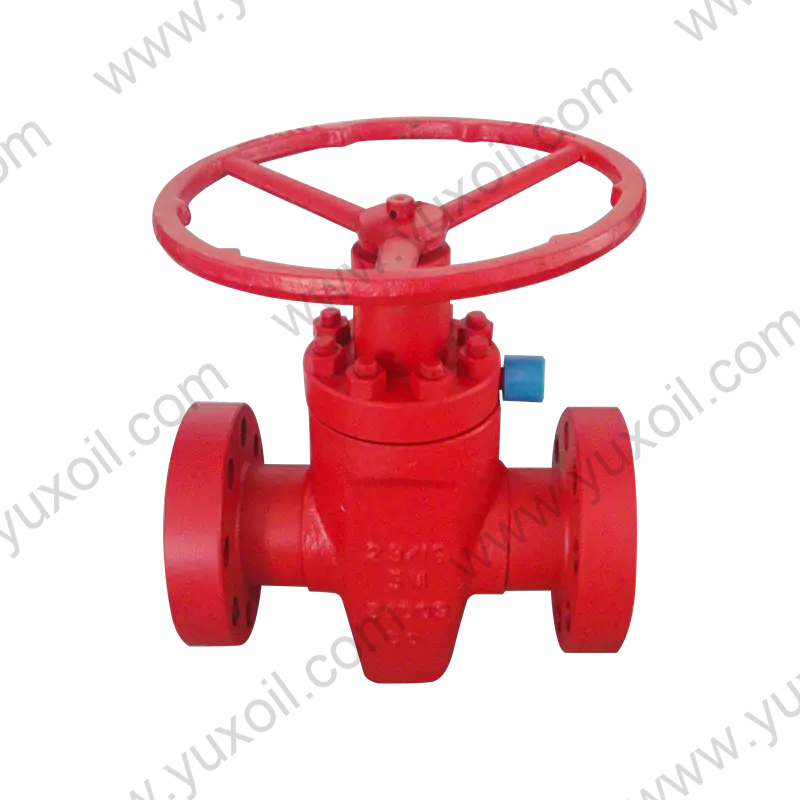
Yes. Most API 6A gate valves are designed with a standardized bonnet interface that allows the manual handwheel to be replaced with a hydraulic or pneumatic actuator. This is common for “Surface Safety Valves” (SSV) that must close automatically in the event of an emergency.
 No. 161, Yanhe Middle Road, Yanhe Town, Jianhu County, Yancheng City, Jiangsu Province, China
 +86-13961903990
 +86-515-86598285
 +86-515-86590688
Copyright © Jianhu Yuxiang Machinery Manufacturing Co., Ltd. All Rights Reserved.
 Login Wholesale High Pressure Wellhead/Drilling Equipment Manufacturer

 English
 русский
 Español